Spanish words we use in English

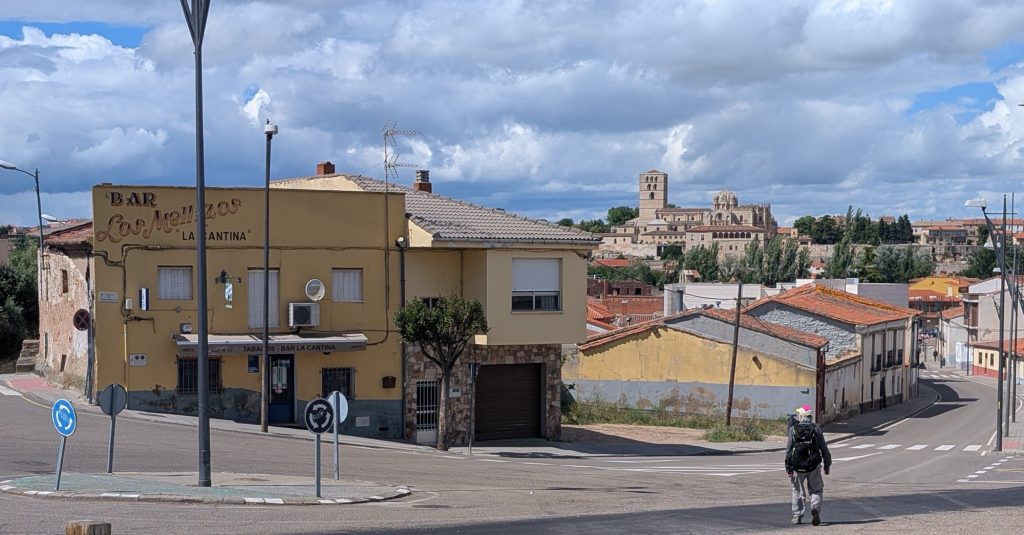
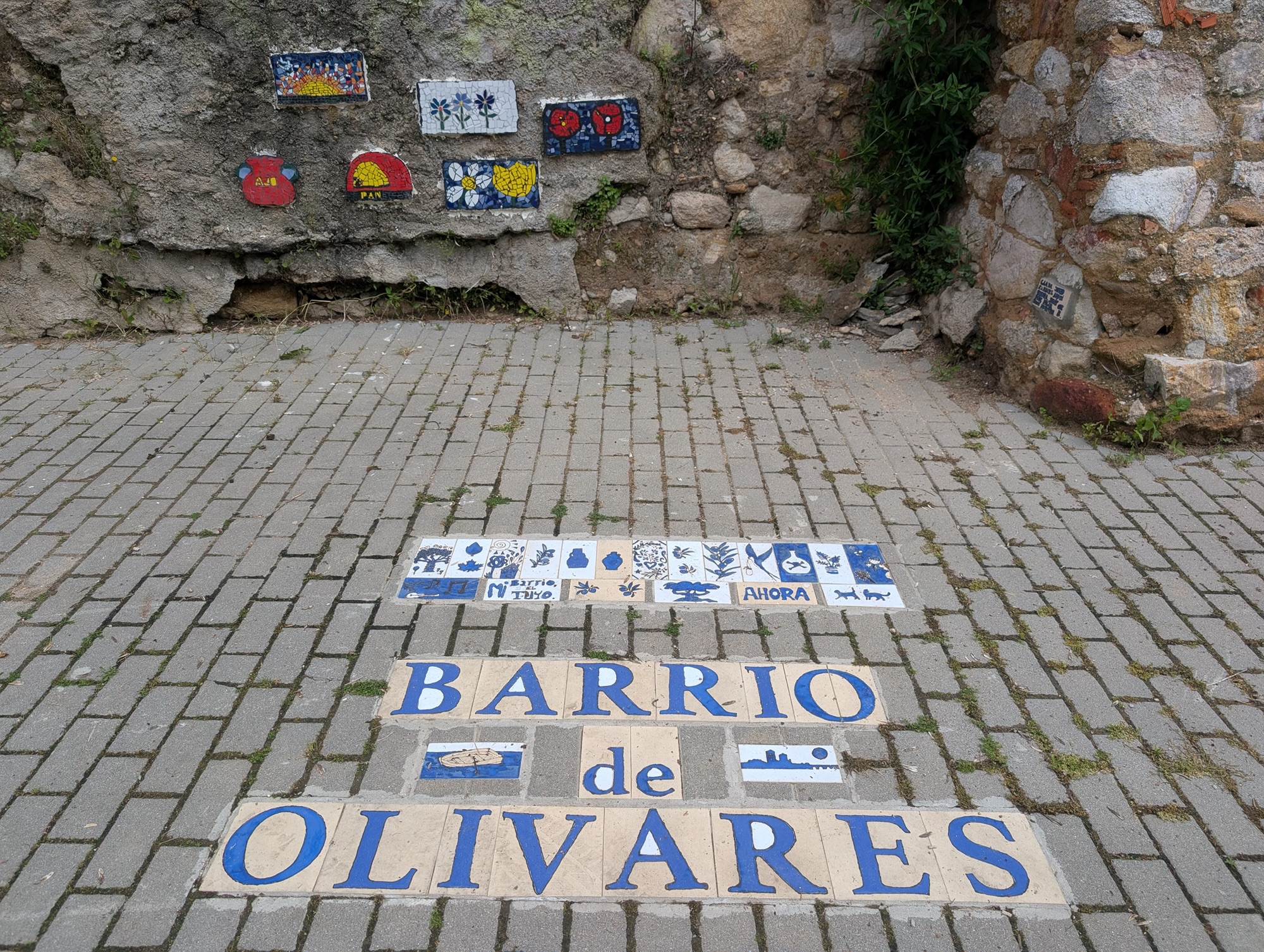
Today we were walking in a neighborhood called “Barrio de Olivares” which means “Neighborhood of Olive Groves.”

The word barrio means neighborhood. I remember being surprised when I first learned that that word means any neighborhood, not a slightly poor Hispanic neighborhood as we use the term in New Mexico. I first heard that term when I lived in Santa Fe.

I might have done a post like this in a blog in years past so if this is a repeat, please forgive me. It’s a topic that I find really interesting: Spanish words that we English-speakers know that have a very specific meaning when we use them but the meaning is much more general in Spanish. I know these type of words show up in all languages. For example, I think chef means any kind of boss in French, not just the head cook. (Correct me if I’m wrong, French-speakers out there.)

I’ve been collecting such Spanish words. This is the list of some of these. Can you think of others?

Arroyo:  stream (of any kind) in Spanish, not just a dry gully like we have in the southwest

Barrio: neighborhood (of any kind) in Spanish, not the connotation of “ghetto”

Bodega: cellar (of any kind) in Spanish

Bosque: forest (of any kind) in Spanish, not just the cottonwoods down by the Rio Grande

Caldera: boiler, cauldron (of any kind) in Spanish

Caramelo: candy (of any kind) in Spanish

Conquistador: conquerer (of any kind) in Spanish

Corral: pen, barnyard (any kind of pen) in Spanish

Fiesta: any party, celebration, or feast in Spanish, big or small

Hacienda: estate, ranch, farm, plantation in Spanish

Huevos: when we are in a New Mexican restaurant, this is what we call the breakfast dish “huevos rancheros”. Of course, in Spanish, huevos is eggs in general.

Matador: killer (of any kind, not just of bulls) in Spanish

Mermelada: jam/jelly (of any kind, not just made with oranges) in Spanish

Mesa: means table of any kind in Spanish

Molestar: to bother in Spanish; not the same connotation as “to molest” in English.

Negro: the color black in Spanish (“el negro” could mean the black man but could also mean “the black anything” depending on context.)

Patio: yard or courtyard in Spanish

Pueblo: small town (of any kind) in Spanish. Also means “people”.

Salsa: any kind of sauce or gravy or salad dressing in Spanish, not just the kind you put on tacos

Sombrero: any kind of hat in Spanish, not just the big straw kind with a big brim
May 11, 12, 13: Last three days in Zamora

Tomorrow we catch a morning train to Madrid. Friday we are scheduled to fly home. A few more photos to tell the story of the last few days.

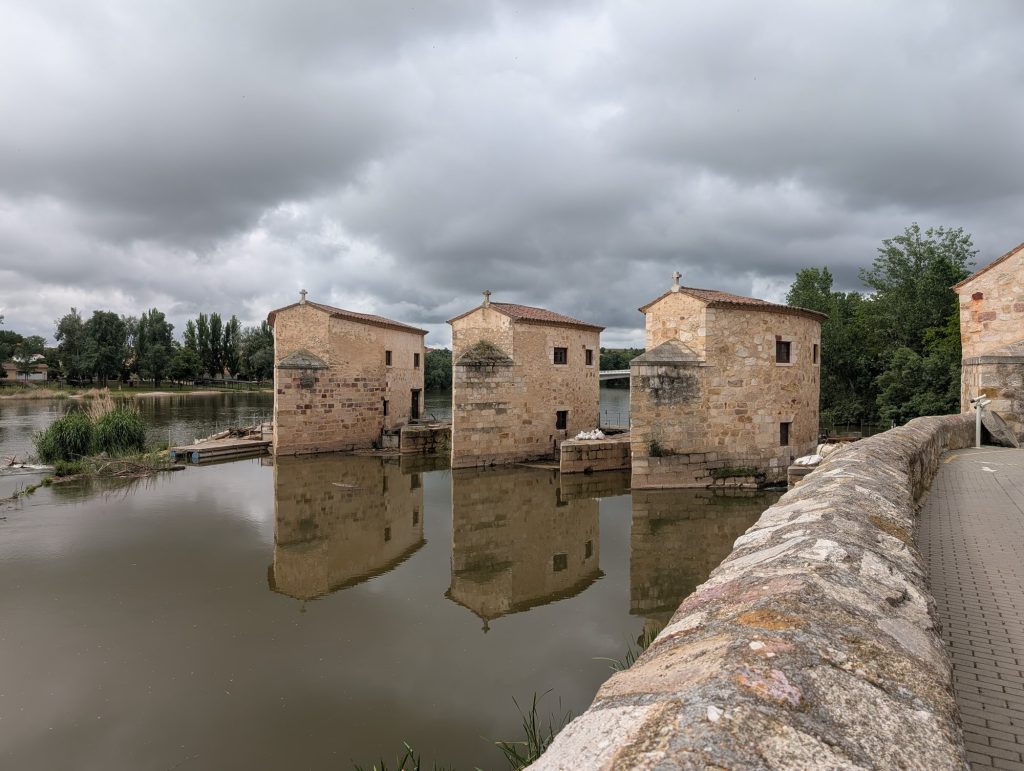
Mills built in the 10th century. They are now a museum but alas it was closed due to renovation. We were disappointed. Wheat is a big crop around here and evidently it was a big crop a thousand years ago as well. There are a number of such mills in the river.
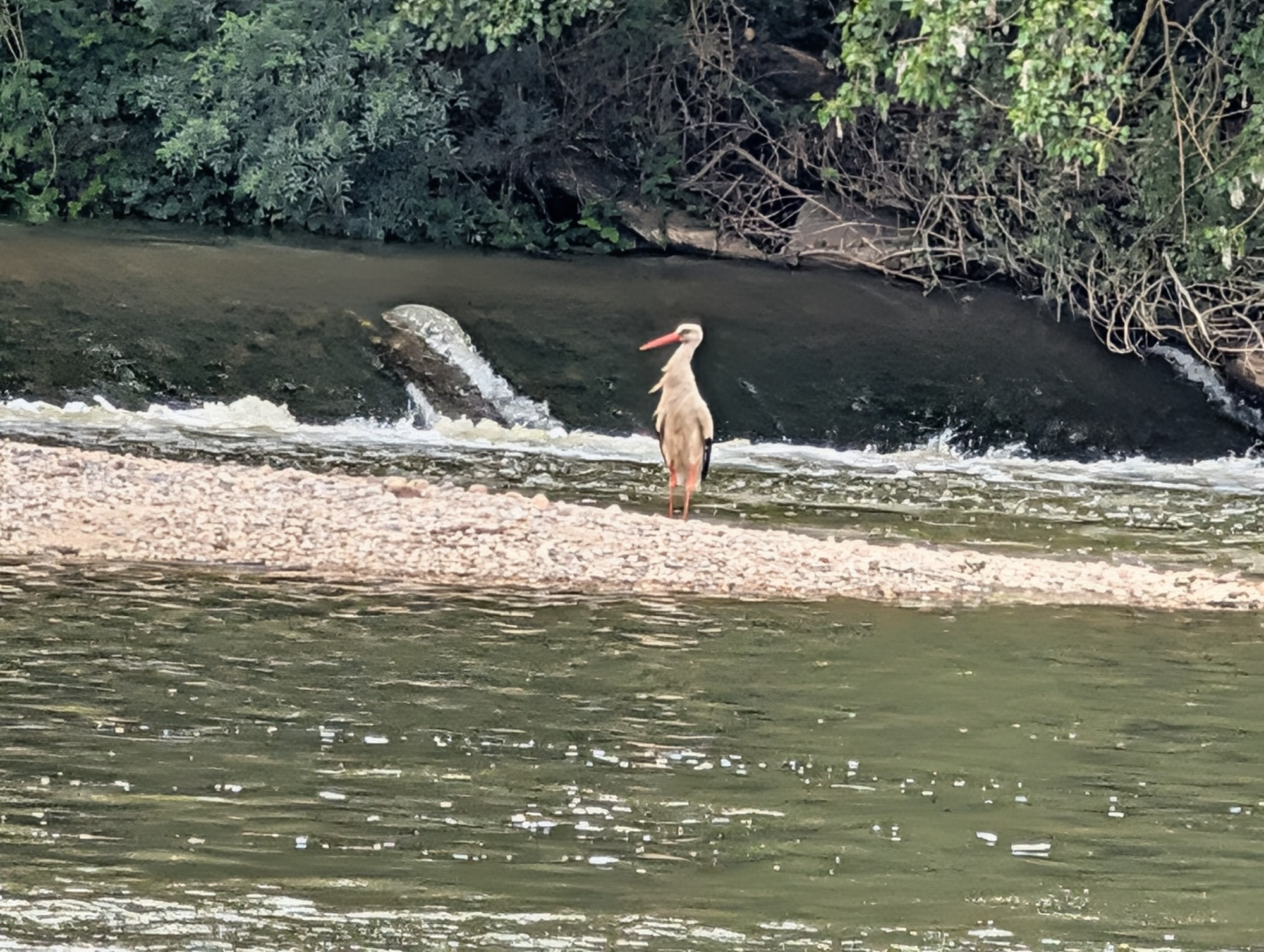
A stork hanging out near one of the weirs in the river here. The weirs were built in the 10th to 12th century to direct the water flow to the mills. Otherwise, the river here is very slow moving. Up till now, I didn’t know what a weir was. Is this something most of you know about?
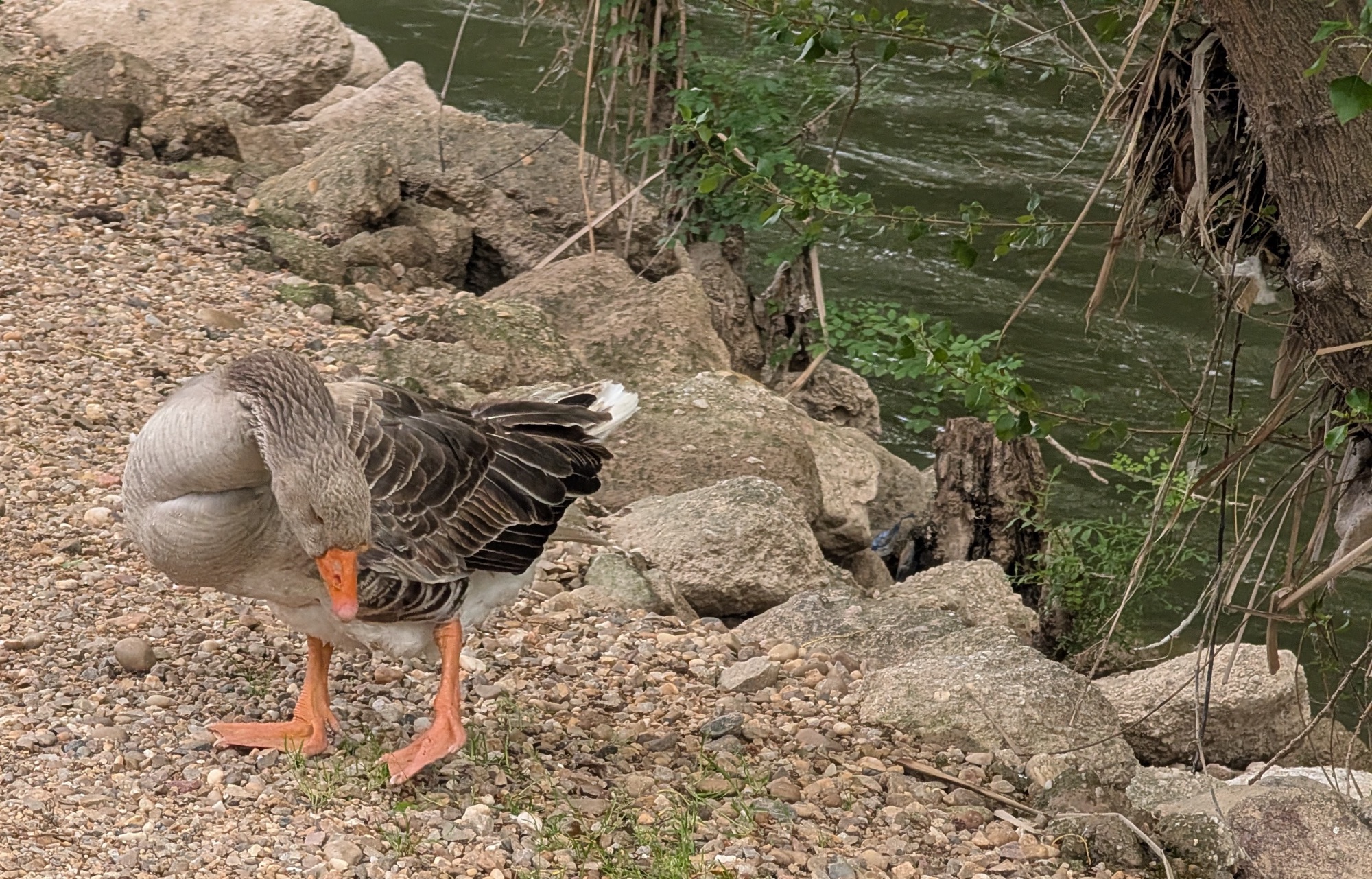
A goose along the riverbank. He completely ignored us and let us get very close.
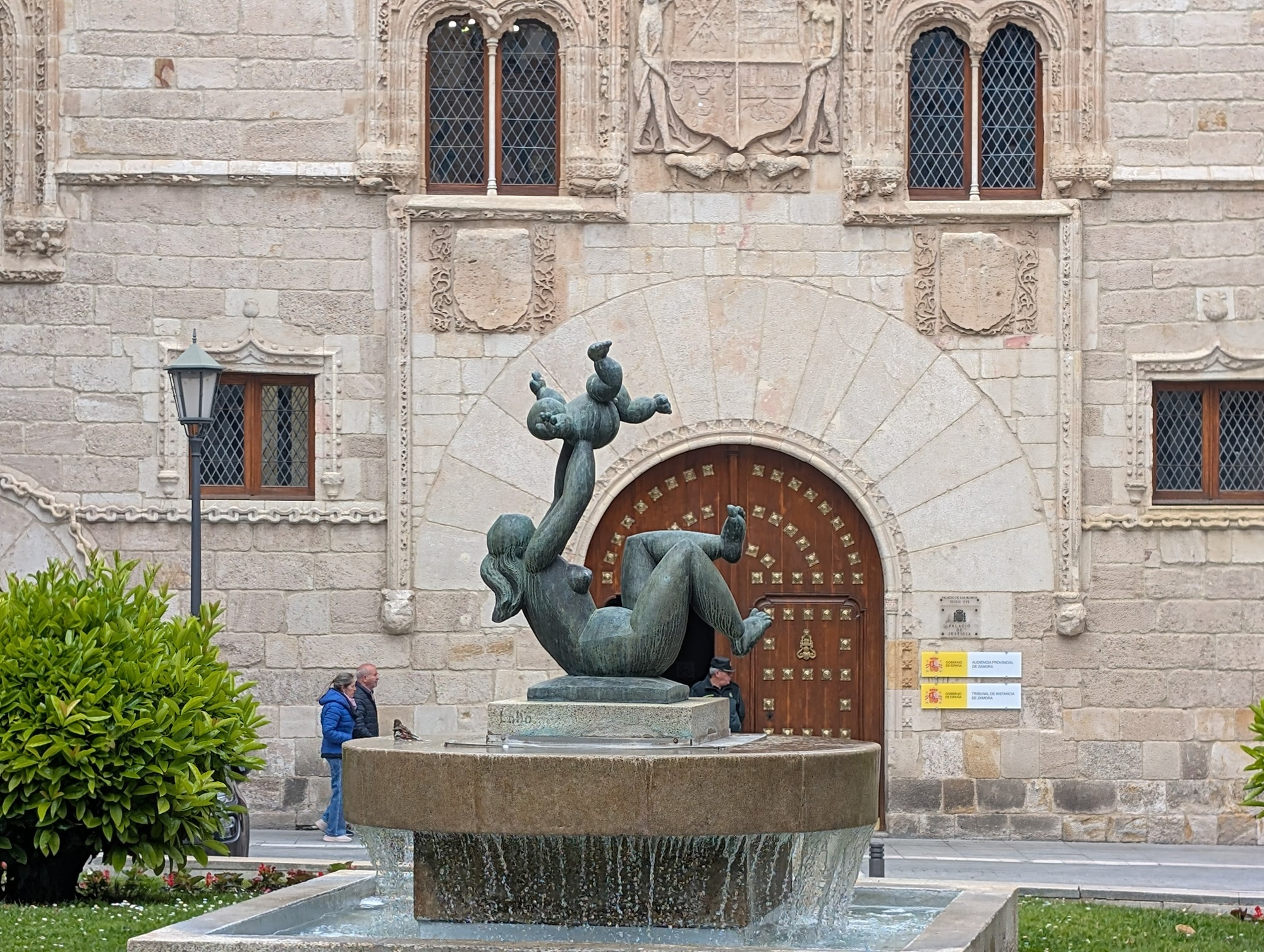
Early in the week we visited a museum of the works of Baltasar Lobo. He’s a local sculptor who gained some fame early in the 20th century. He exiled to France during the Spanish Civil War and was a contemporary of Picasso. This is one of his works in the square in front of our apartment.
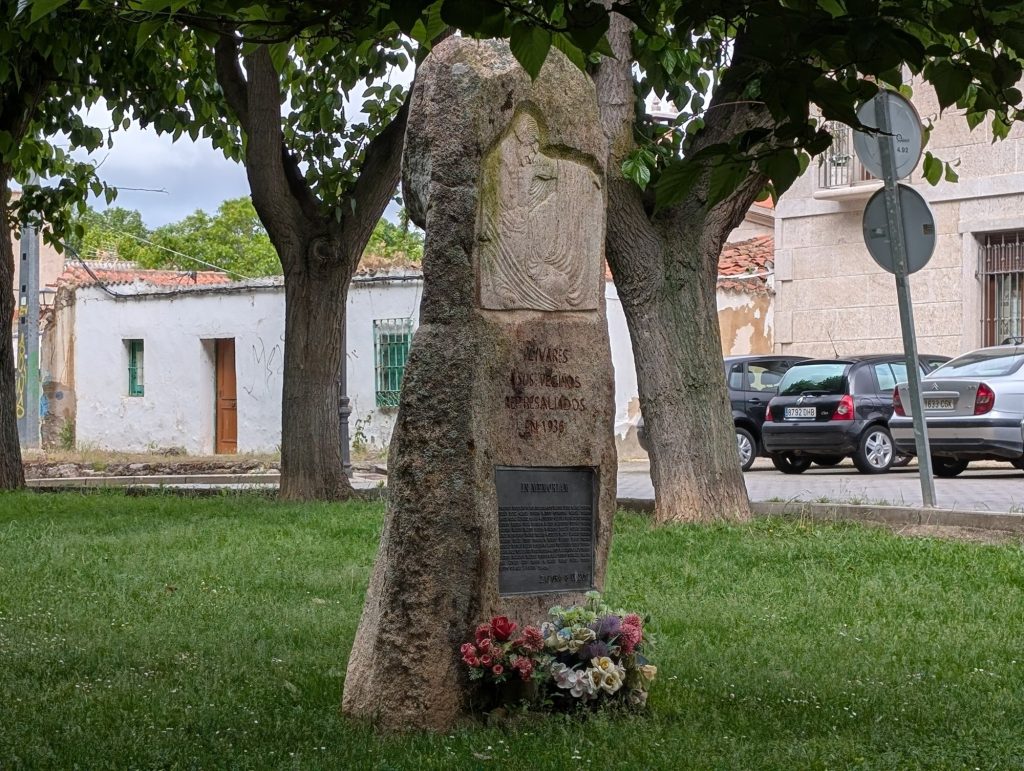
Yet another monument to those who died during the Civil War in the 30s.
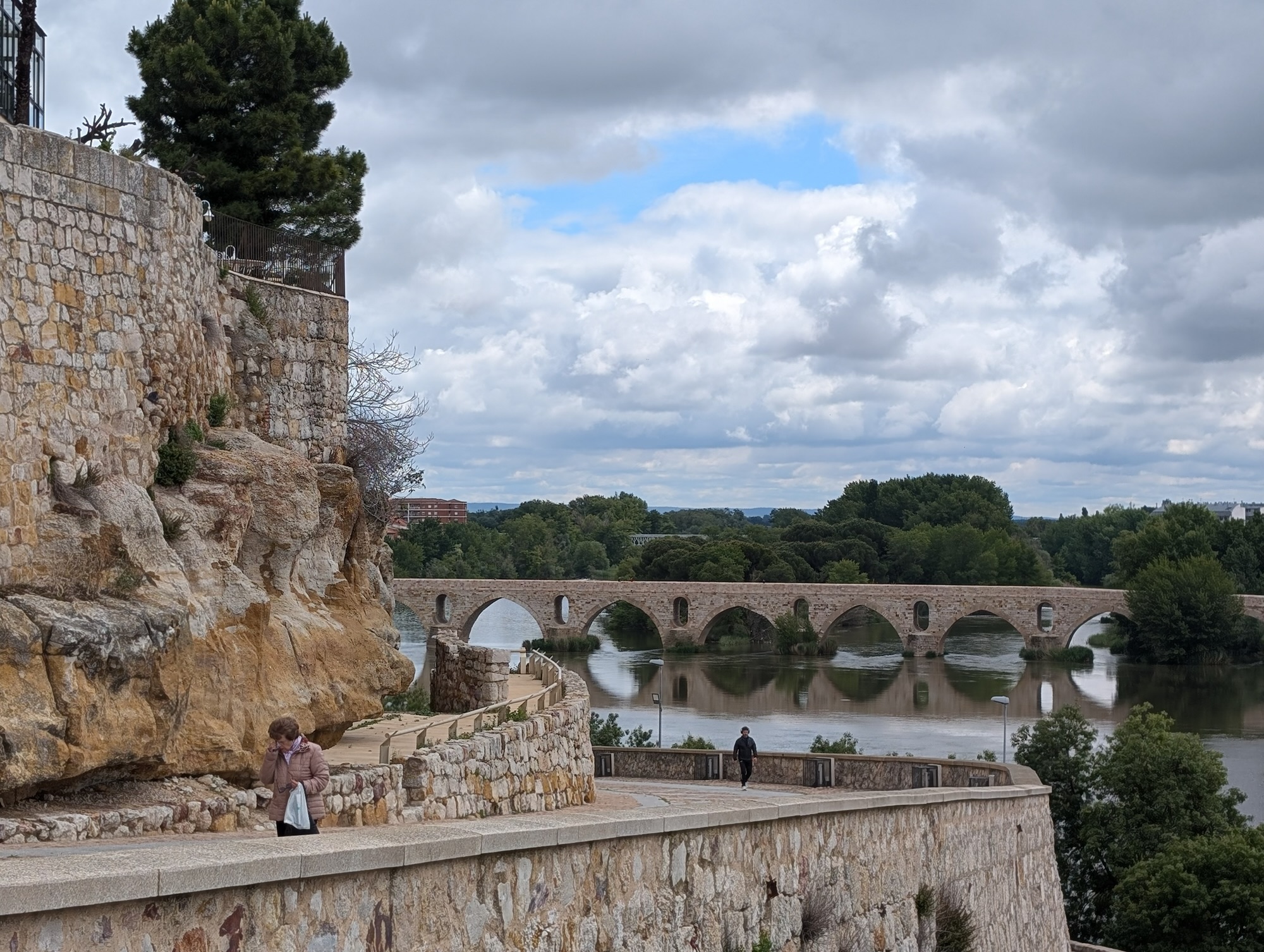
Another view of the beautiful stone bridge across the Rio Duero.
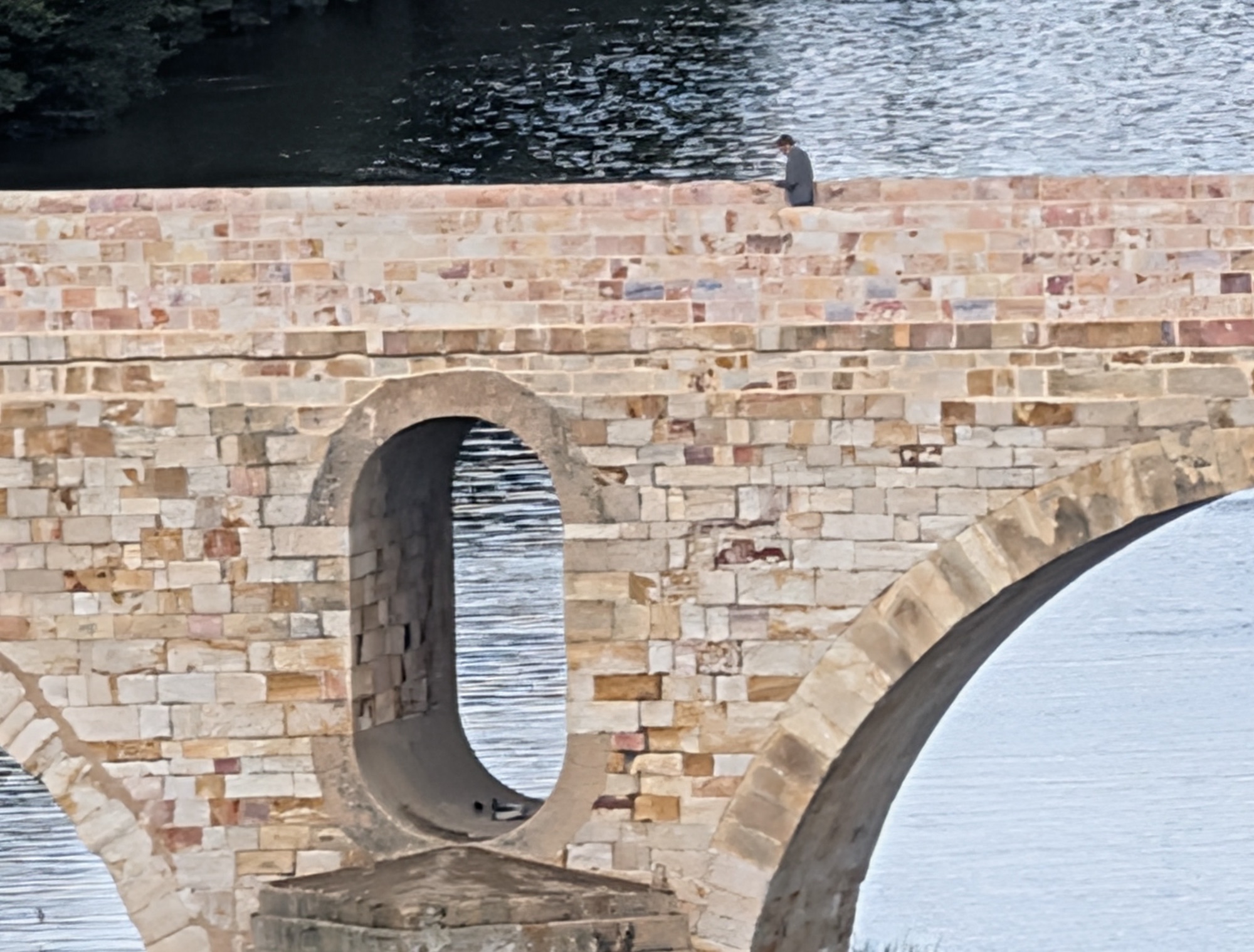
Taken with telephoto. Man walking on the old stone bridge.
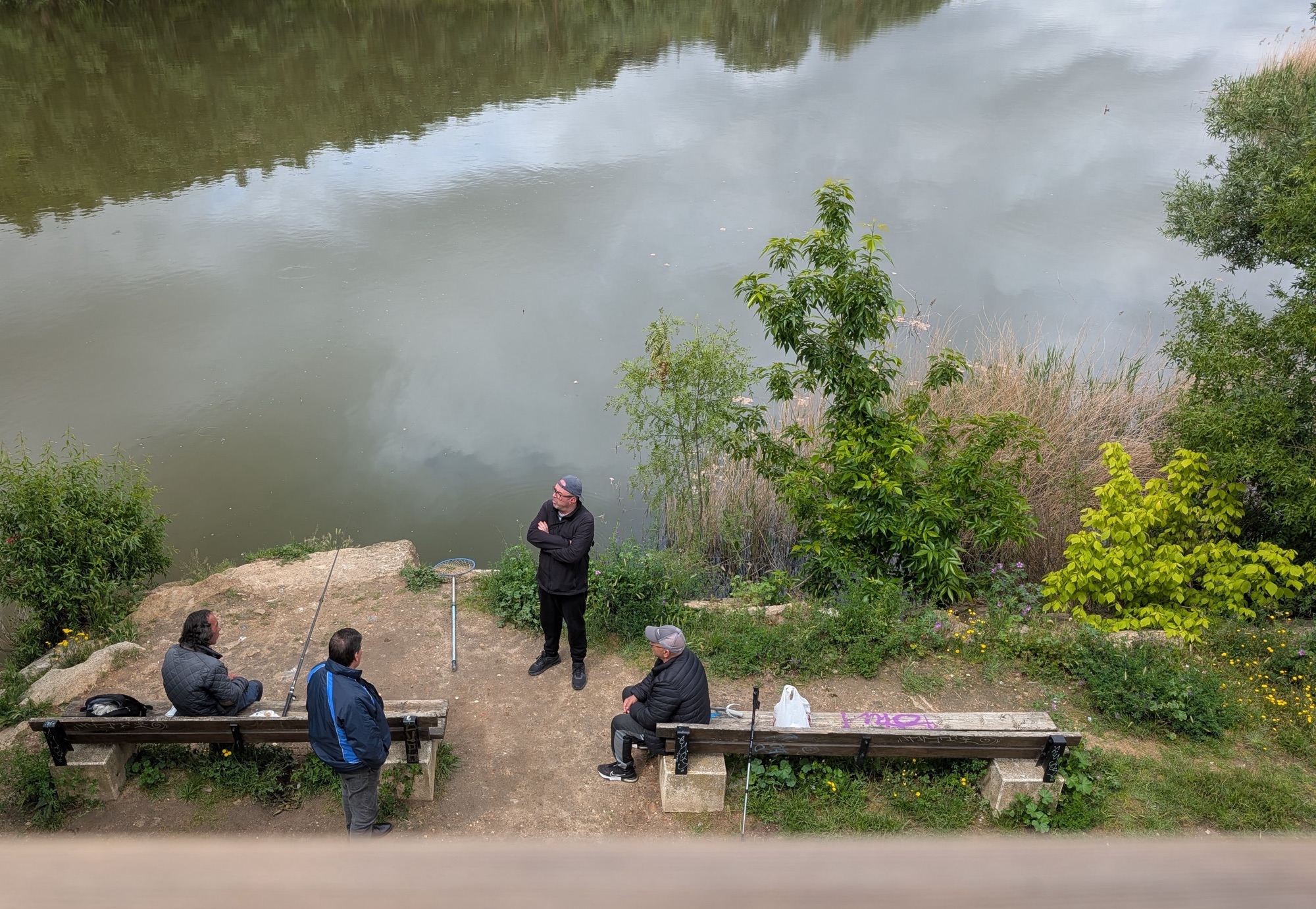
Walking this morning, we came across a fisherman and other men hanging out together. They encouraged us to climb a tall structure that allowed a look out. For birds?? We took their photo from way up there.
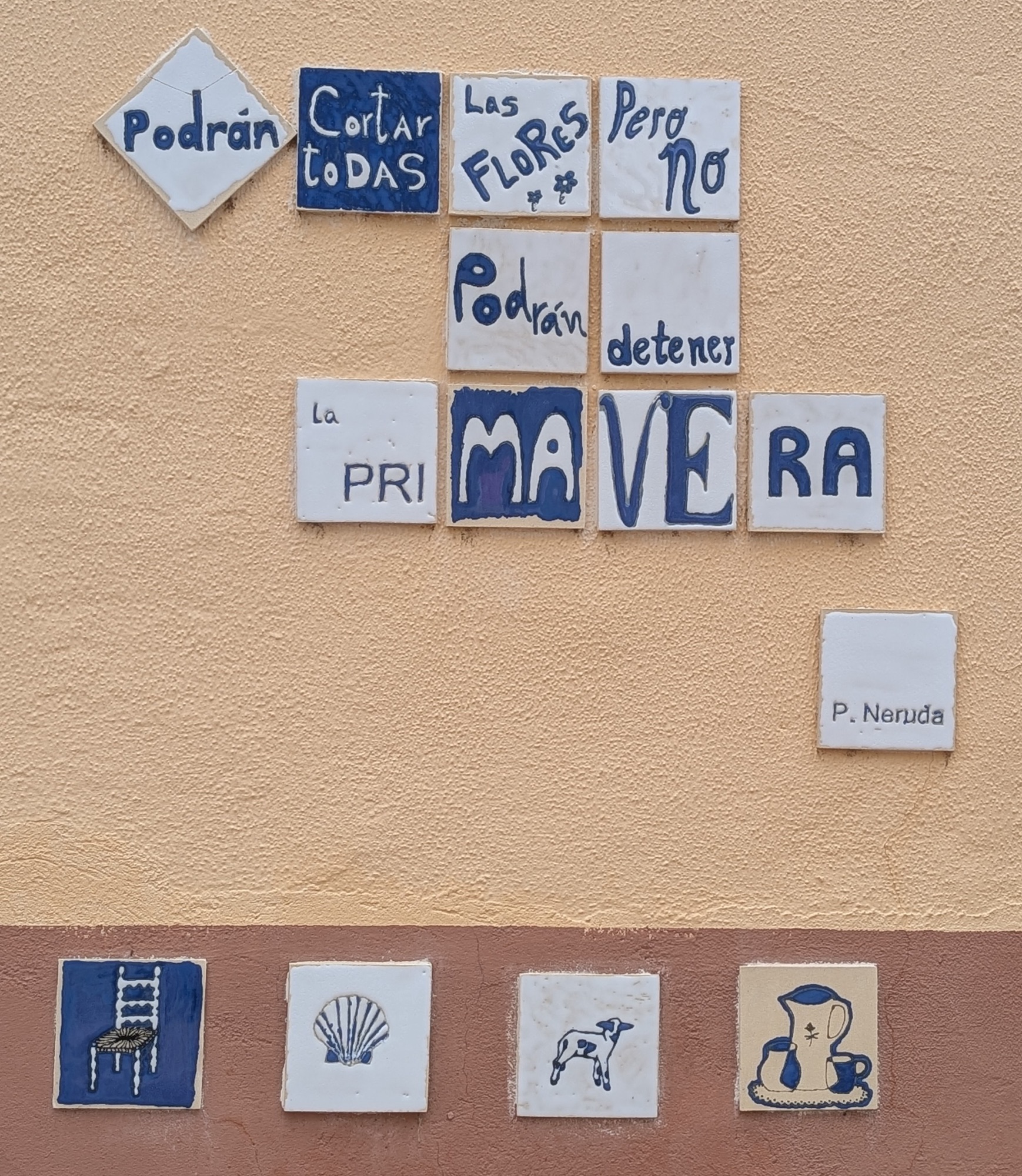
On a wall. Poem by Neruda. “They can cut all the flowers but they cannot stop the spring.”

Living like a local

We are into a routine of staying in one place for a few days to a week after we finish a Camino. Over the years we’ve stayed in Madrid, Lisbon, Gijón, A Coruña, Muxia, Oviedo, Llanes, Pontevedra, Vigo (plus Lucca when we walked on the Via Francigena in Italy). An interesting mixture of very large, very small, touristy, non-touristy towns. Our favorites so far have been Gijón (large but with a small walkable center and very non-touristy) and Llanes (tiny). Those are both on the Camino del Norte, on the Atlantic coast in northern Spain, with great walking along the ocean.

This year we chose Zamora. It sounded like a nice town and it was in a convenient location. No ocean walks but impressive river paths. Zamora is not among our favorites, but it has been a pleasant place to live for a week. In a way it doesn’t matter where we are. We love Spain so much and enjoy pretending to simply live here and do our usual routines. Of course, it’s impossible to really do that but we try.

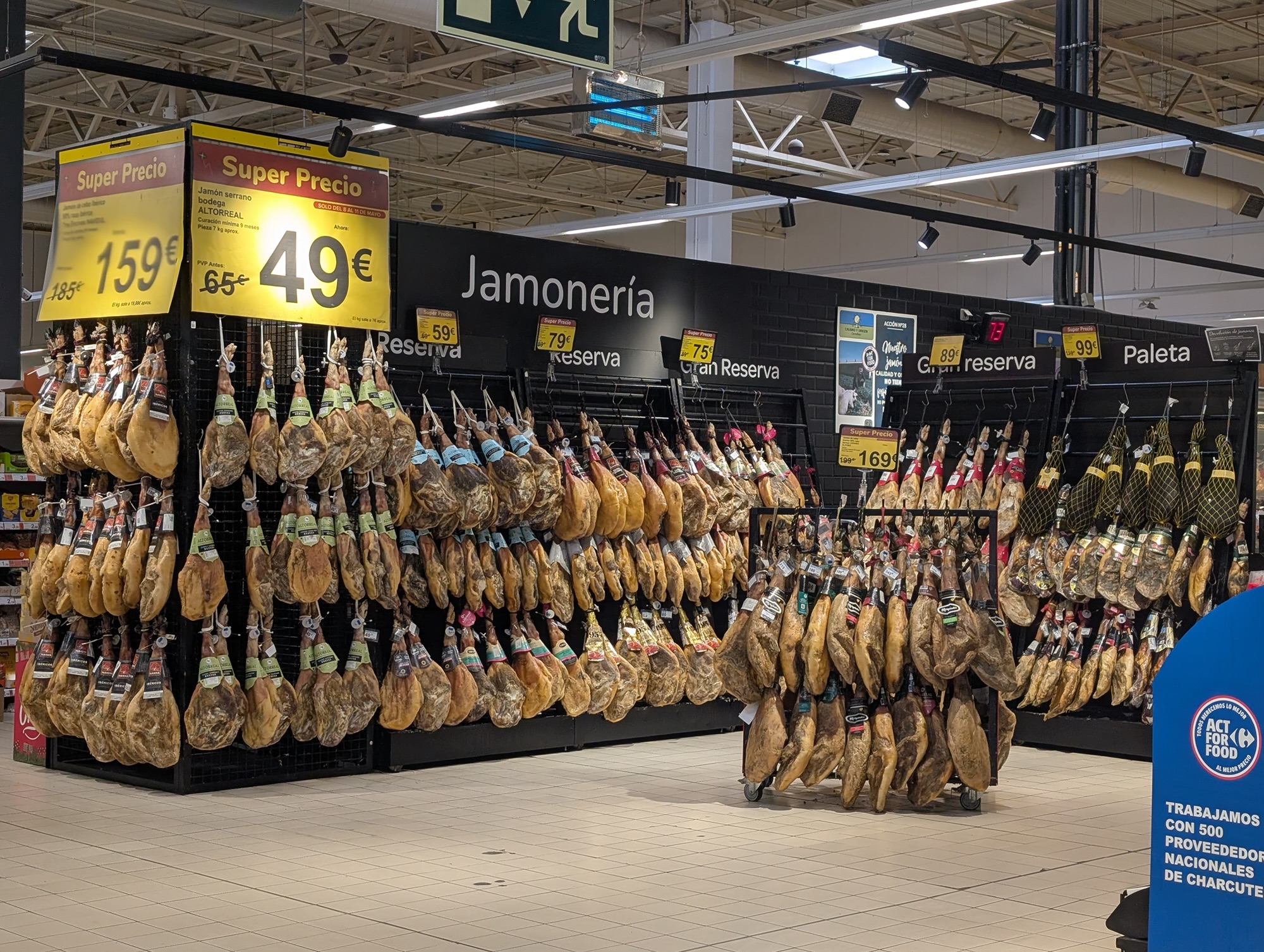
Yesterday we walked to the Carrefour Supermarket. We liked the Carrefour grocery store in Palencia so decided it would be worth the 2 mile round trip walk to go to the one here. We were shocked how huge it was. It was inside a shopping mall. It had clothes and appliances, a little bit of everything, as well as food. In other words it was similar to a Walmart and nearly as large. No telling how many small businesses it has shut down. I fear it won’t be many years before the small neighborhood markets are gone here in Spain. Luckily we have a small DIA market a 3 minute walk from our apartment where we go every day. Strangely, for most things, we like the DIA food selection better than the Carrefour.

One section in the Carrefour you wouldn’t find at Walmart in the states. Spanish ham!
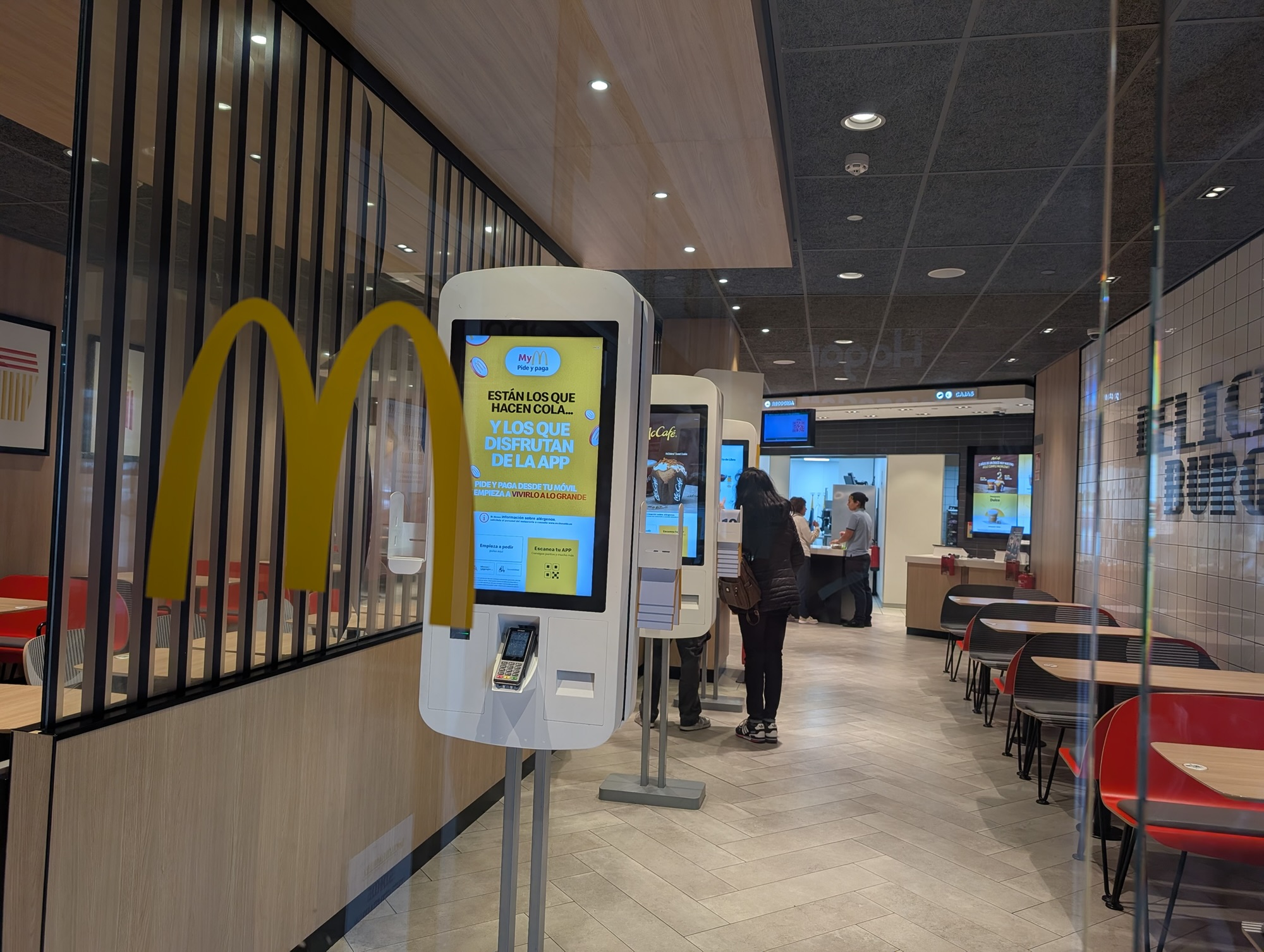
A McDonald’s we passed in the shopping center. Few employees needed. You just stand at the big white phone-like things and place your order and pay with your phone.
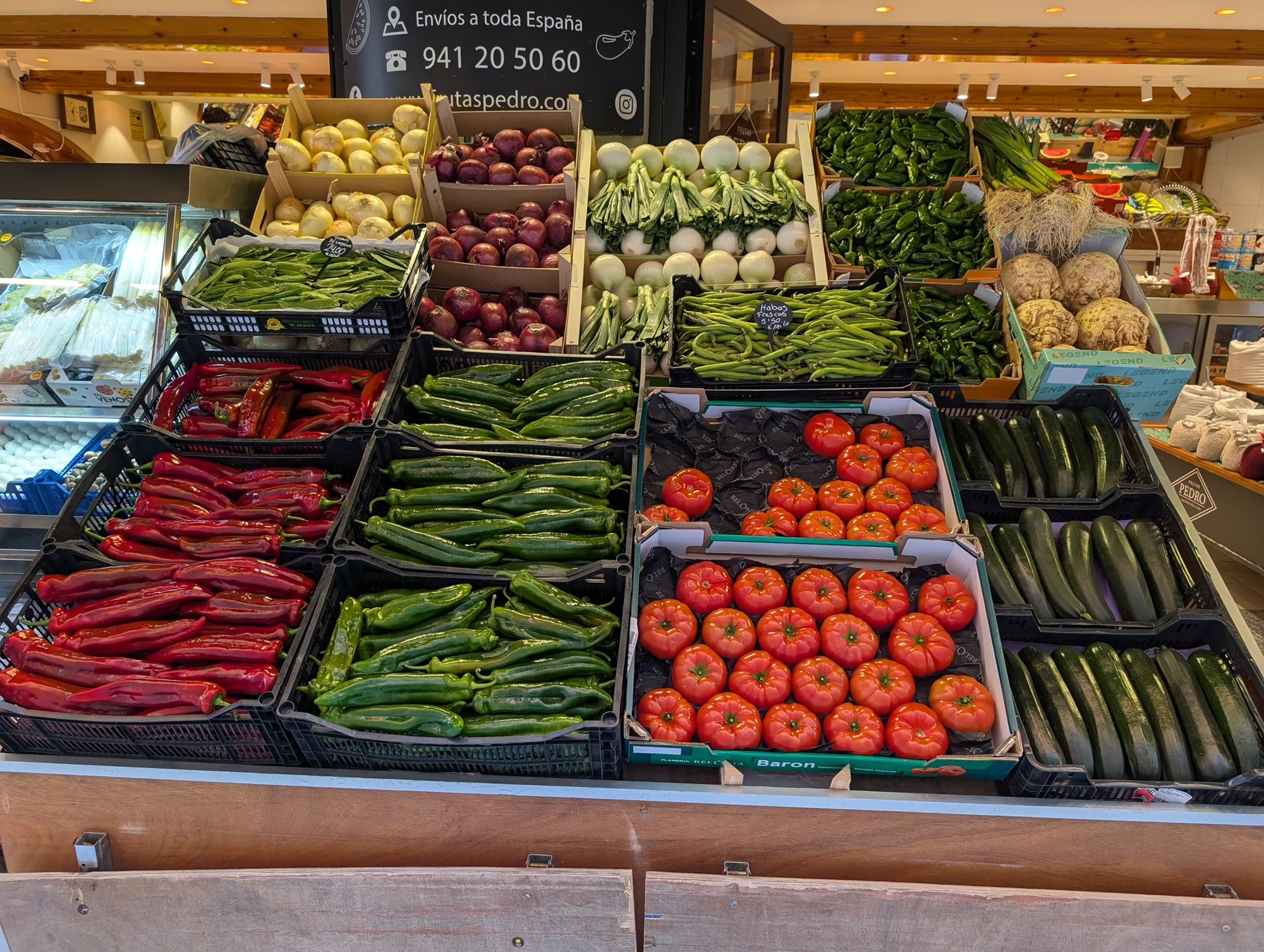
Nearly every grocery store has beautiful displays of fruits and vegetables.
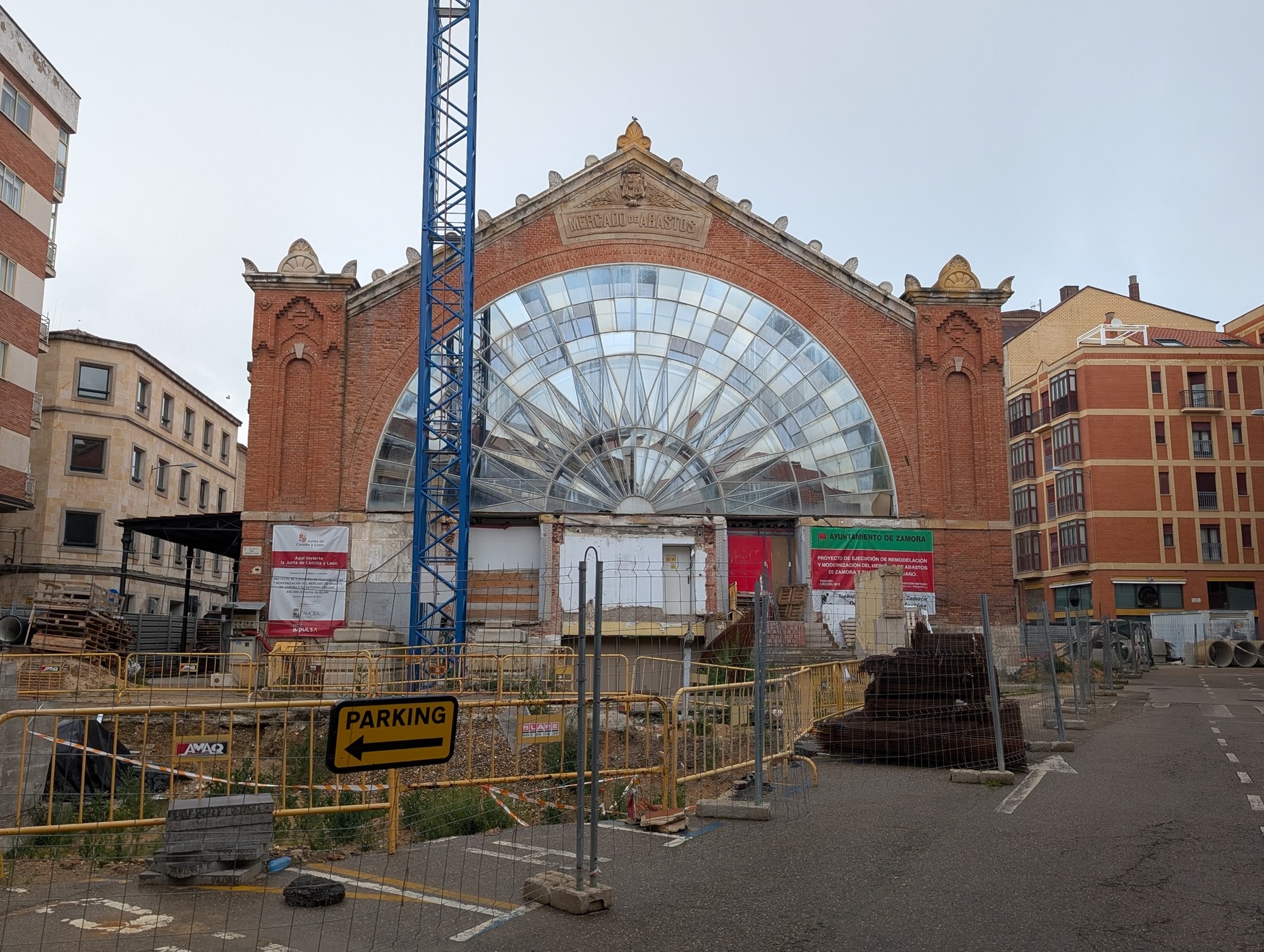
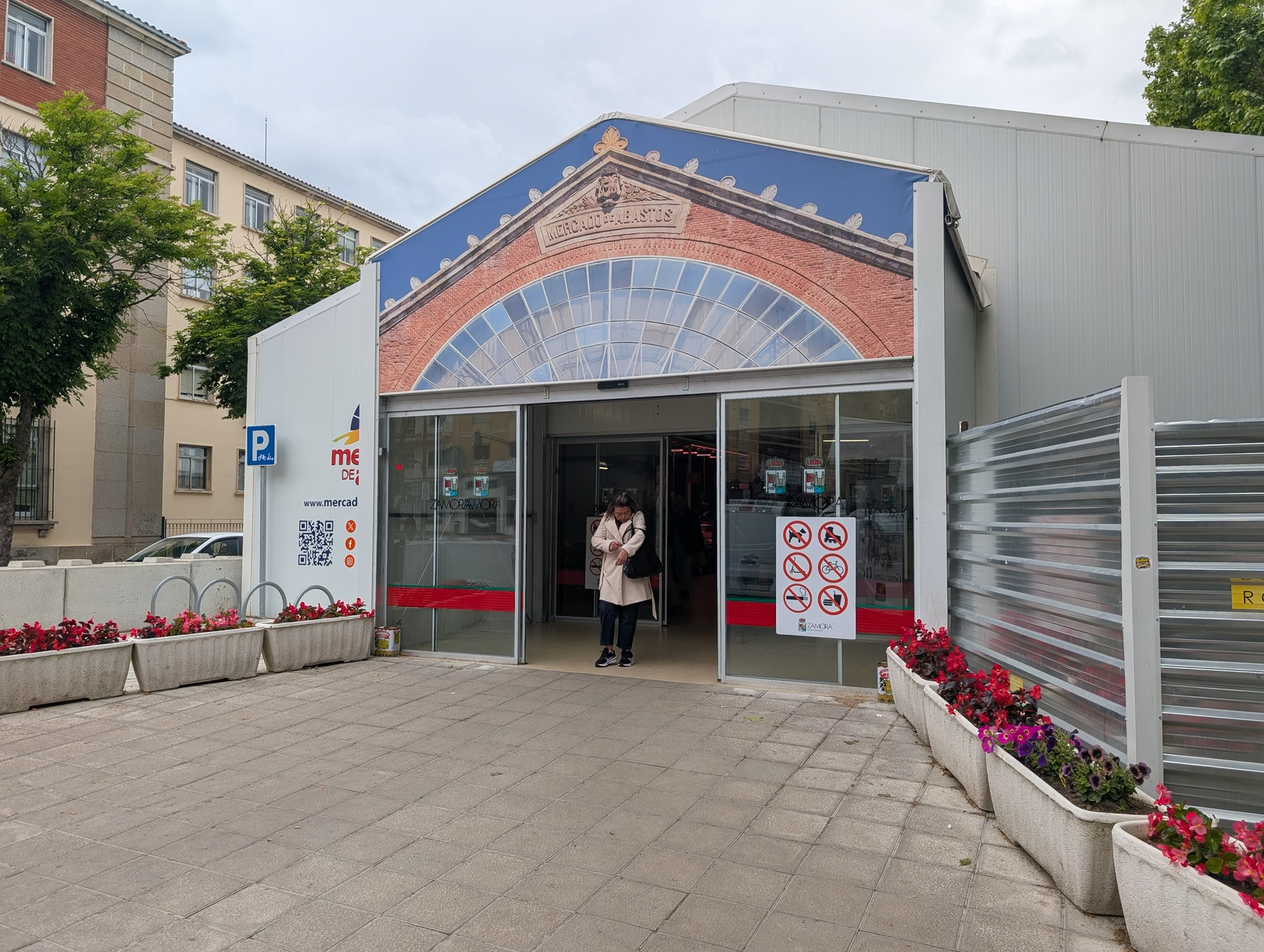
Zamora, like most Spanish towns of any size, has a market with stalls that sell fresh produce and meat and seafood and such. Open every day except Sunday. We were disappointed to find that the one in Zamora is closed down due to renovation. It looks like a neat old building (above), but …
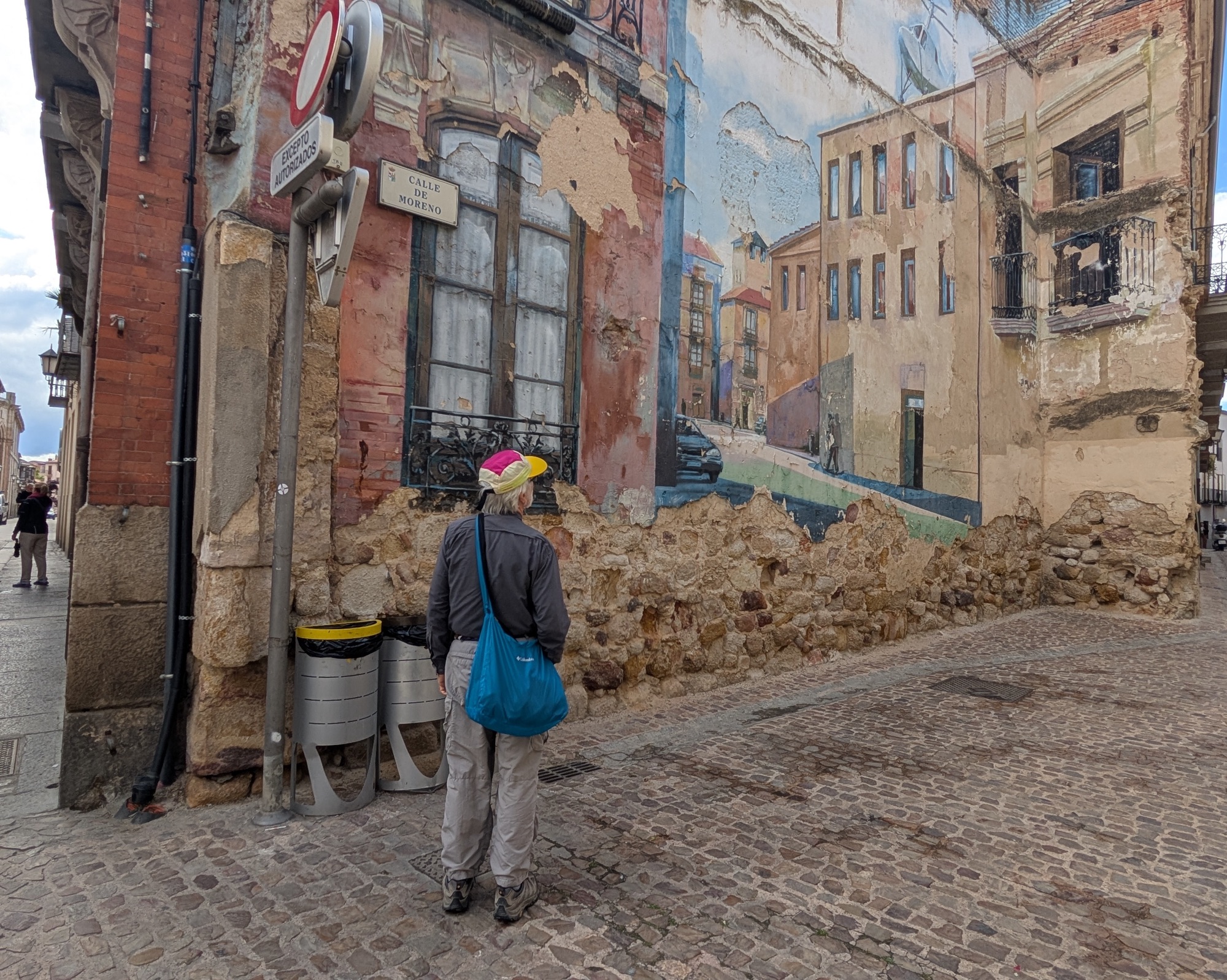
It is open at a temporary location a few blocks away. We got a kick out of the design they put up at the entrance of the temporary location. A photo or painting of the facade of the old location!
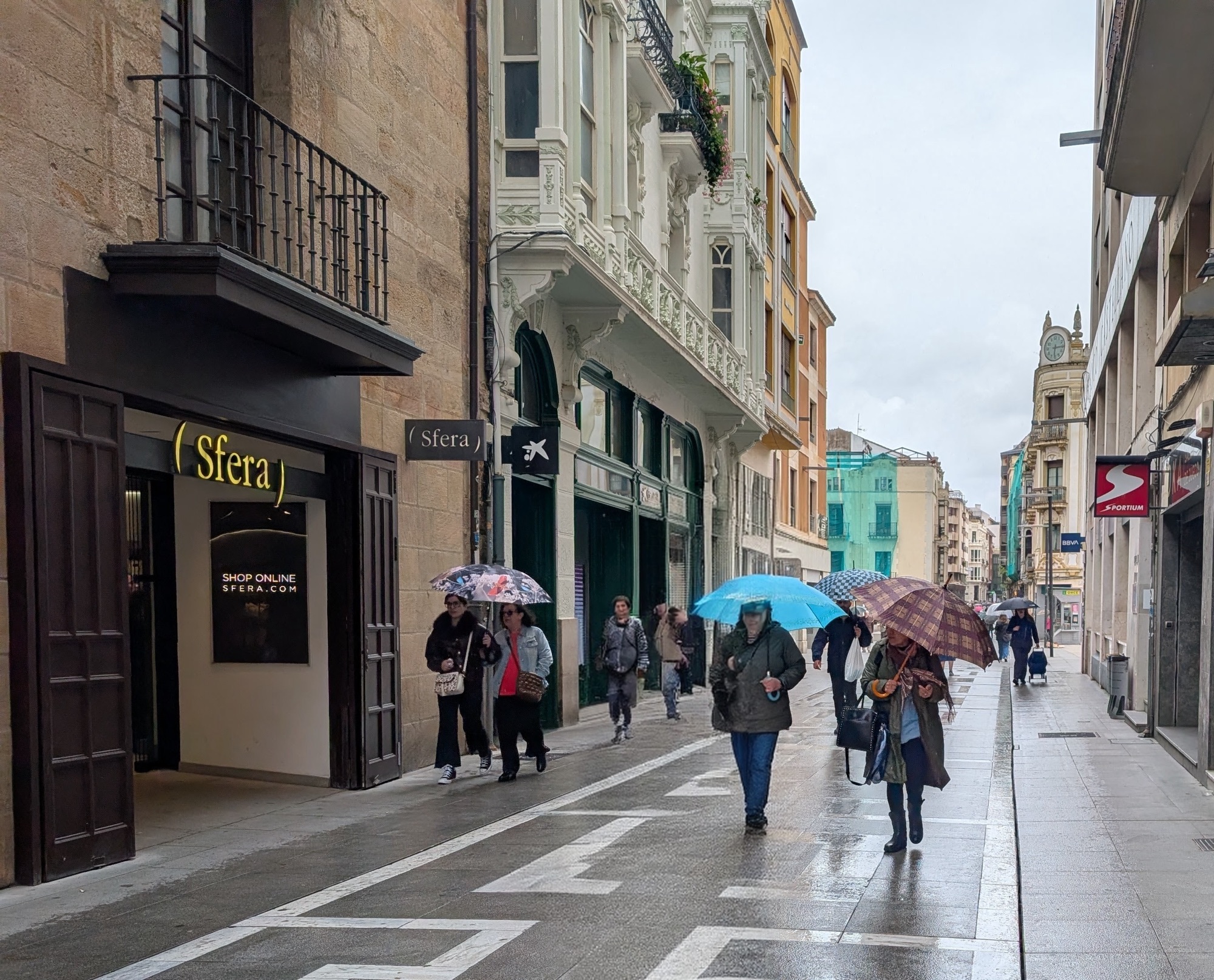
Rain, rain. Our landlady was complaining that Zamora was becoming like Galicia.
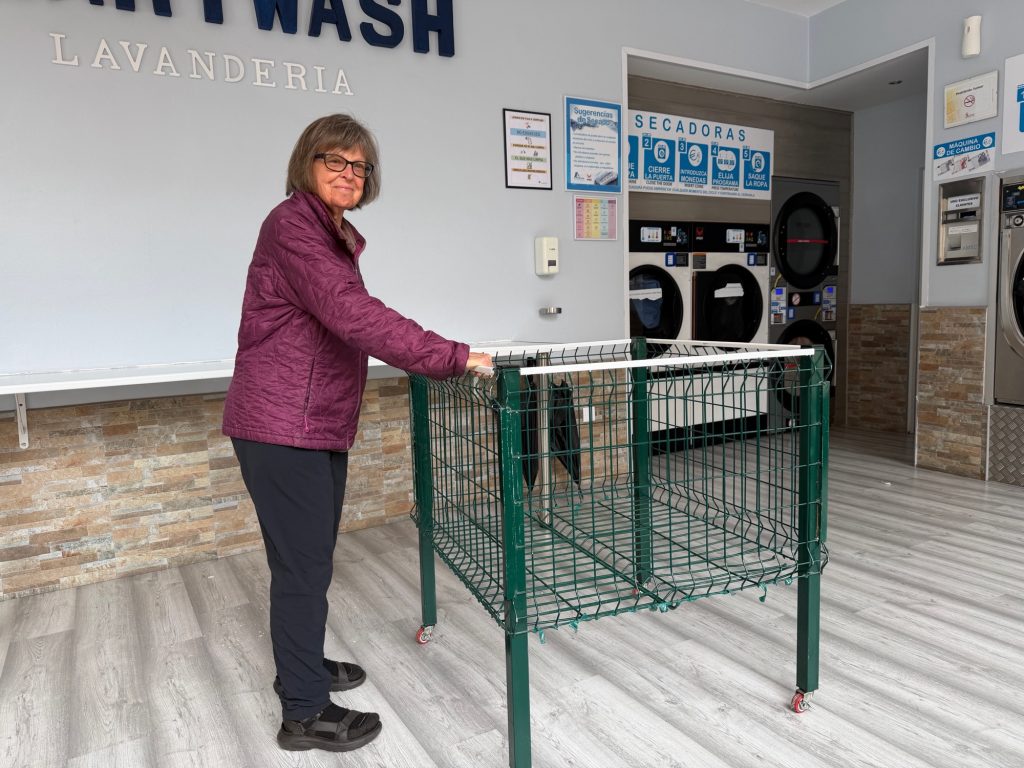
We have a washing machine in our apartment but no clothes dryer. (Those are rare in Spanish homes.) And it’s too rainy to hang clothes on the line outside one of our bedroom windows. So, we took our clean wet laundry to the laundrymat to use the dryers. In the above photo, this was the only basket in the laundrymat. At least it would hold a lot of laundry!

May 10: A day in Zamora

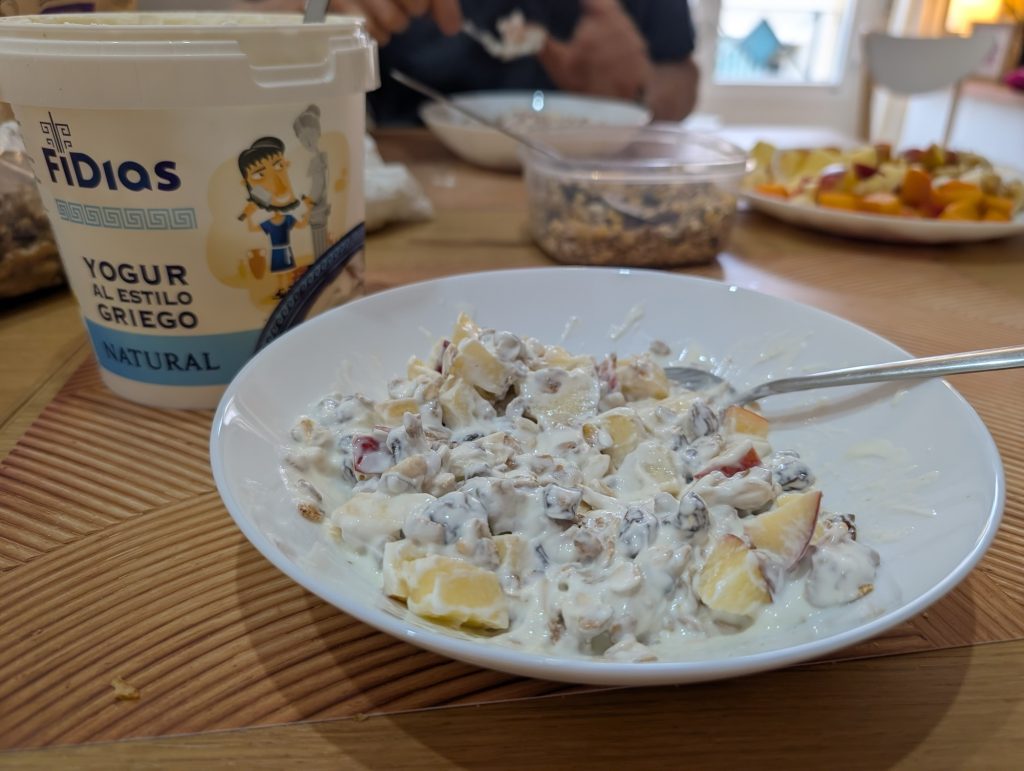
We had a leisurely Sunday morning hanging out in the apartment. Coffee with our usual morning games: NY Times Crossword (not too hard with autocheck), Connections, Bracket City, and Quintalist. Then breakfast: granola with the most amazing plain yoghurt we’ve ever eaten (at about 1/4 the cost of what we buy at Costco).

Then we did some food shopping and then we cooked a yummy lunch.

Later we walked for three hours on the Camino, Via de la Plata. That walk comes into town from the south. Photos below were taken when the sun was out but much of that walk was in heavy rain.

We’ve used our rain gear here in Zamora more than we ever did when we were actually walking the Camino. Weather here changes constantly. Sun then rain then sun then rain … . Usually the rain is light but sometimes it is hard. It’s been quite chilly. Highs have been in the low 60s and breezy. Our Airbnb owner complained that Zamora was becoming like Galicia.

While we were out of town, after the rain stopped, while we were still walking, I called my sweet mom back in Albuquerque. Mother’s Day!

After we got back into town we stopped at an ice cream store named “Unconventional World” because the sign said they had unconventional ice cream. I had a Dulce de Leche cone (basically caramel, smooth and creamy) and Charlie had mint chocolate chip. Not particularly unconventional, but we might just go back!

Breakfast
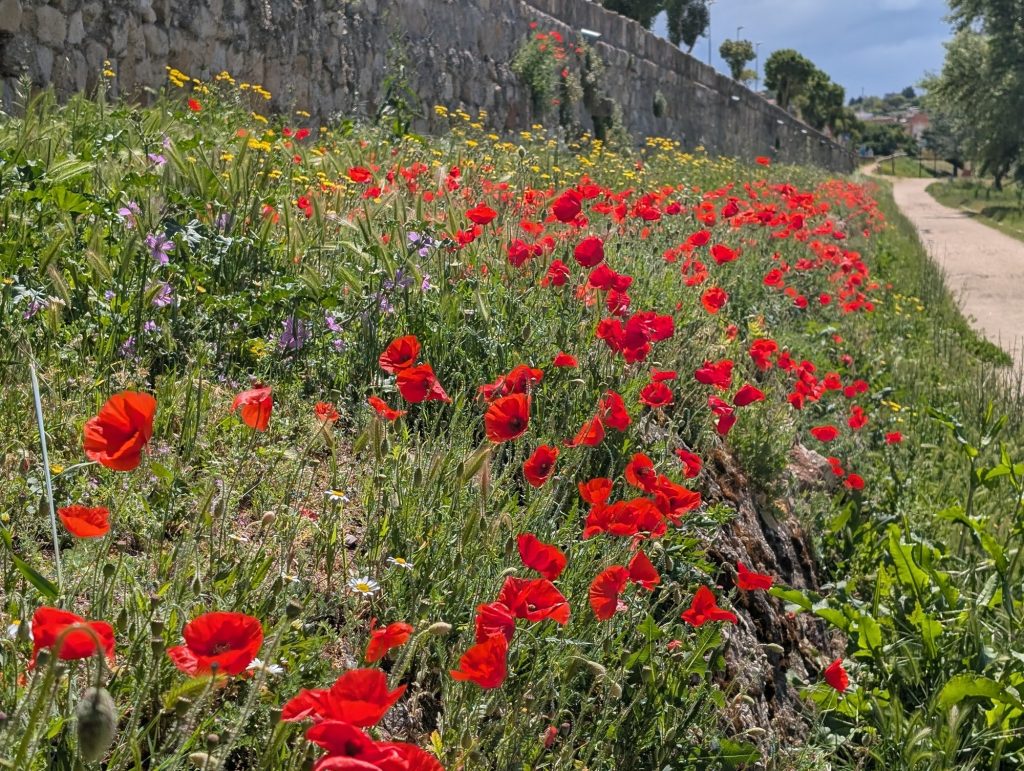
Poppies are blooming everywhere!
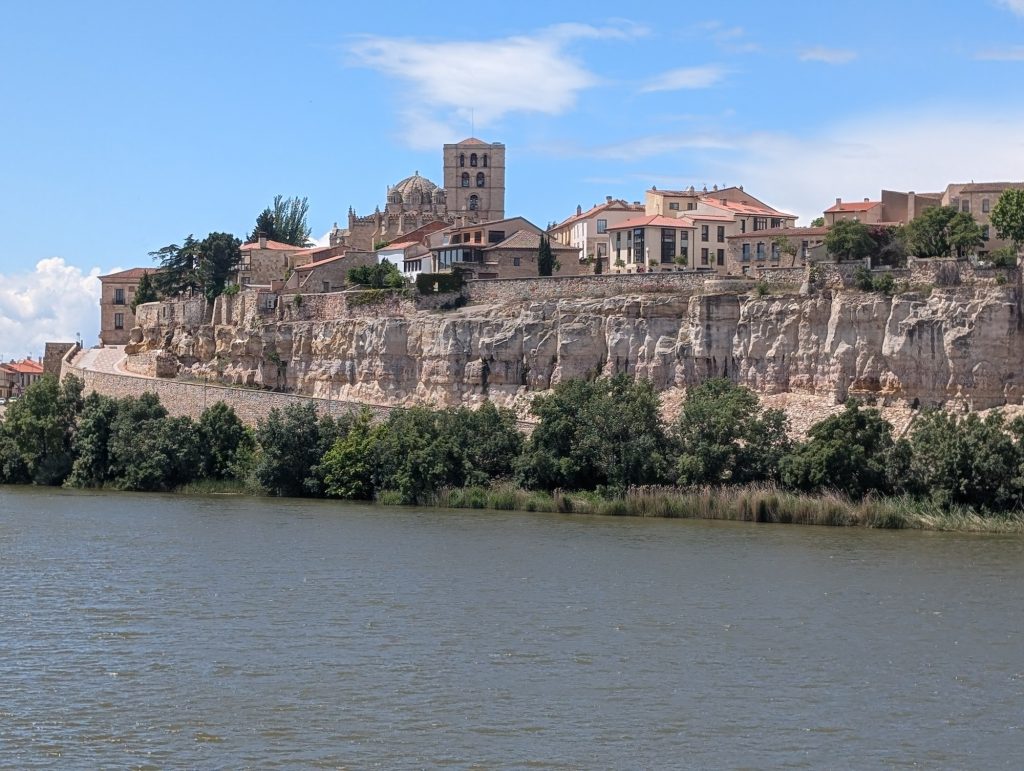
We walked along the river for a while. Looking back across the river toward Zamora. That tall building on the left is the cathedral. (We tried to go inside it a few days ago but it is closed for the month for some kind of renovation.)
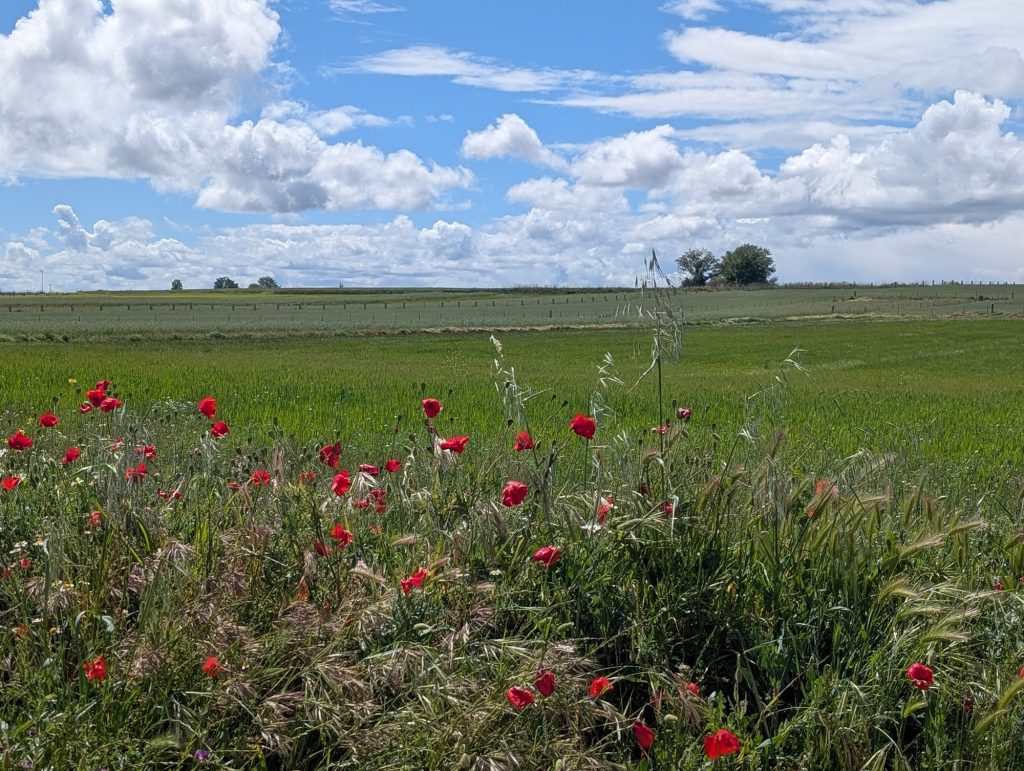
We finally got out of town and into the countryside. The meseta!
We had to turn around. Walking into town, this would be the first bar the pilgrims would come to after about 11 miles without services, so this is where most pilgrims would stop. We would for sure. Alas, it was closed when we passed it. I was hoping to get a Kas Limón.
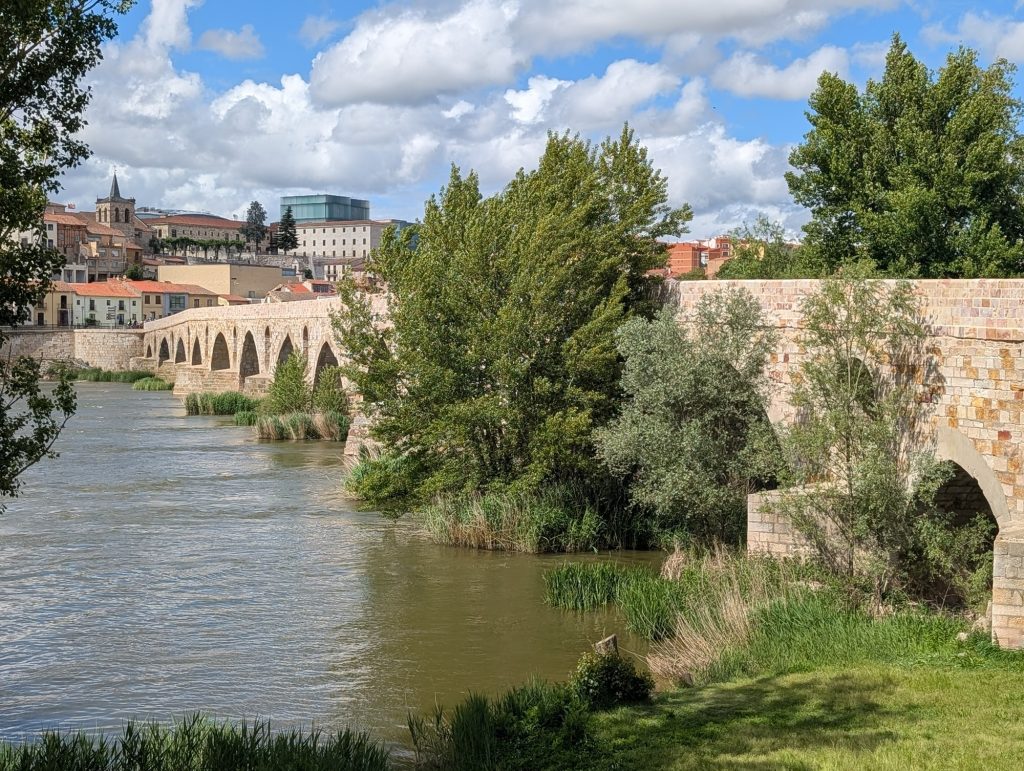
The bridge leading back into Zamora.

A mishmash of photos

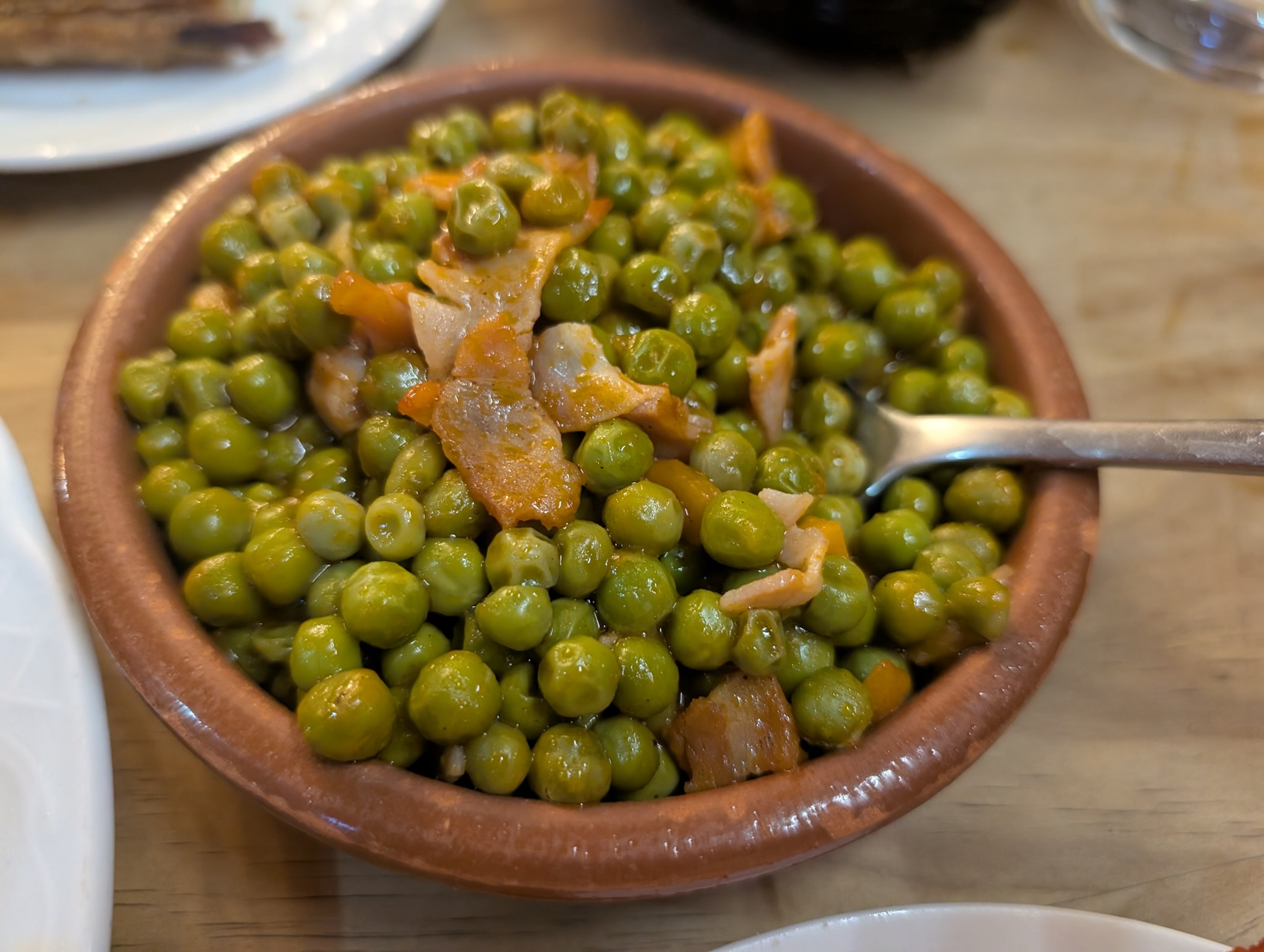
We are always thrilled to find guisantes (peas) on the menu. Doesn’t happen often.
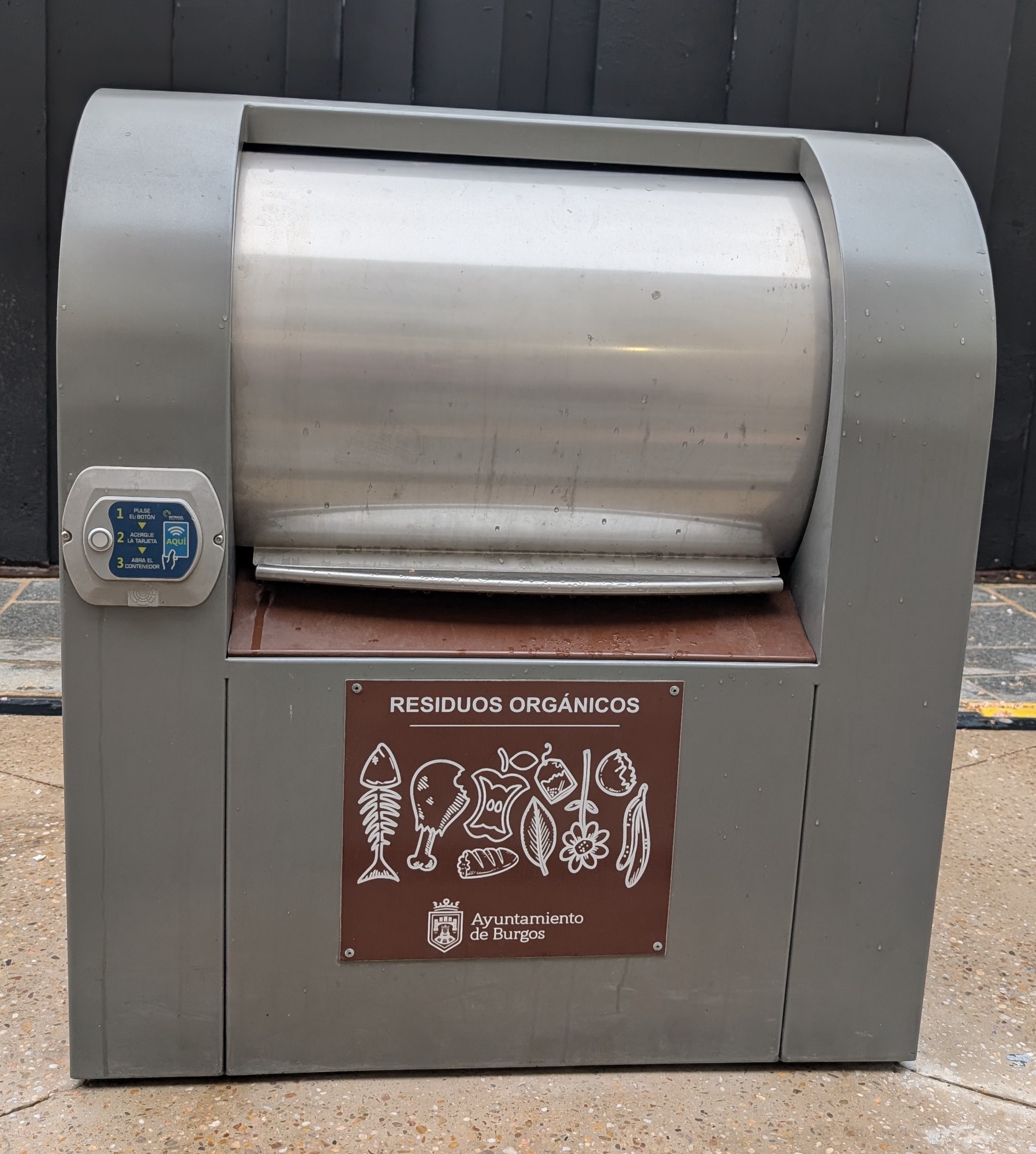
In Burgos you could put your compostibles in a bin on the street. It required a special card to open it. I’m not sure if you’d have to pay to get the card or maybe just go through some kind of orientation?
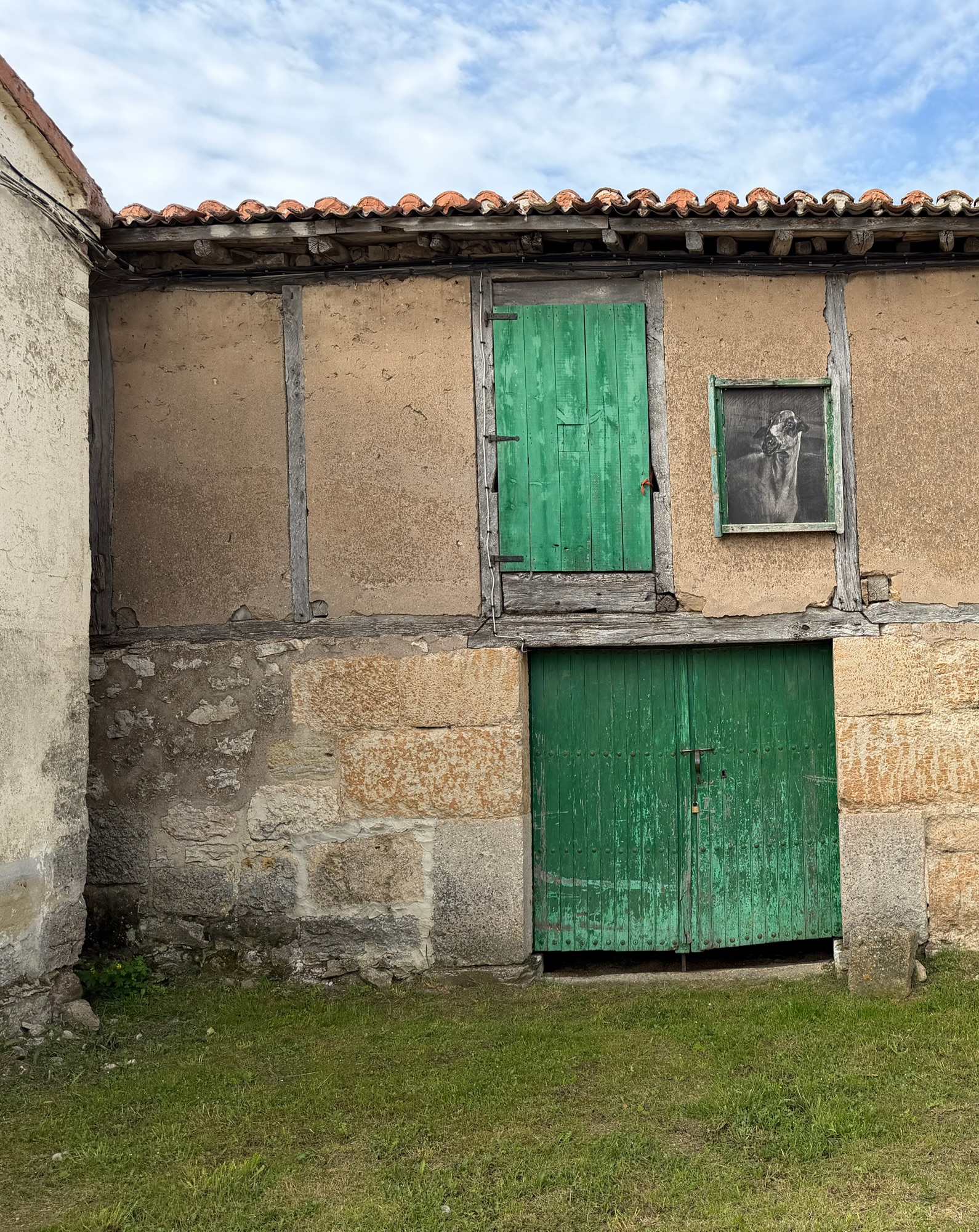
On the walk into Atapuerca. A goat’s portrait on the outside of a barn. I’d love to know the story behind that.
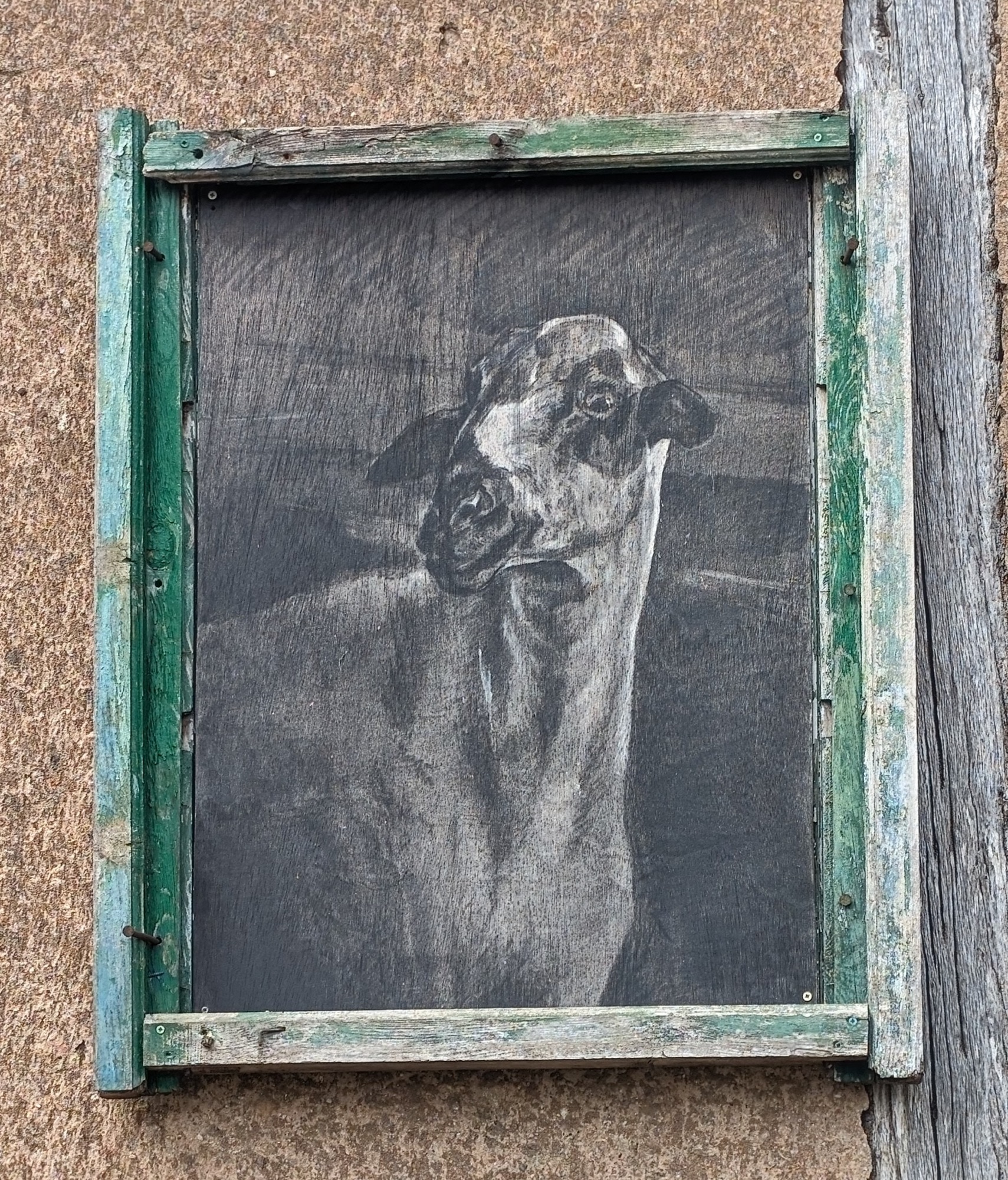
Close up of the goat. (Not absolutely sure it is a goat.)
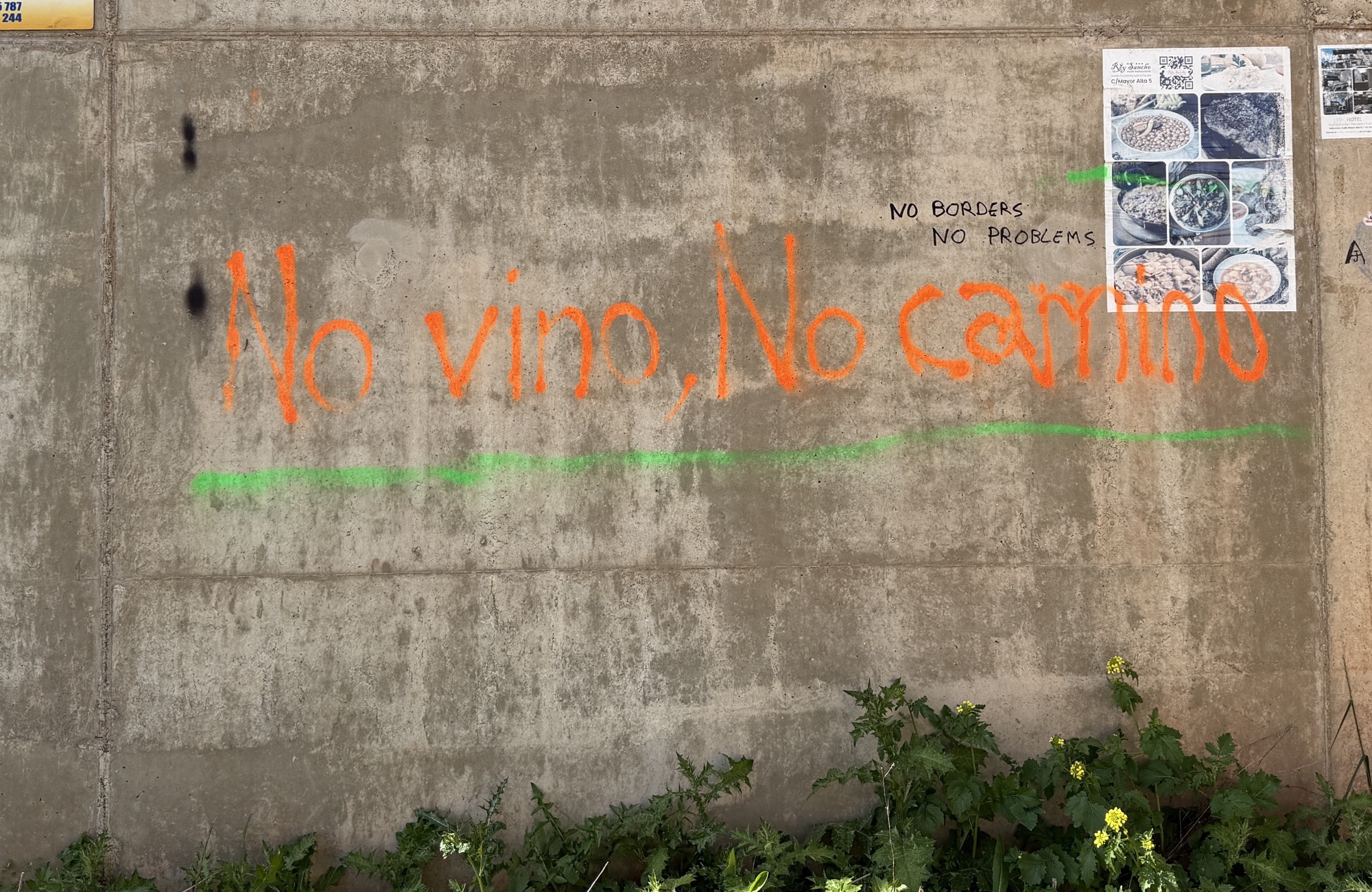
Graffiti in a tunnel. Charlie and I aren’t big wine drinkers, but it seems a lot of the pilgrims we meet or read on the forum feel this way. Our motto would be “No café con leche, no Camino” but it doesn’t quite have that poetic punch.
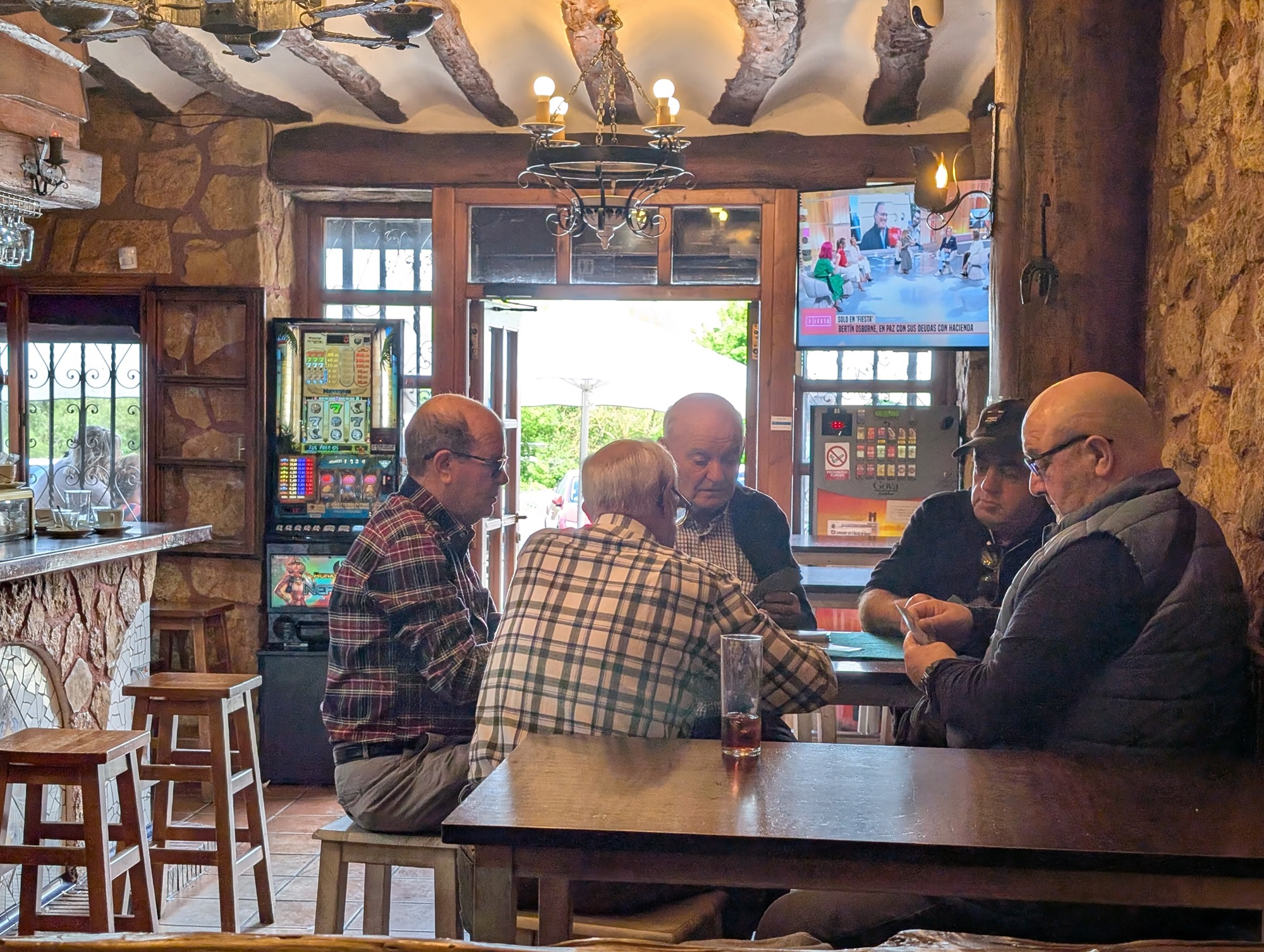
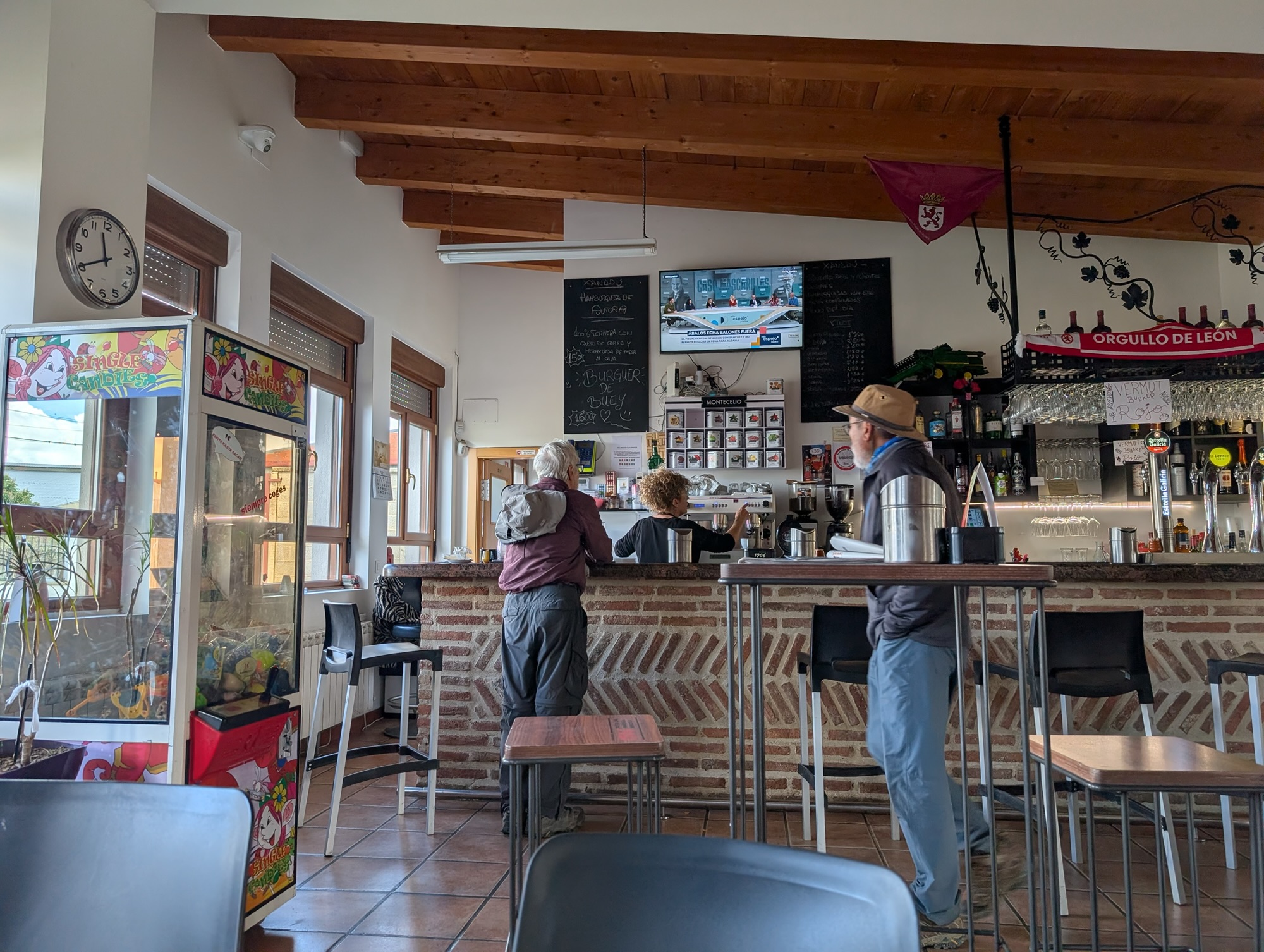
In the bar we hung out in in Villafranca Montes de Oca. Every year I post a photo like this: men playing cards in a bar. We saw this happen a number of times on this trip. It probably happens in every town in Spain every day. My grandad used to go play dominoes at the filling station in Dora, New Mexico. He’d kid us and say he was “going to the office.” Of course, Grandaddy never worked in an office. He was a dry-land dairy farmer.

Shell

Our friends in Albuquerque, Moira and Henry, did the Camino to Santiago by car a number of years ago. This would have been sufficient for them to receive an Indulgence, assuming they went to the cathedral, said a prayer, and received confession and communion. No walking required. (Not to be confused with a Compostela, a certificate one gets only after walking 100k or more. And I don’t think useful for getting into heaven.)

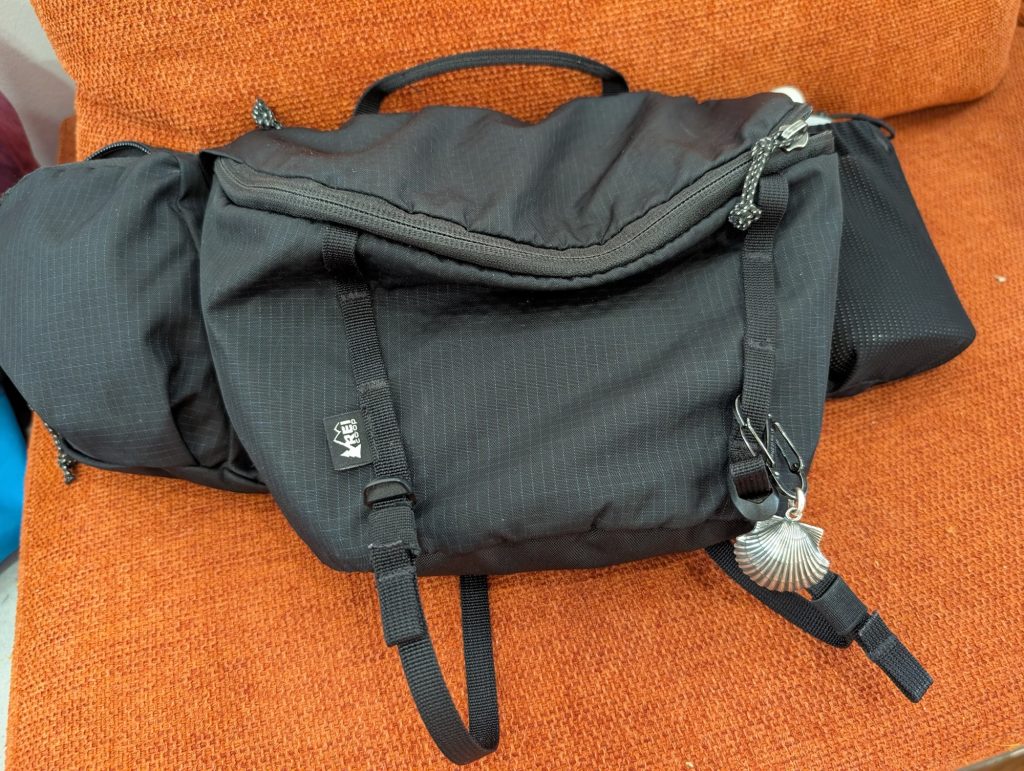
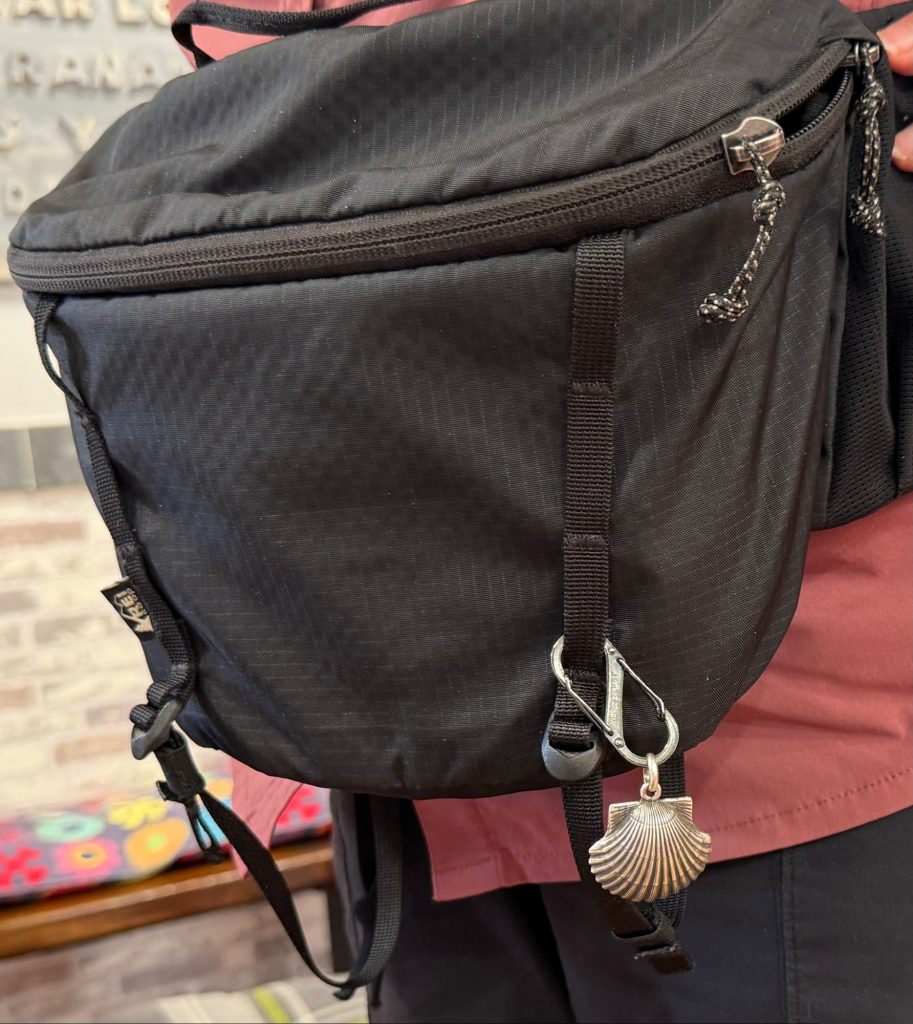
Moira bought a pretty scallop shell pendant then and, before we left on Camino this year, she gave it to me! I’ve enjoyed so much having it on this trip. I originally planned to have it on the back of my backpack, where people generally attach their Camino shells. But, since we used a bag transfer service, that didn’t make sense so I put it on my waist pack which I did walk with every day. Thank you, Moira.

April 7-9: First three days in Zamora

We took a two-hour bus ride from Palencia to Zamora on Thursday. Walked the mile from the bus station to our Airbnb with our packs and suitcase. It felt good to walk and get our first view of the city. Raquel was waiting to check us in and she made us feel very welcome. She kept saying “this is su casa“.

Our apartment is on one of the main streets in Zamora but it is a pedestrian street and we are on the 4th floor, so it is quiet. We spend a lot of time leaning out the window watching the locals stroll by. Today is Saturday and it is a bit of a party atmosphere. We’ve seen three bands of sorts in the street, all made up of mostly older men. We just took this video from our window a few minutes ago. Whistles and drums: https://photos.app.goo.gl/KsFWCDdN4Y415AVb7

This was when we were out walking earlier. Kazoos??https://photos.app.goo.gl/qYVjc6Cf7UqsLa917

Seems like a neat way for older men to spend their time.

Zamora, population 60,000, is on a less-traveled Camino called the Via de la Plata, a 620 mile walk which starts in Sevilla in southern Spain. About 1.6% of pilgrims reaching Santiago this year so far have walked this route. We talked with some of the Via pilgrims yesterday outside the municipal albergue. They seemed to be in great spirits. We plan to walk the Camino a few miles in and out of Zamora while we are here.

Gronze, our Camino guide, says: We enter Zamora via the medieval bridge over the Duero River; the city is considered the capital of Romanesque architecture, boasting the highest concentration of churches and monuments of this style in the world.

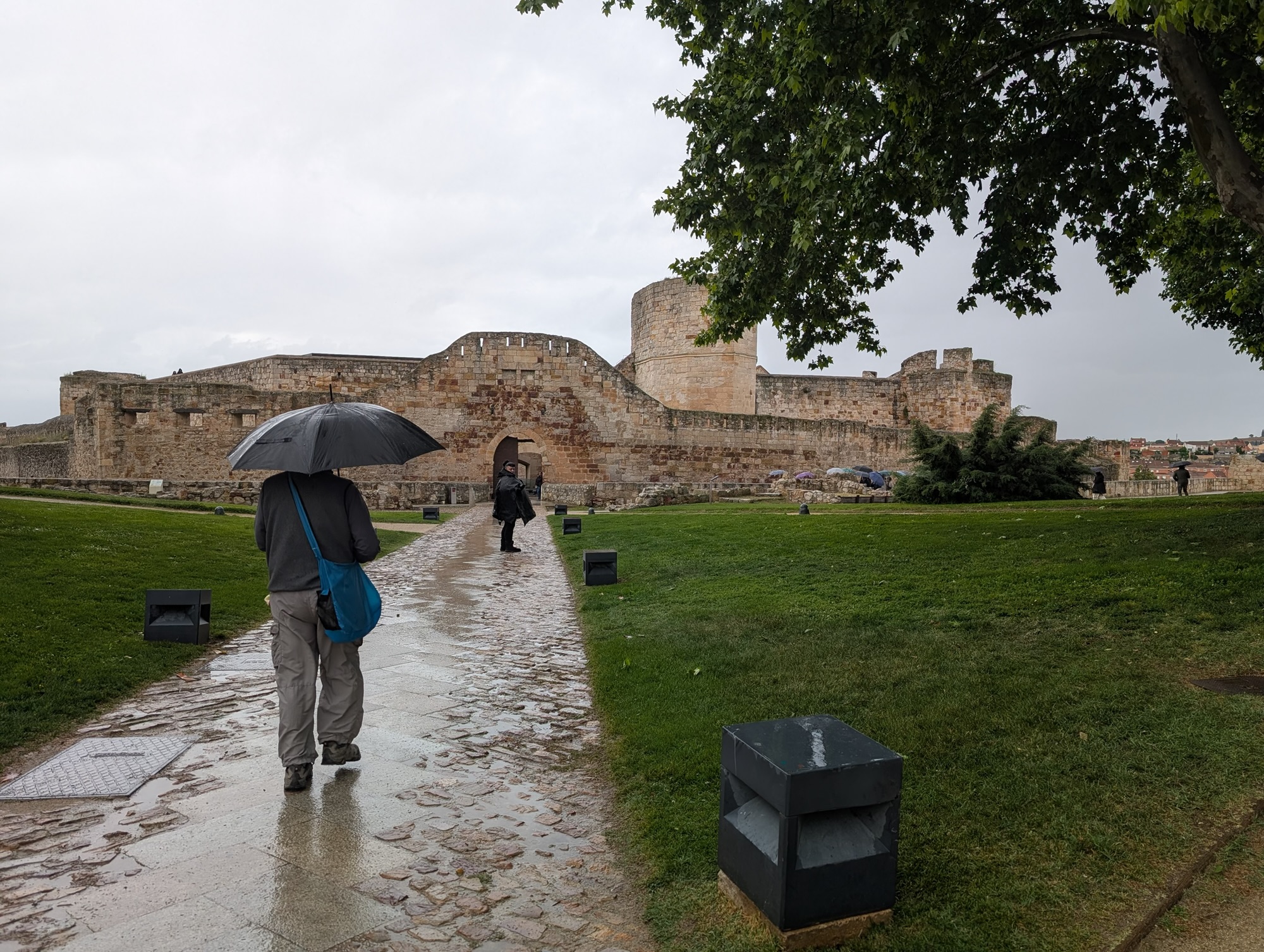
There are 20 Romanesque churches here. It has an impressive old town. We visited the castle today (in pouring rain, alas).

In addition to popping in and out of churches, much of our first three days here has been spent food shopping and cooking. We love shopping in Spanish grocery stores and being able to cook in an apartment.

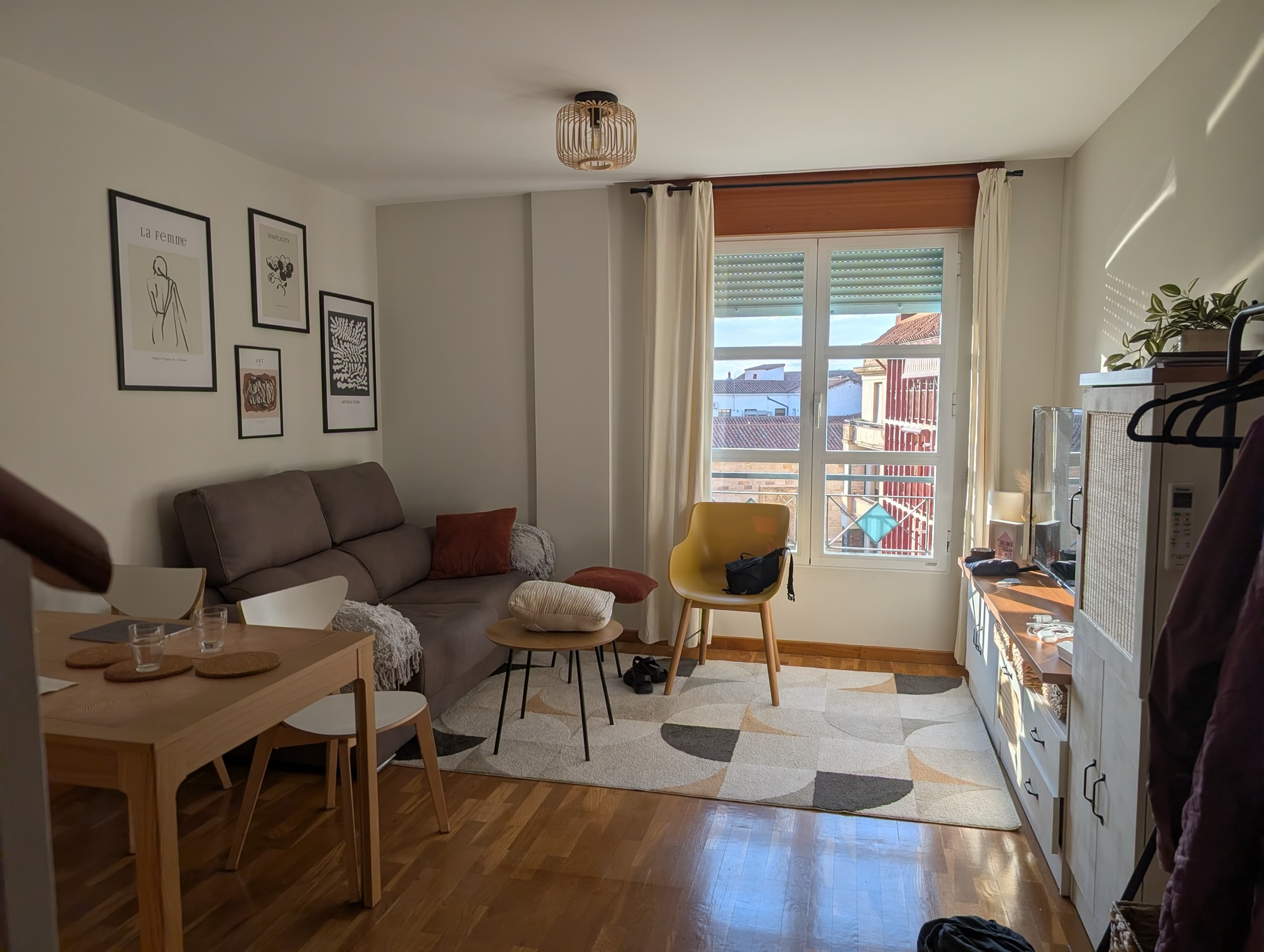
Our apartment living room.
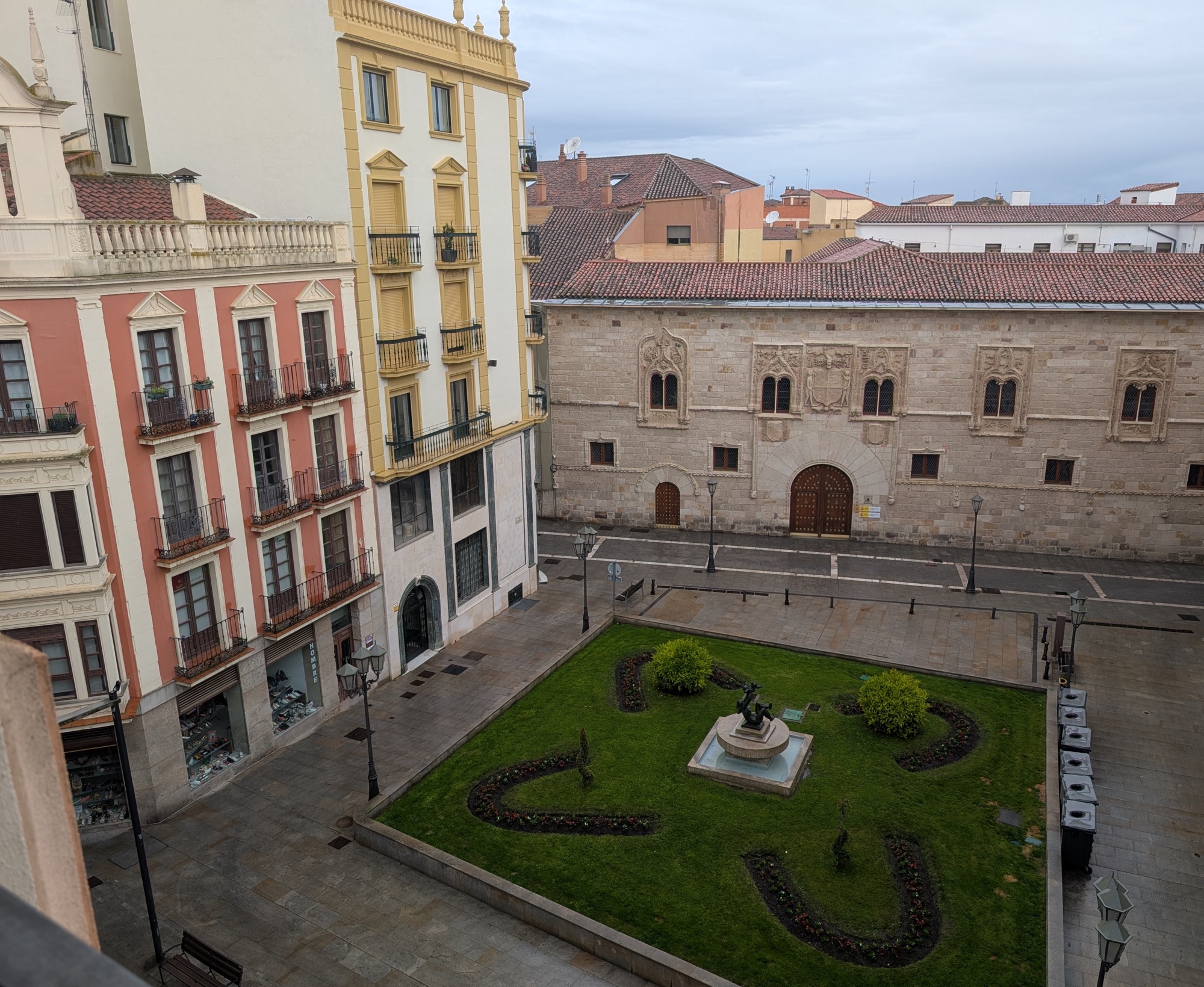
View out the window. That’s a court house across the square.
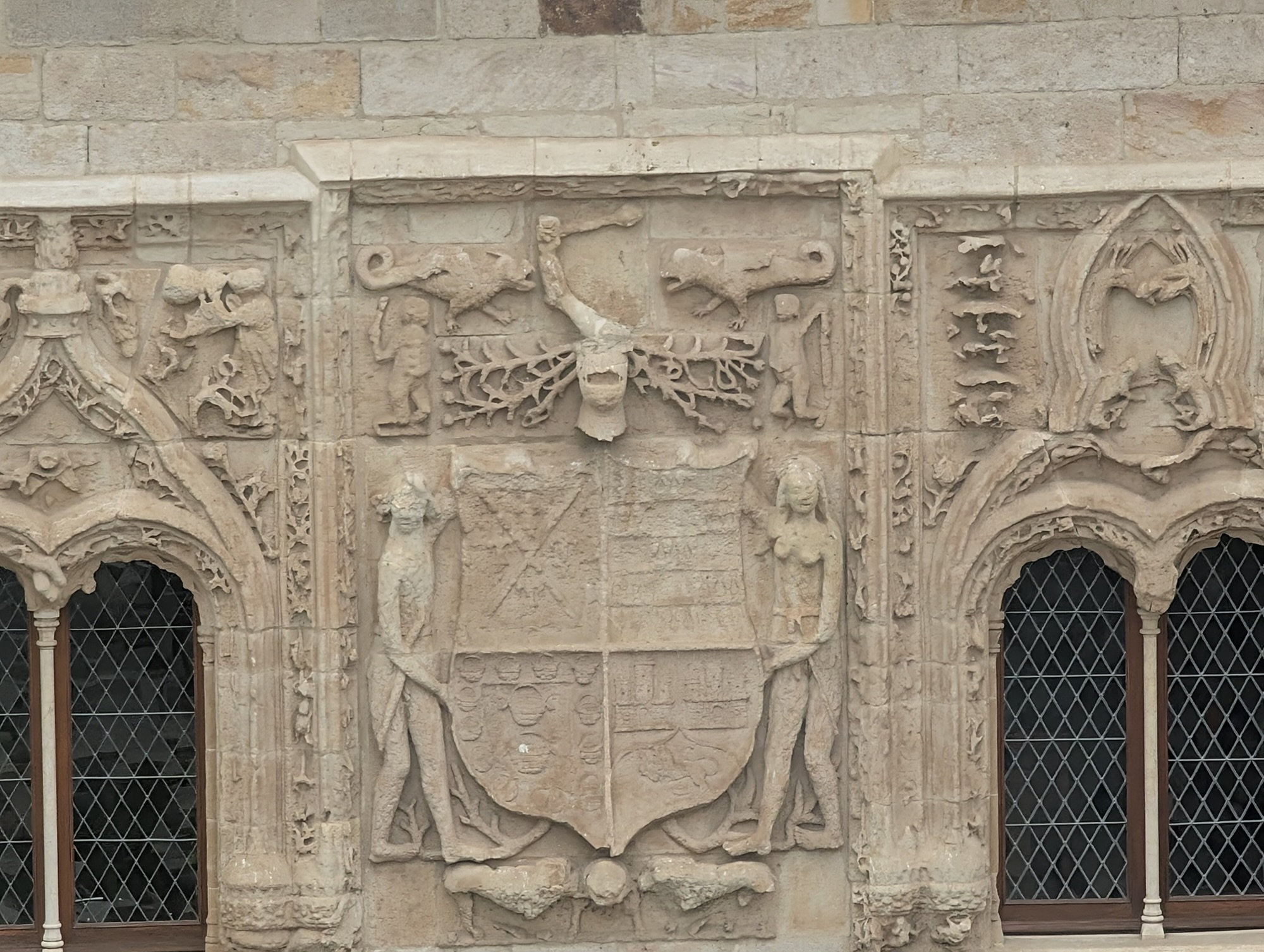
This is the frieze above the door of the courthouse across the square in the above photo. I took this from our apartment window with my phone’s telephoto lenses. It’s amazing the detail we can see. Maybe as good as binoculars.
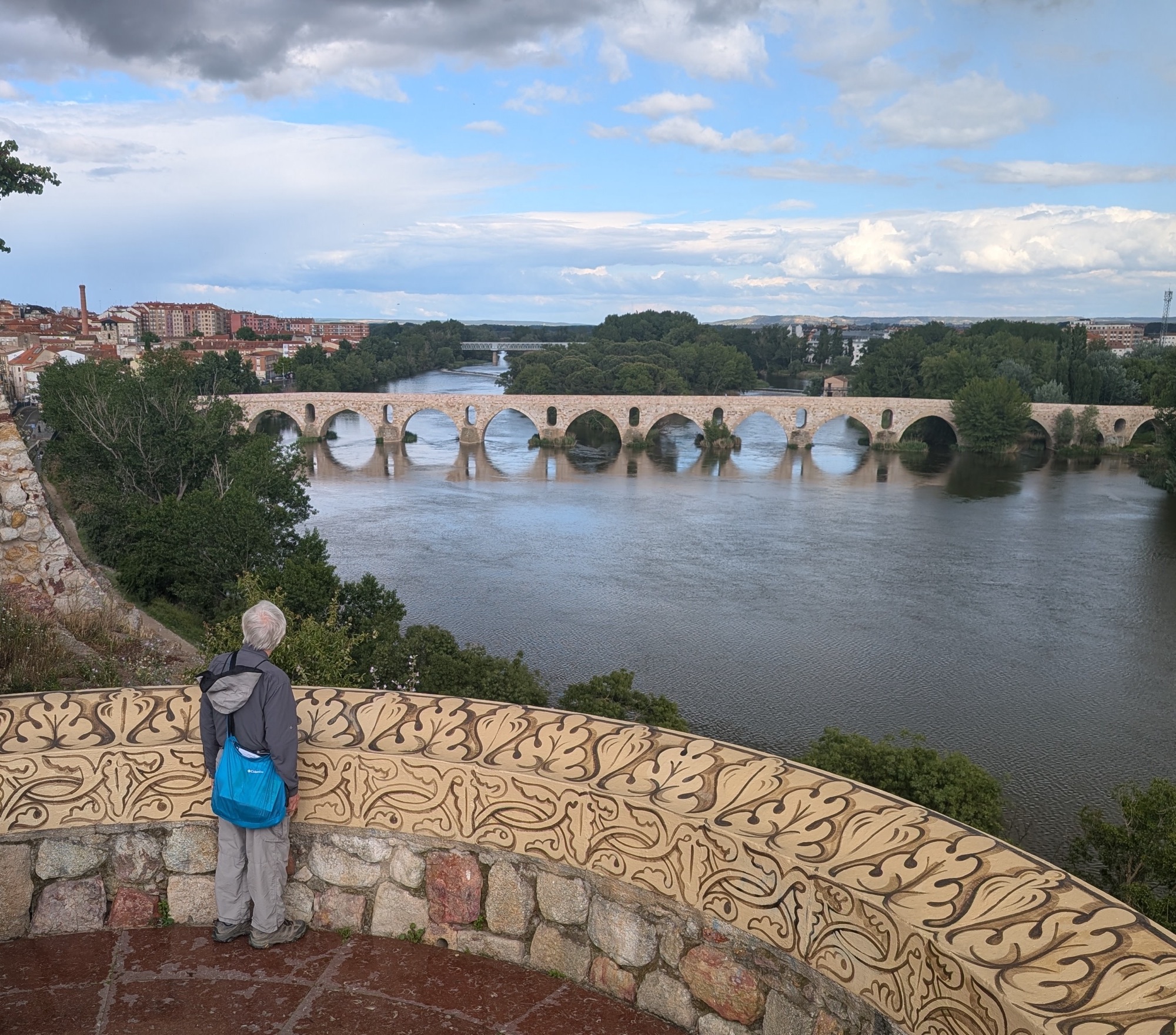
View of the medieval bridge across the Duero River. This river will eventually end up in the Atlantic at Porto, Portugal, where it will be called the Duoro.
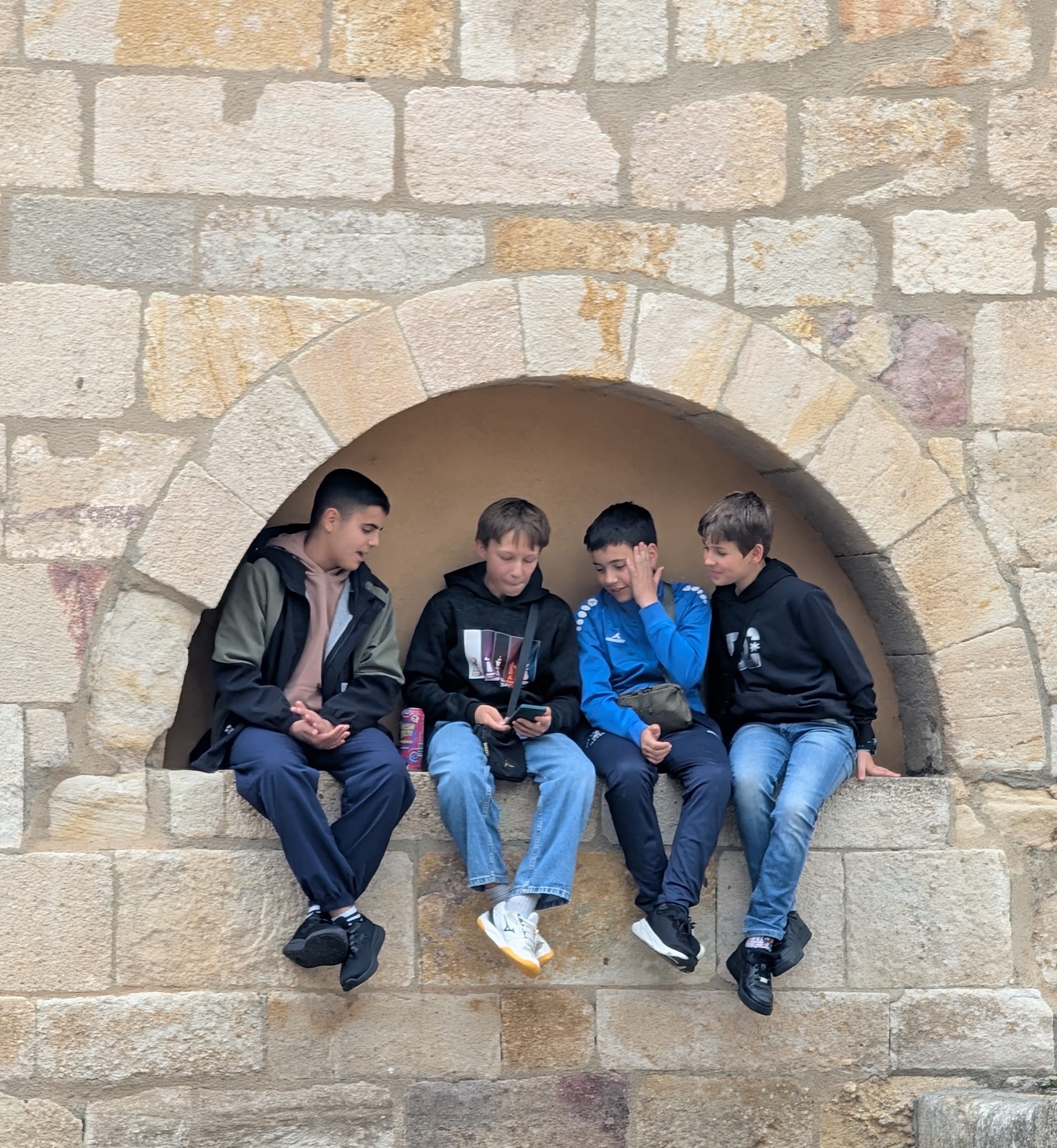
These boys were hanging out in a niche in one of the churches. (Shot from a distance with telephoto lens.)
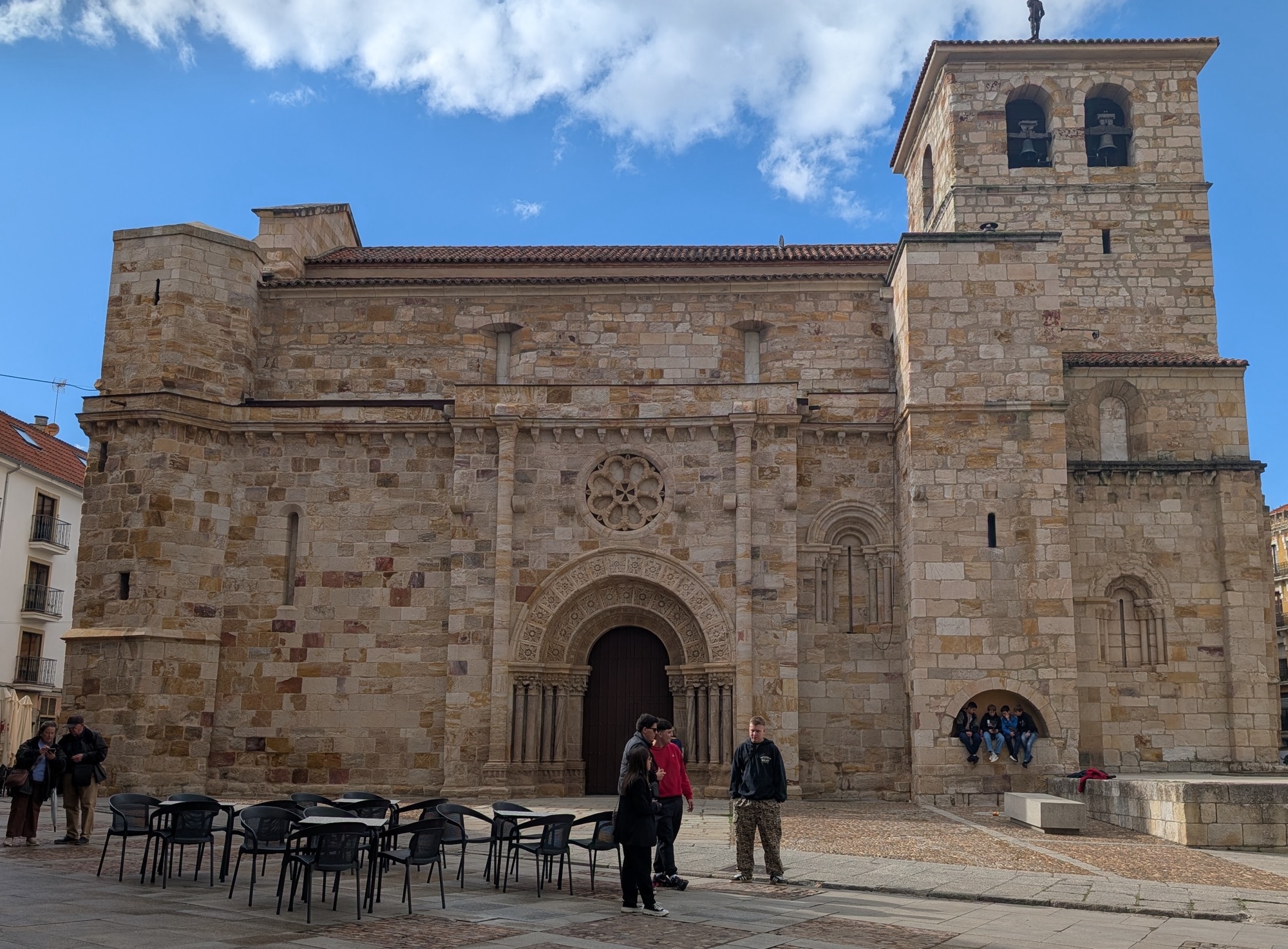
Here’s the church where the boys were sitting. Can you find them?
That’s all paint except for the guy in the multicolored hat.
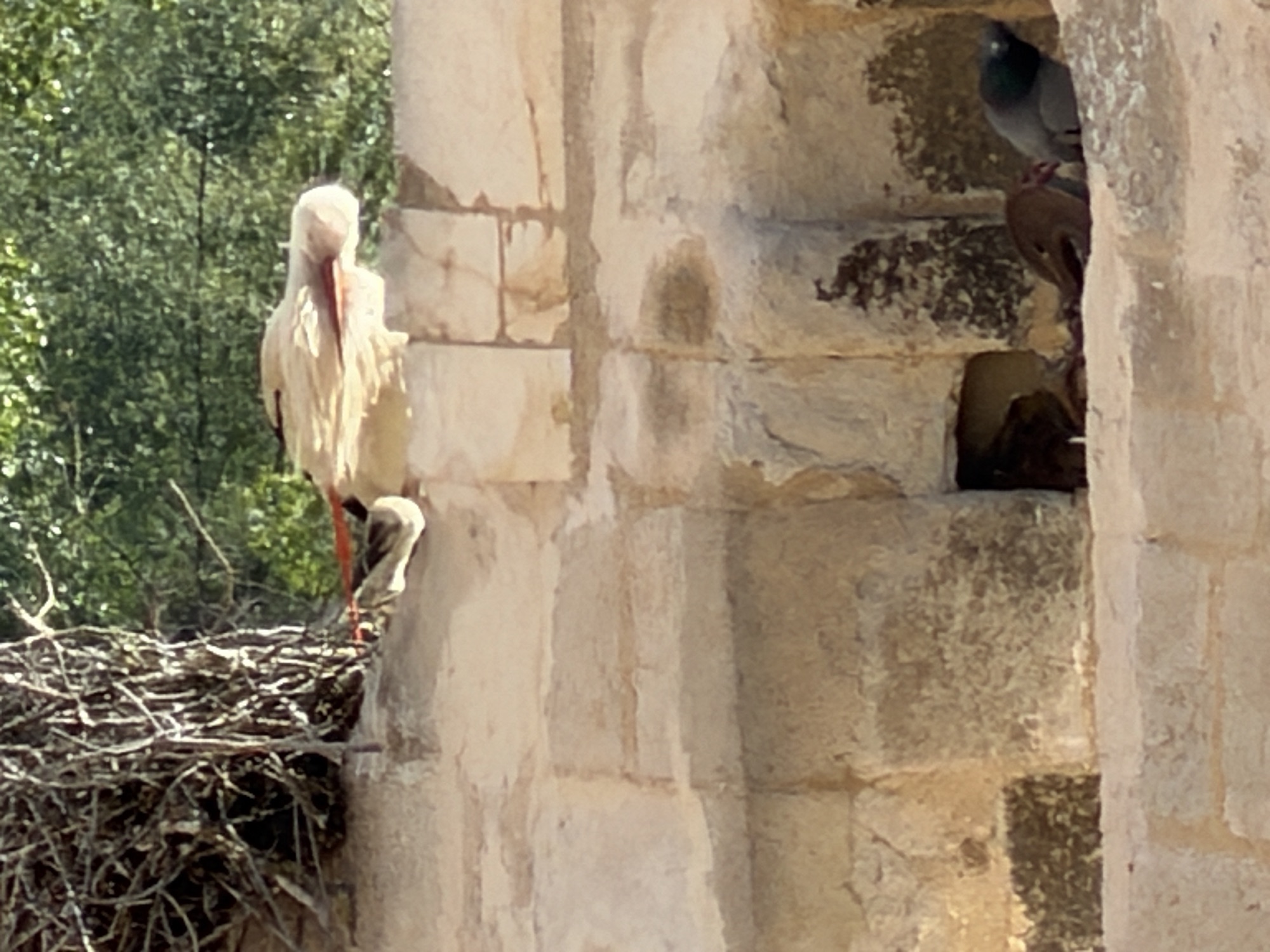
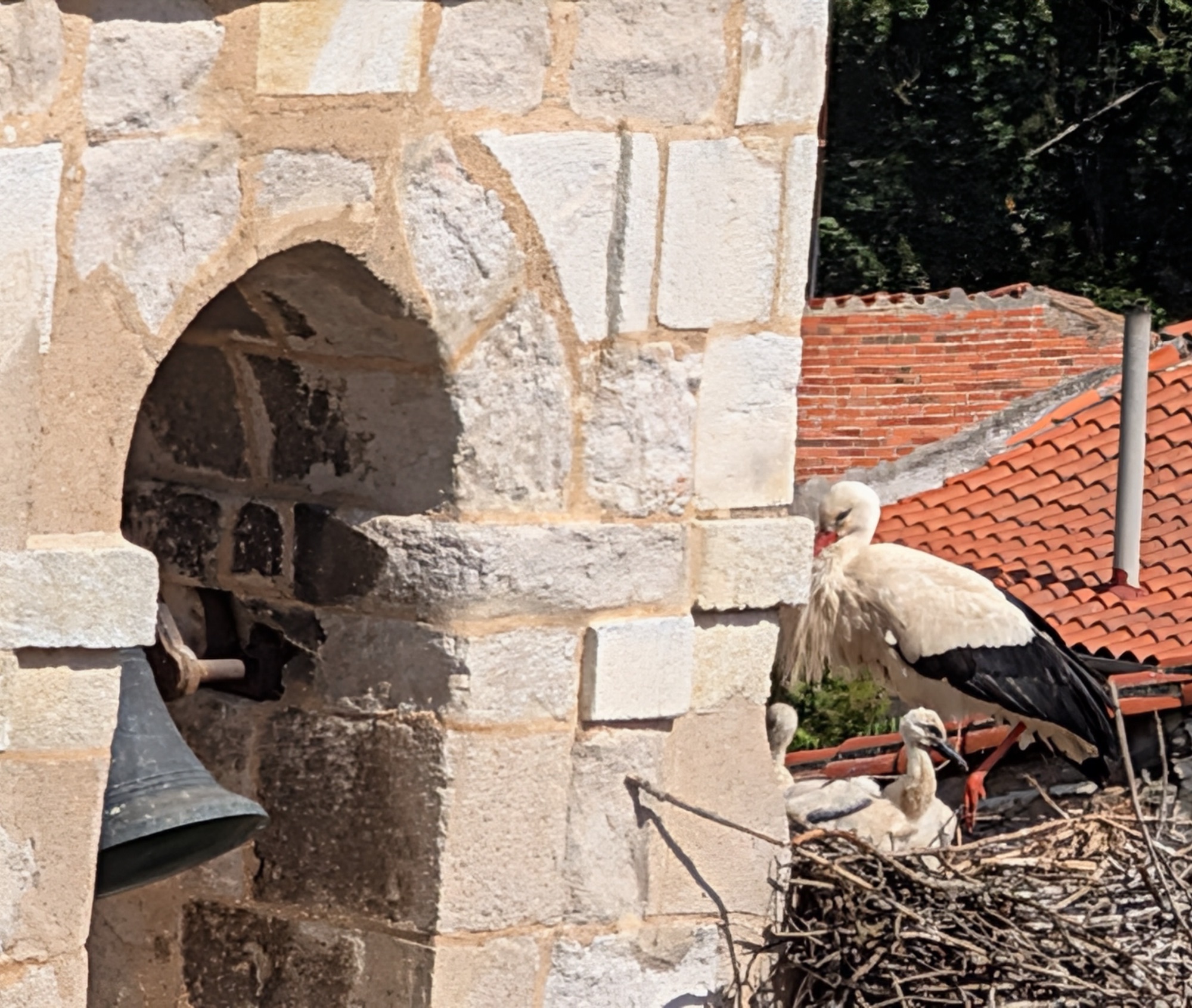
We got to see this stork’s nest from above. Charlie shot this from one side.
And I shot this from the other. Same stork. Of course, we were using telephoto lenses.
Approaching the castle.
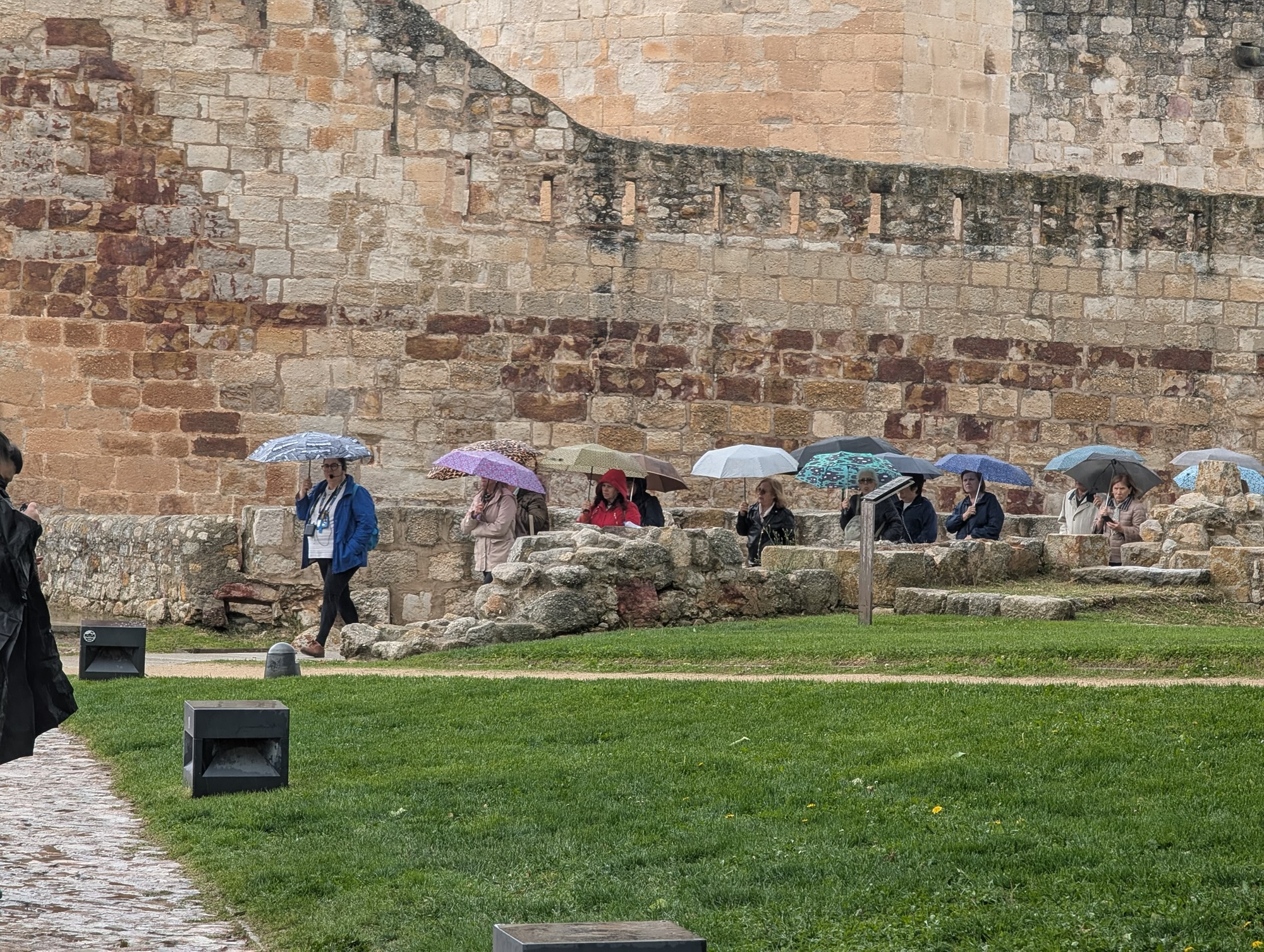
It was surreal seeing this large group entering the castle ahead of us. They were in a line, all with an umbrella. That’s only about half of them!

Palencia Cathedral: Catedral-Basílica de San Antolín

The largest cathedral in Spain is in Sevilla (Gothic). The second largest is in Toledo (high Gothic) And the third largest is in Palencia (Gothic, Renaissance).

This morning we paid 5 euros each (senior rate) to tour the one here.

I’ll show photos below of some of the highlights for me.

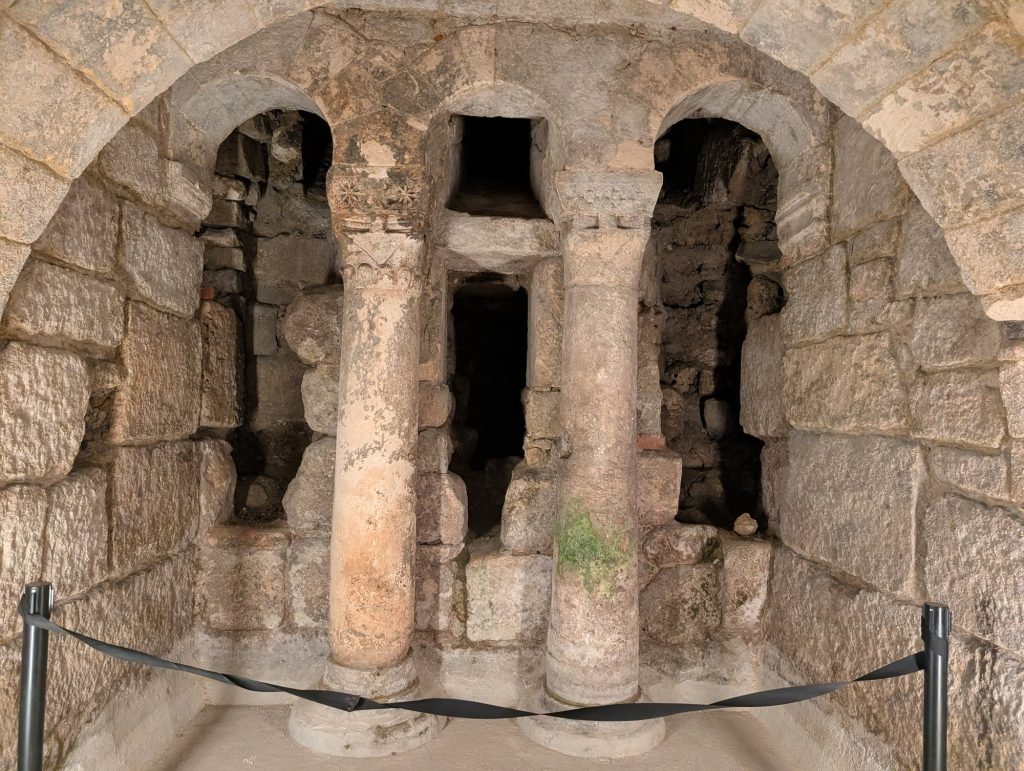
The cathedral, started in the 11th century, is built over a 7th century Visigoth crypt which holds the remains of San Antolín.
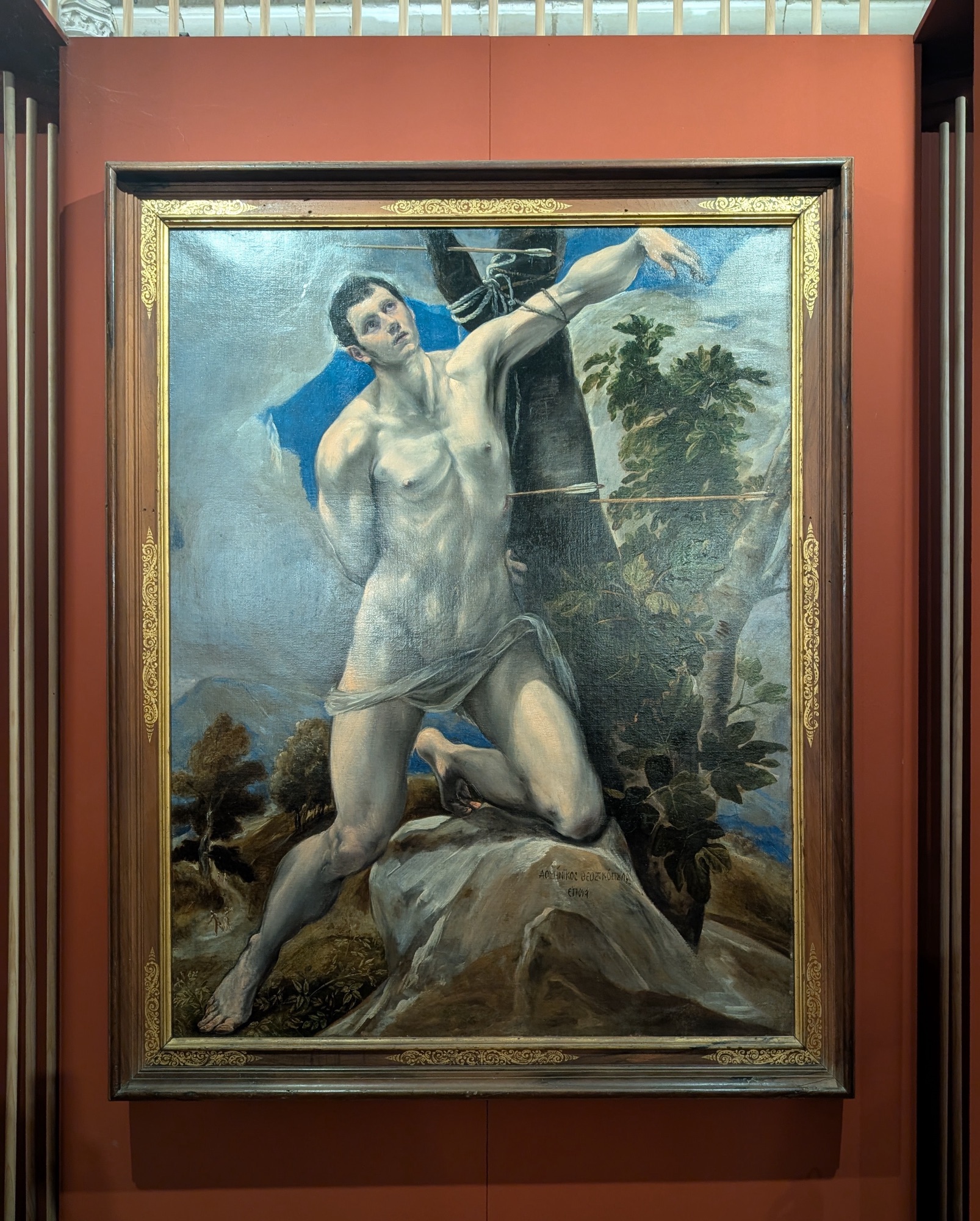
In the cathedral museum, large painting by El Greco, “The Martyrdom of Saint Sebastian”, 1577. Not just attributed as was the Michaelangelo painting we saw in Logroño. Clearly El Greco. I loved seeing this.
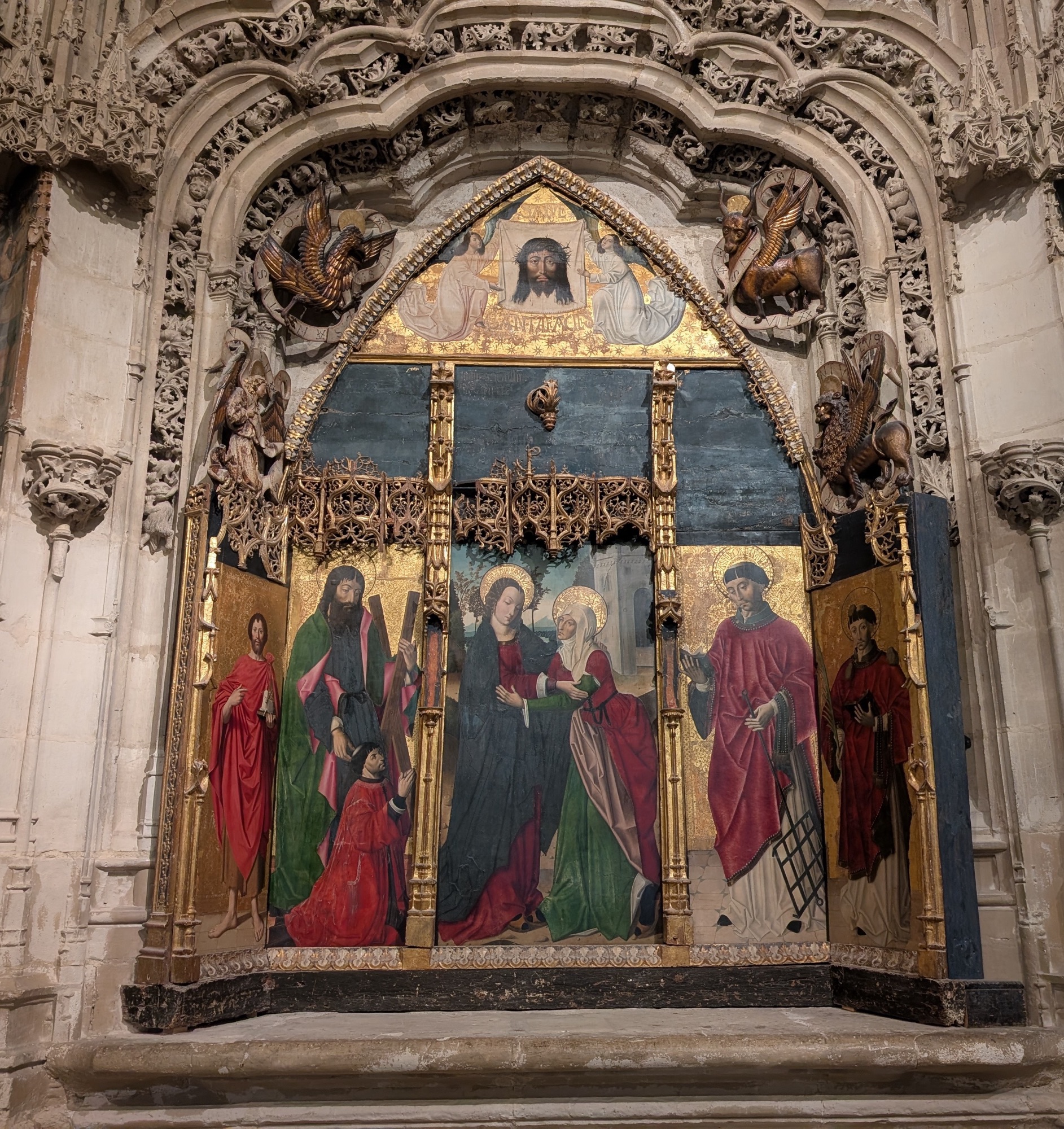
This beautiful piece is a 15th century Gothic altarpiece known as the Ratablo de la Visitación.

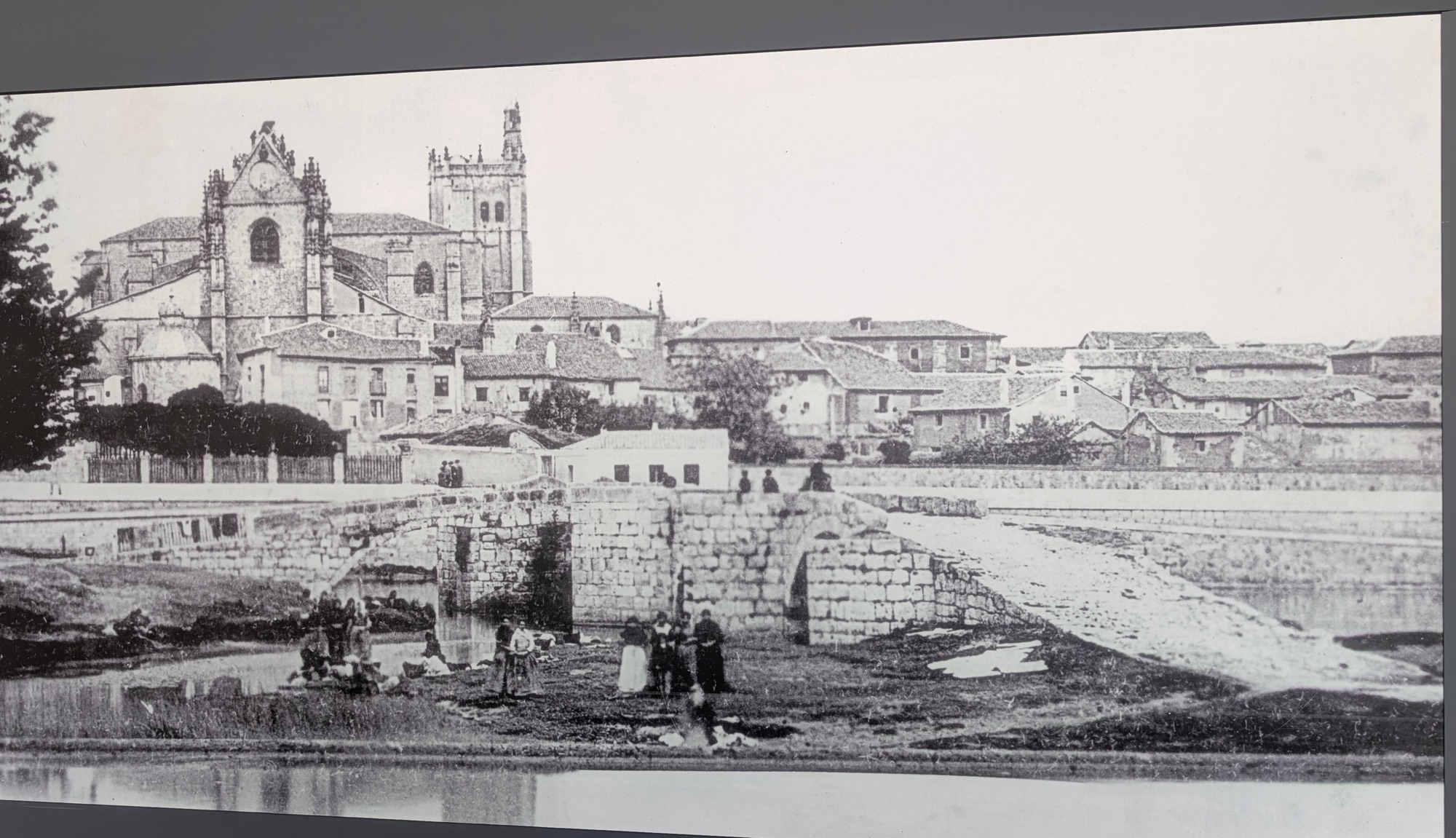
I have tried to get a photo of the outside that shows the beauty and size of the cathedral but have not been satisfied with any of my shots. The above was an old photo in the museum. Must have been taken in the 1800s??
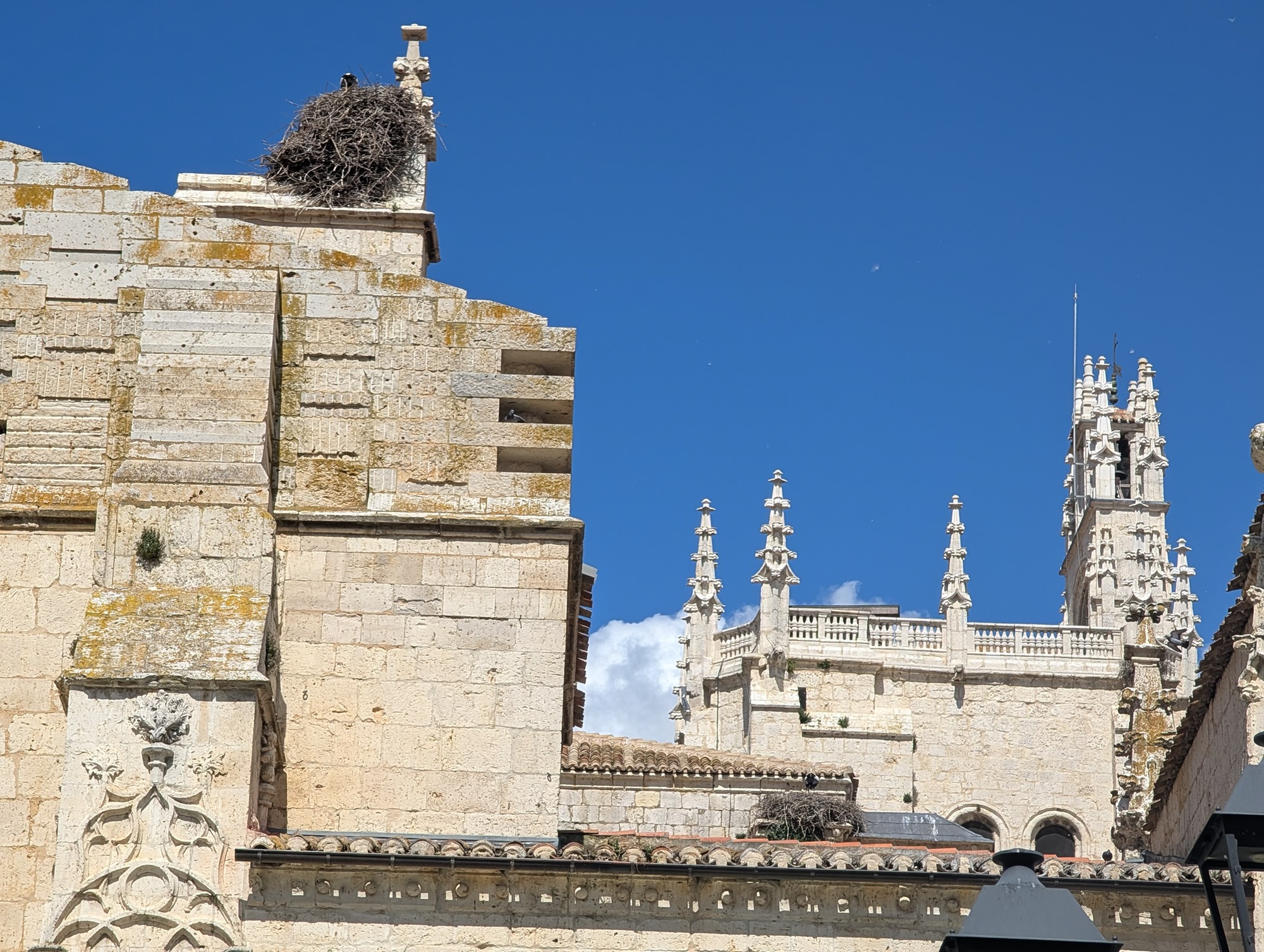
Since I wasn’t satisfied with any of my outside shots, I decided to settle for this one with a stork’s nest and the stork’s head sticking out.

Day trip to Sahagún

Yesterday, May 5, we caught a 7:45 am train from Palencia to Sahagún. It’s a 45 minute train ride.

Sahagún was where we had originally planned to end our Camino and where we had mailed our suitcase containing things we only needed for the last week in Zamora and on the airplane. We needed to go to Sahagún to pick up the suitcase.

The Spanish Post Office does a great service for pilgrims letting you mail things from one PO on the Camino to another for decent rates.

Our return train to Palencia didn’t leave till 3:15 so we had several hours to spend in Sahagún.

I’m pretty sure we saw at least 200 pilgrims while we were there. Sahagún is the exact midway point on the Camino Frances: half way between Saint-Jean-Pied-de-Port and Santiago.

A lovely young employee in the PO gave us our bag and then I, with some trepidation, asked “would it be possible to leave it here with you while we are out for the day”. She didn’t hesitate one bit but said “of course”. She told us we had to get it before the PO closed at 2:30 and not to come when she’d be on her break between 1:00 and 1:15. We were glad not to have to lug the suitcase around with us all day.

We then asked for a recommendation for where to eat breakfast and another woman in the PO, a customer, walked us outside and showed us where to go. She didn’t lead us wrong. We had a most enjoyable breakfast.

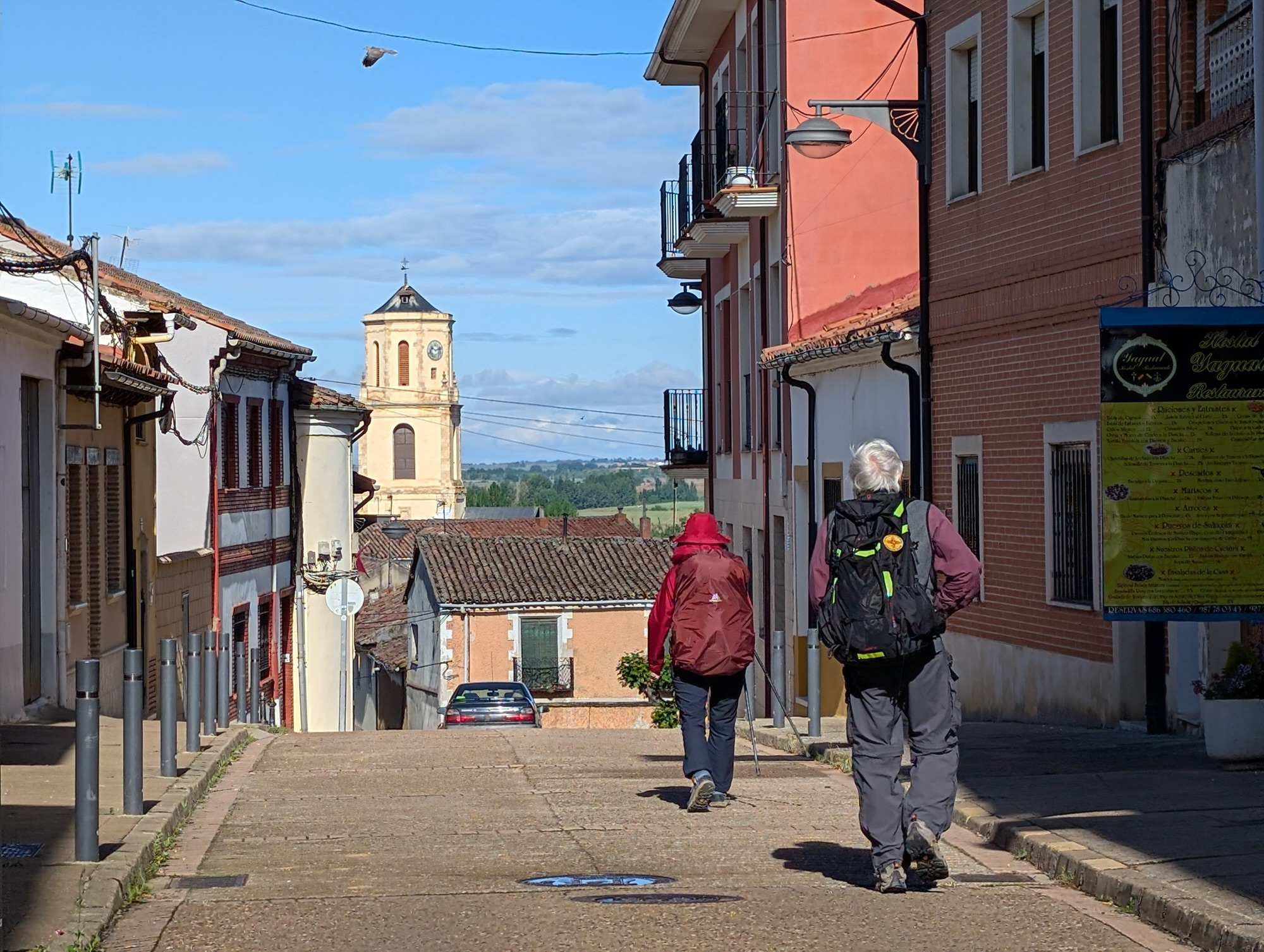
After breakfast, we headed out on the Camino. Yep, that was our plan for the day. We didn’t walk too far, about 4 miles out and 4 miles back. I counted the pilgrims we passed when walking back to town: 92 peregrinos and 7 bicigrinos (bicycle pilgrims). This was mid-day. We were surprised to see so many that time of day.

On the Camino, you seldom see pilgrims heading any way but in the same direction you are walking: west. Nearly everyone smiled at us and said “hola” and most had a quizzical look in their eye like “huh, why are you walking the wrong way? You don’t look like locals.”

Heading out on the Camino in Sahagún
The cliche is that “the Camino provides”. Just at the point where we needed to turn back on our walk, we came to a great bar, the first on the walk. I had a Kas Limón, my new go-to drink when I’m thirsty, and Charlie had a café con leche. And, of course, we used the aseos!
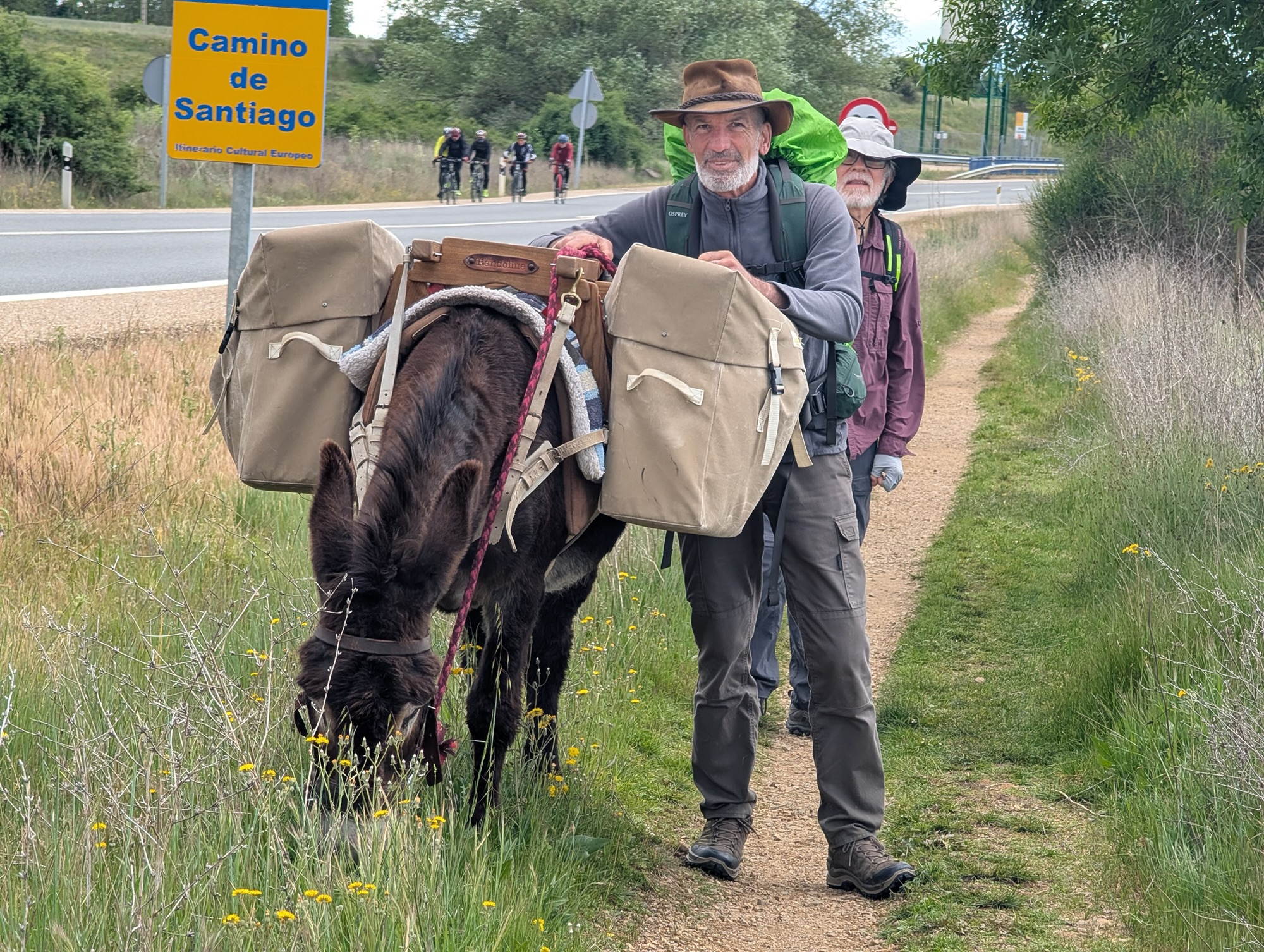
We met a “burro-grino” as well!! I asked if I could take his photo.
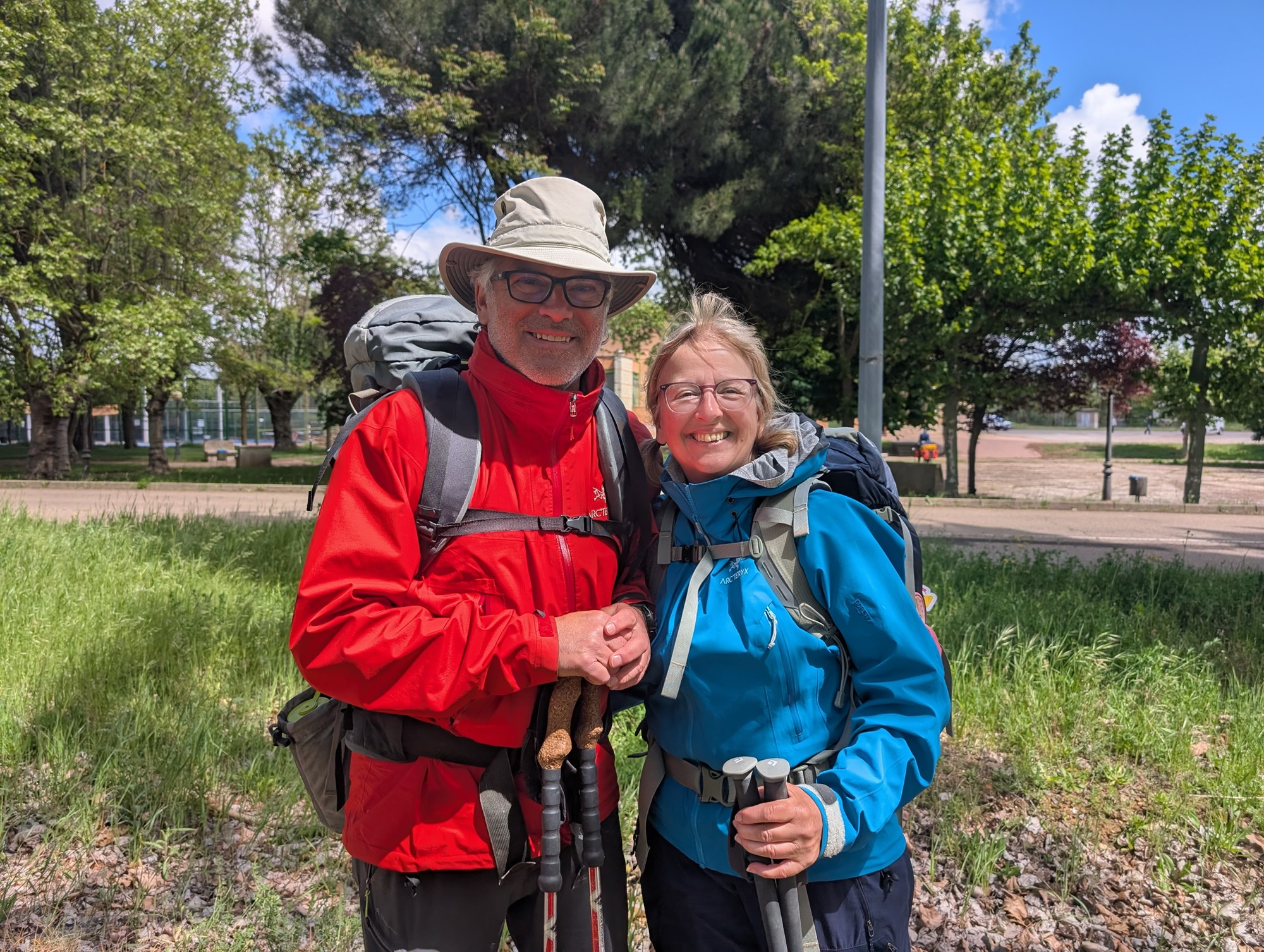
As we were walking back into town, Charlie and I discussed the possibility we’d run into someone we’d met already. We both thought there’d be little chance since most people would be ahead of us by now. But, we passed this couple above and they recognized us first. You might recognize them from a photo we posted of pilgrims visiting outside our albergue in Atapuerca. They are a really nice couple from Montreal. So much fun to run into them.
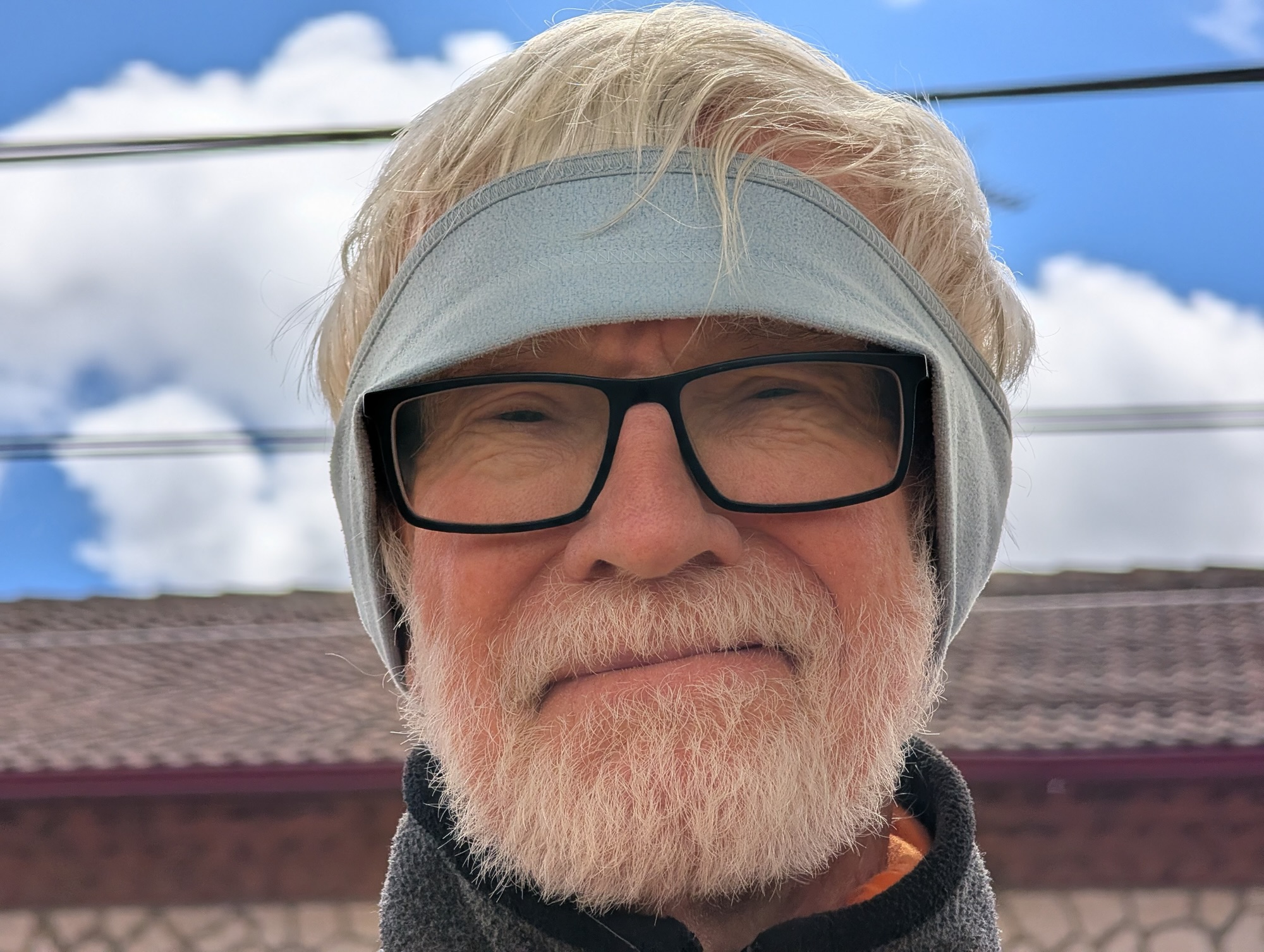
This is Charlie when we were waiting for our train back to Palencia. We were cold. Charlie’s hair was so white and shiny, I told him he looked like the sky and clouds with his white hair and blue ear warmer. The photo didn’t quite pick up how white his hair looked in the light.