Camino Frances from Saint Jean to Sahagun, then a week in Zamora
April 22: Logroño to Navarrete.
Miles walked: 9.0
Flights of stairs equivalent climbed: 44
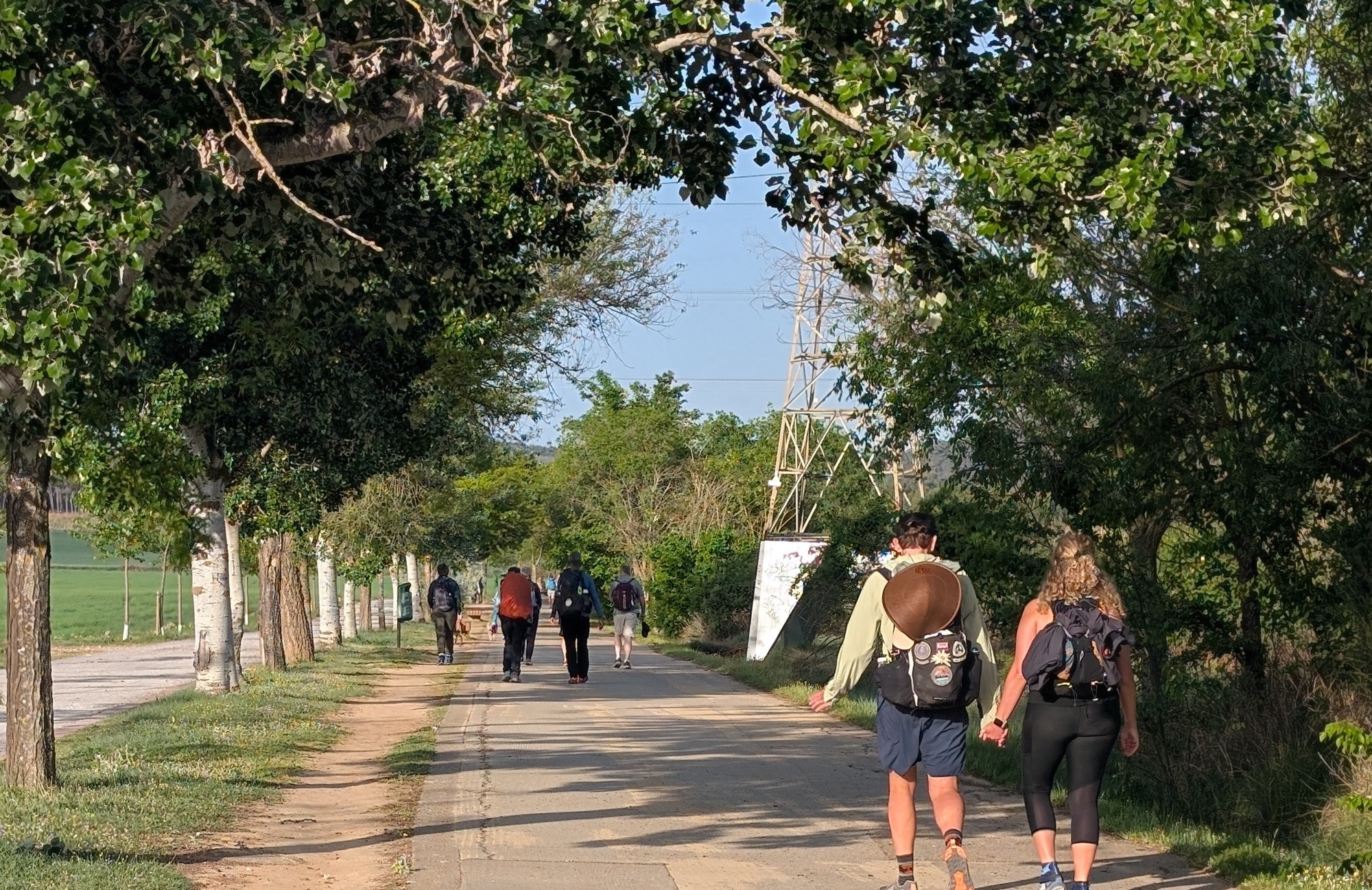
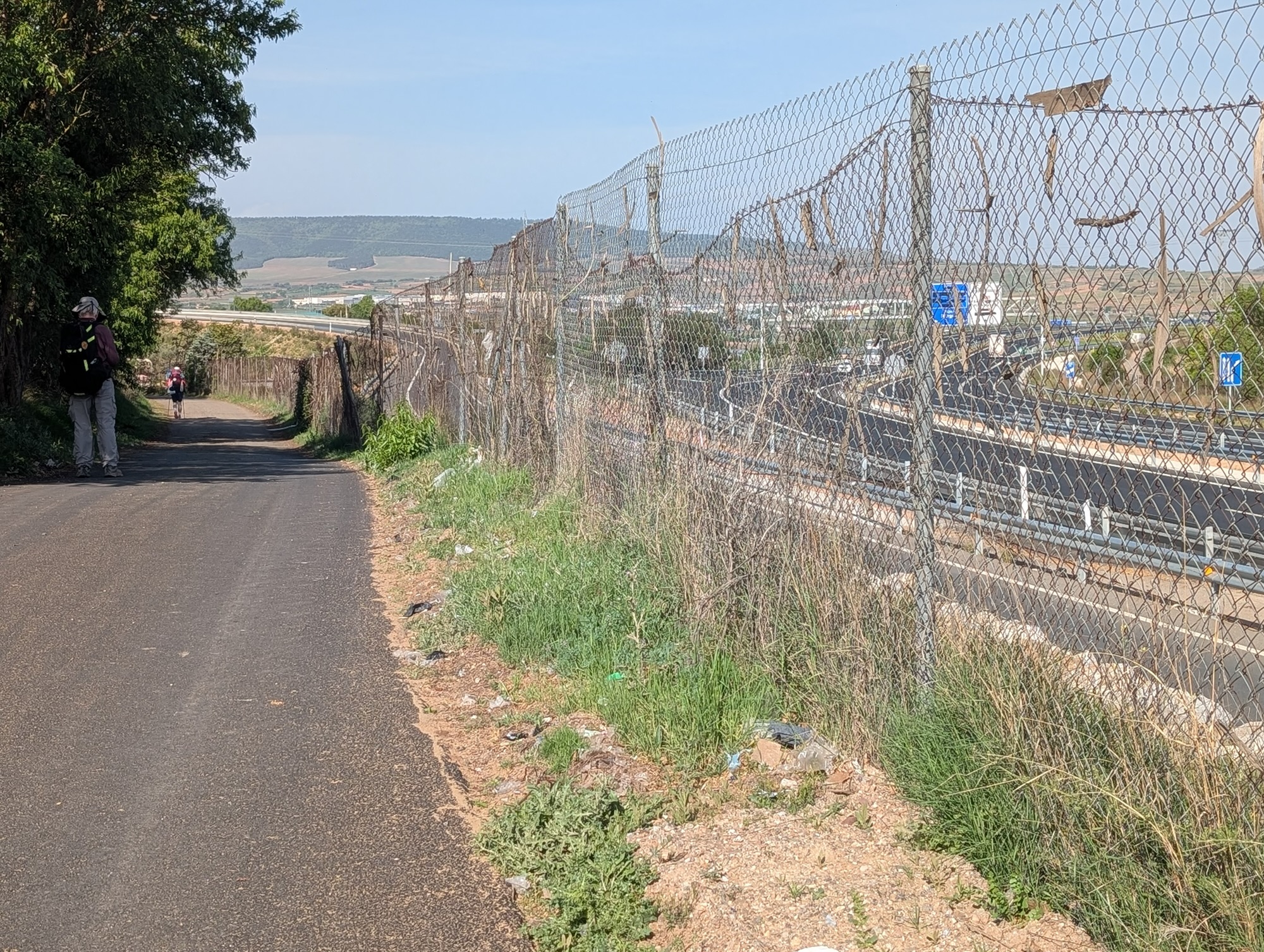
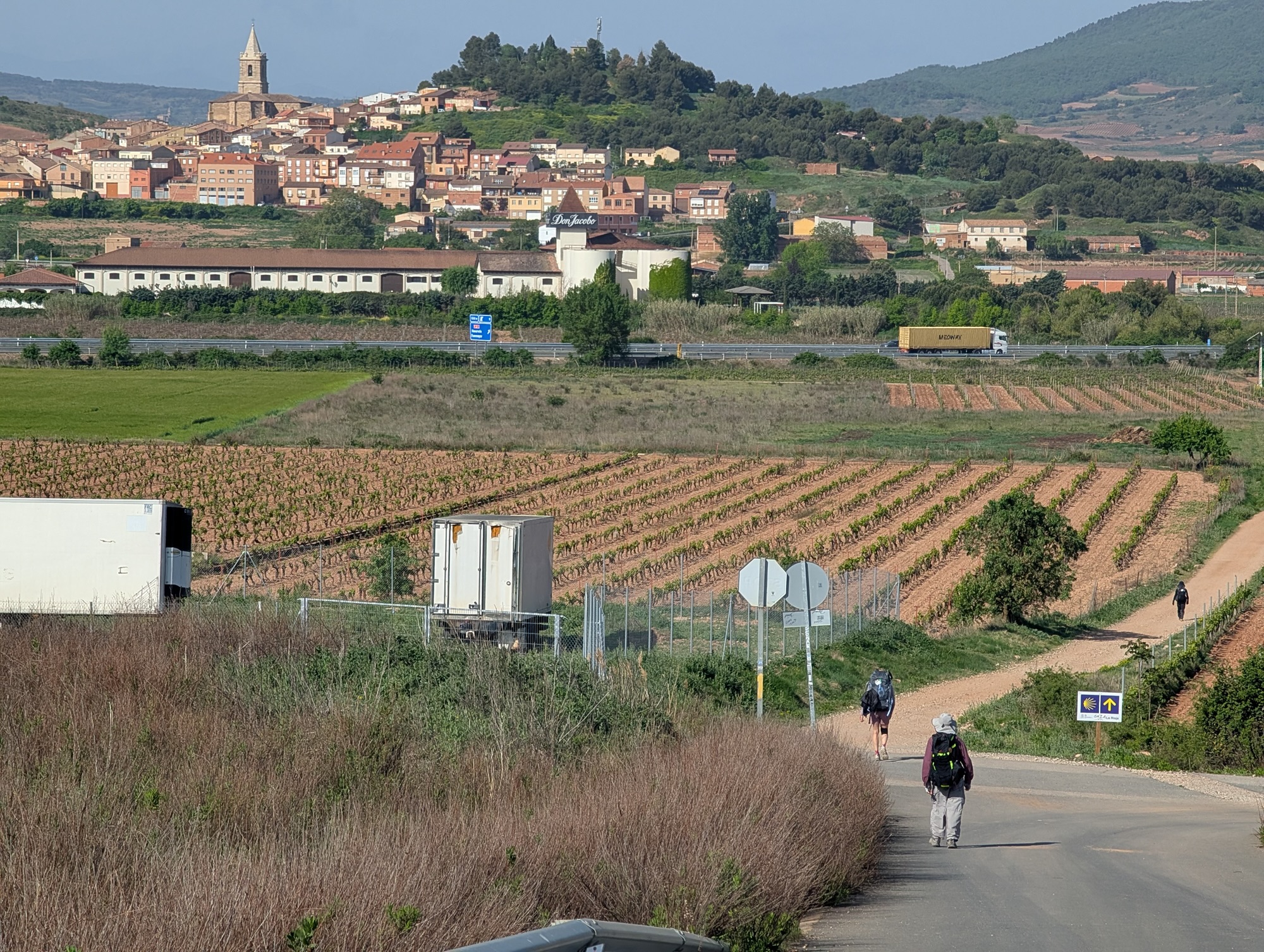
The first mile or two out of Logroño was through the city. The next 4 or 5 miles were along a long green path that ended in a gigantic park beside a reservoir. A huge very nice dog park, a huge very nice children’s playground, lots of forest and picnic tables and such. Impressive. Then we walked alongside some vineyards. And then we walked a mile or two on a path next to a huge noisy freeway (what they call an autopista). Then finally into the cute hill town of Navarrete.
We are staying in a private room in an albergue. It’s nice being back in pilgram-land after a couple of days of isolation from that in our apartment in Logroño.
The day in photos:
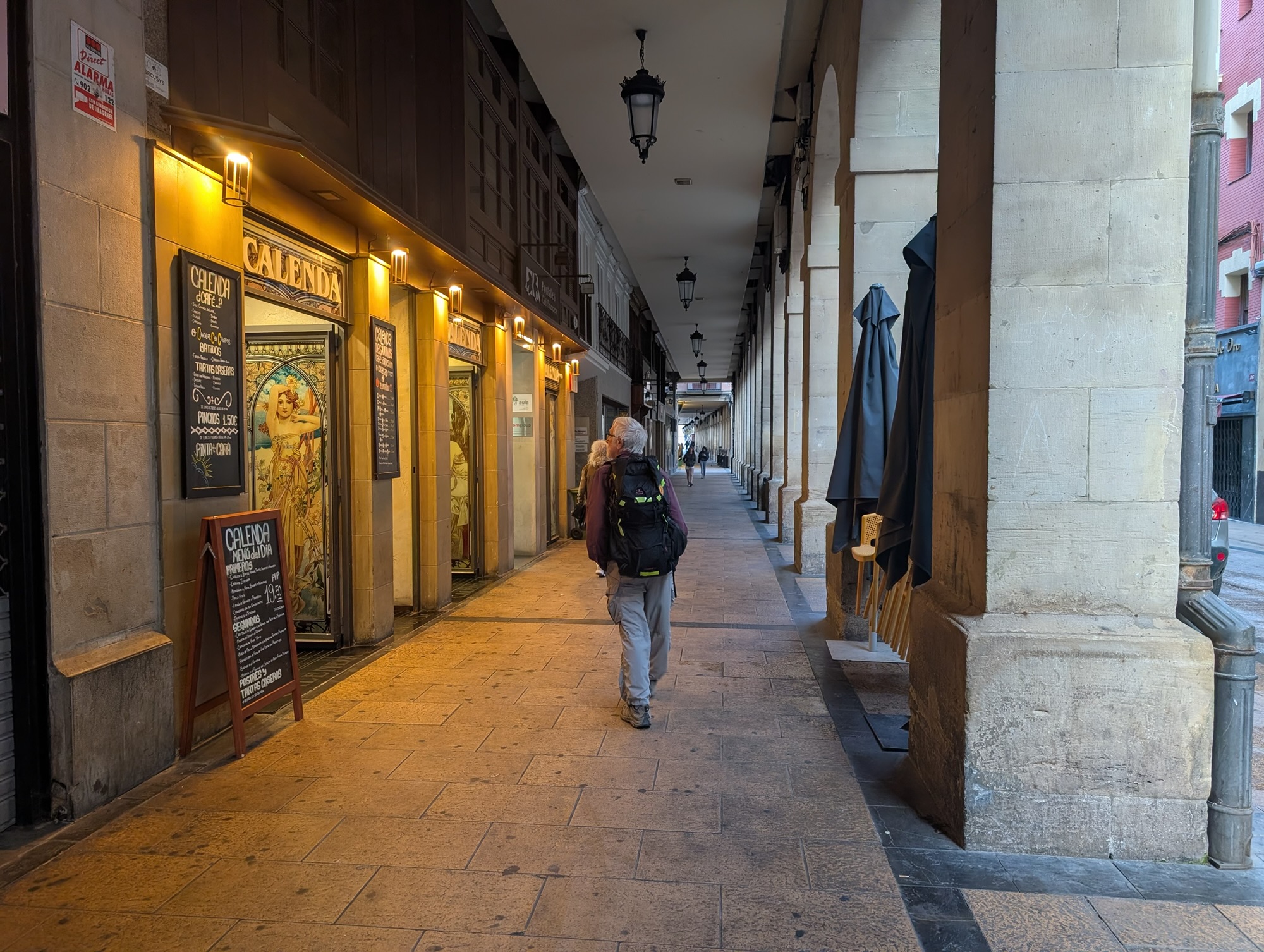
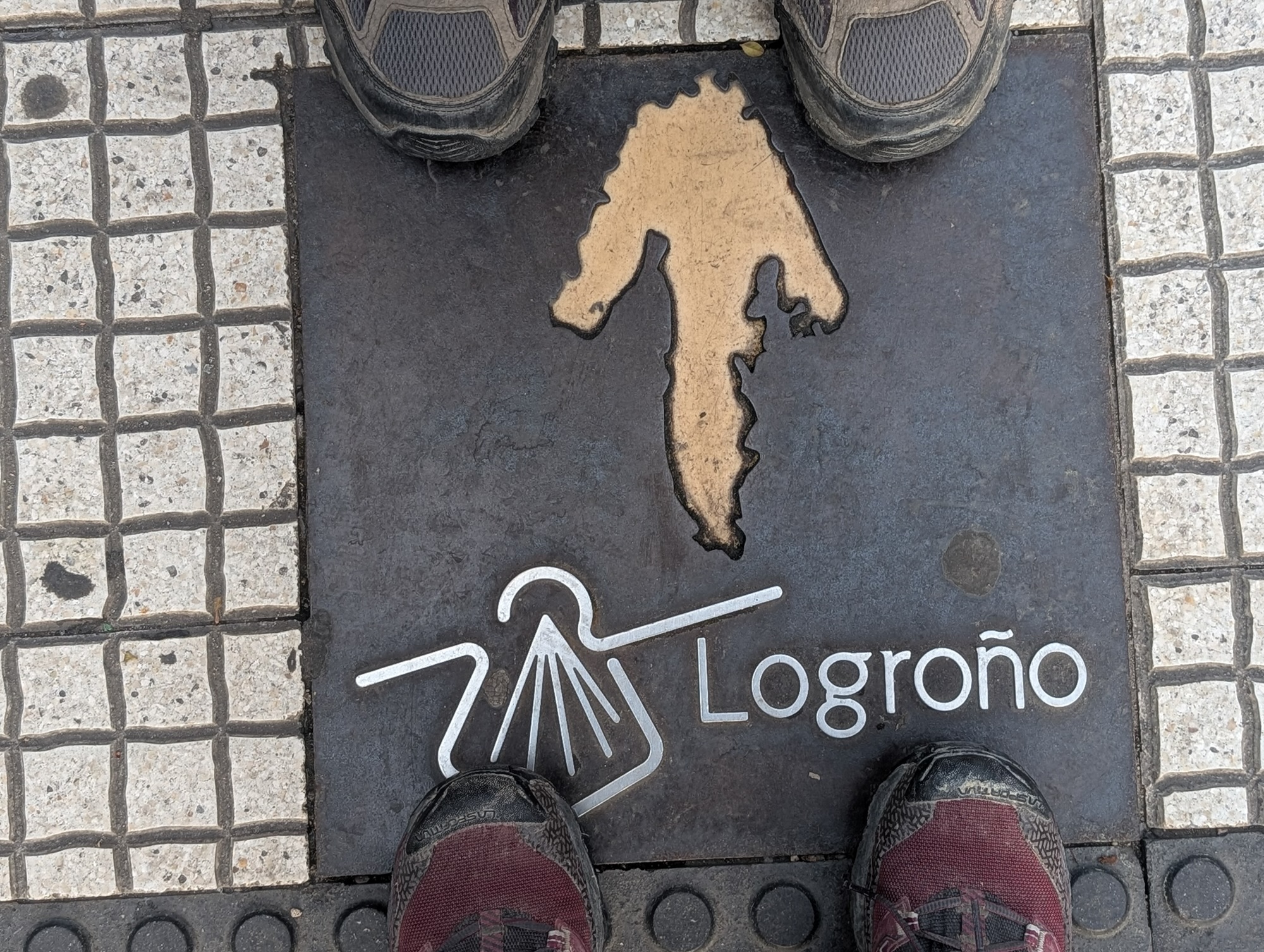
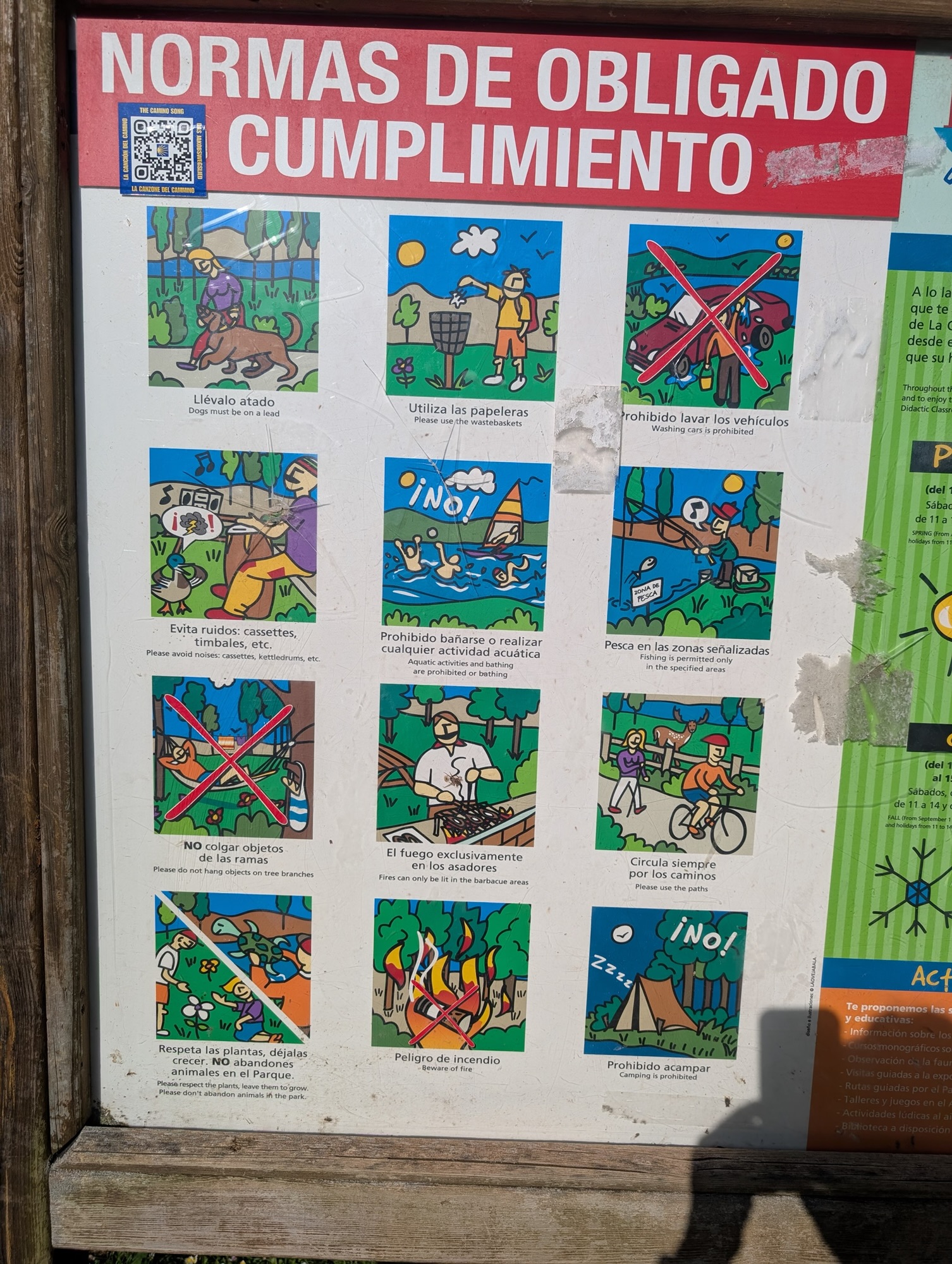
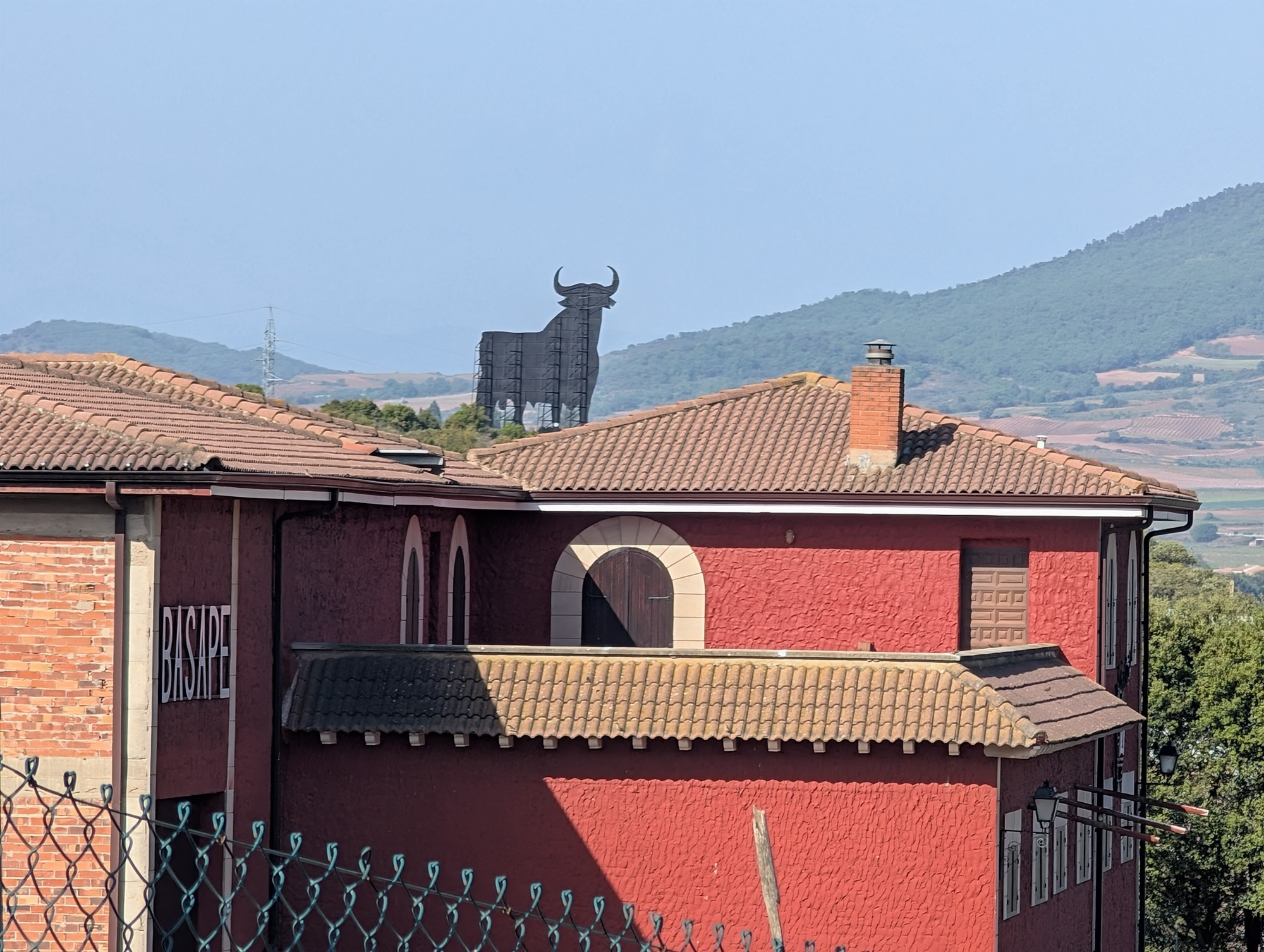
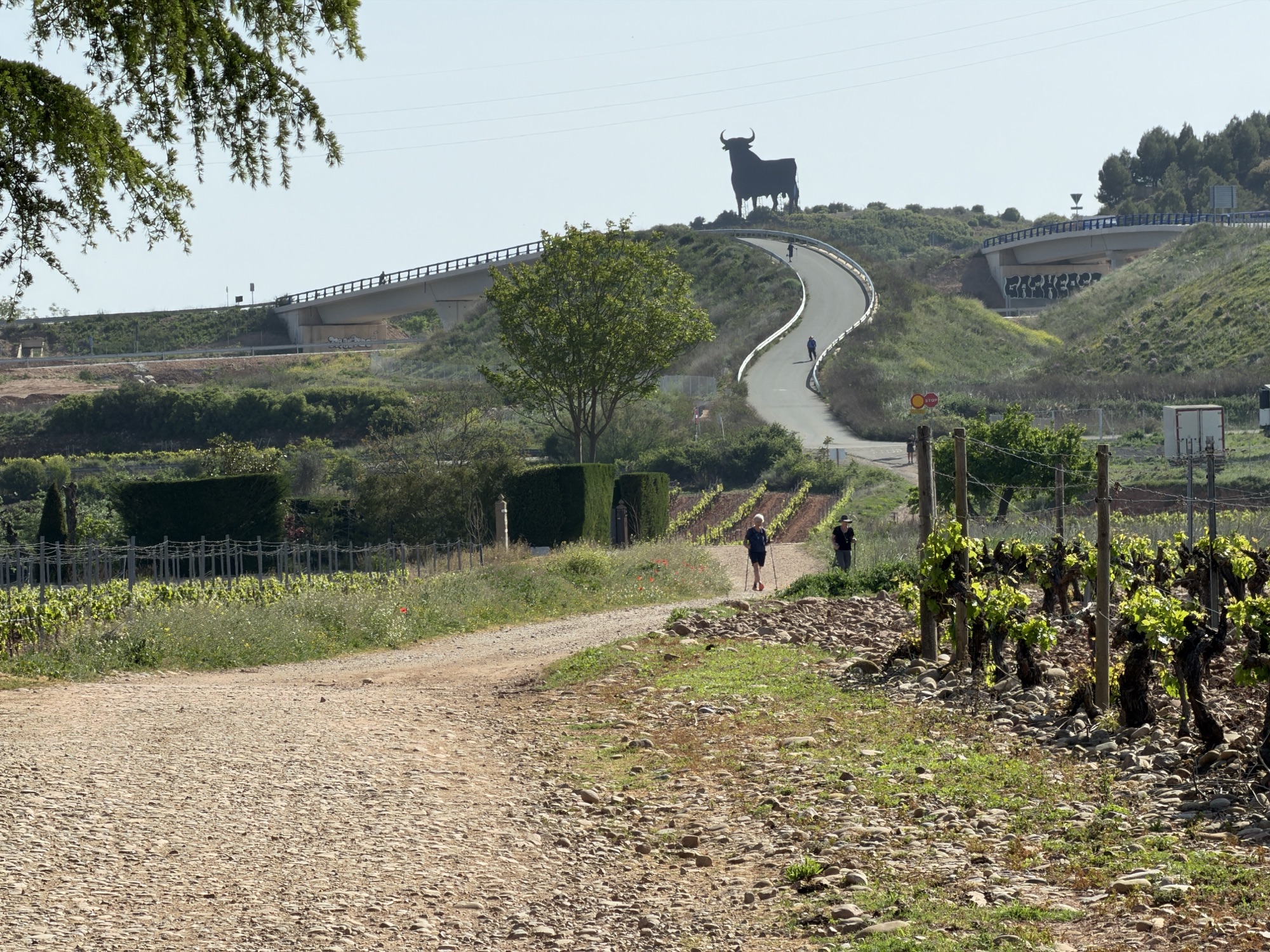
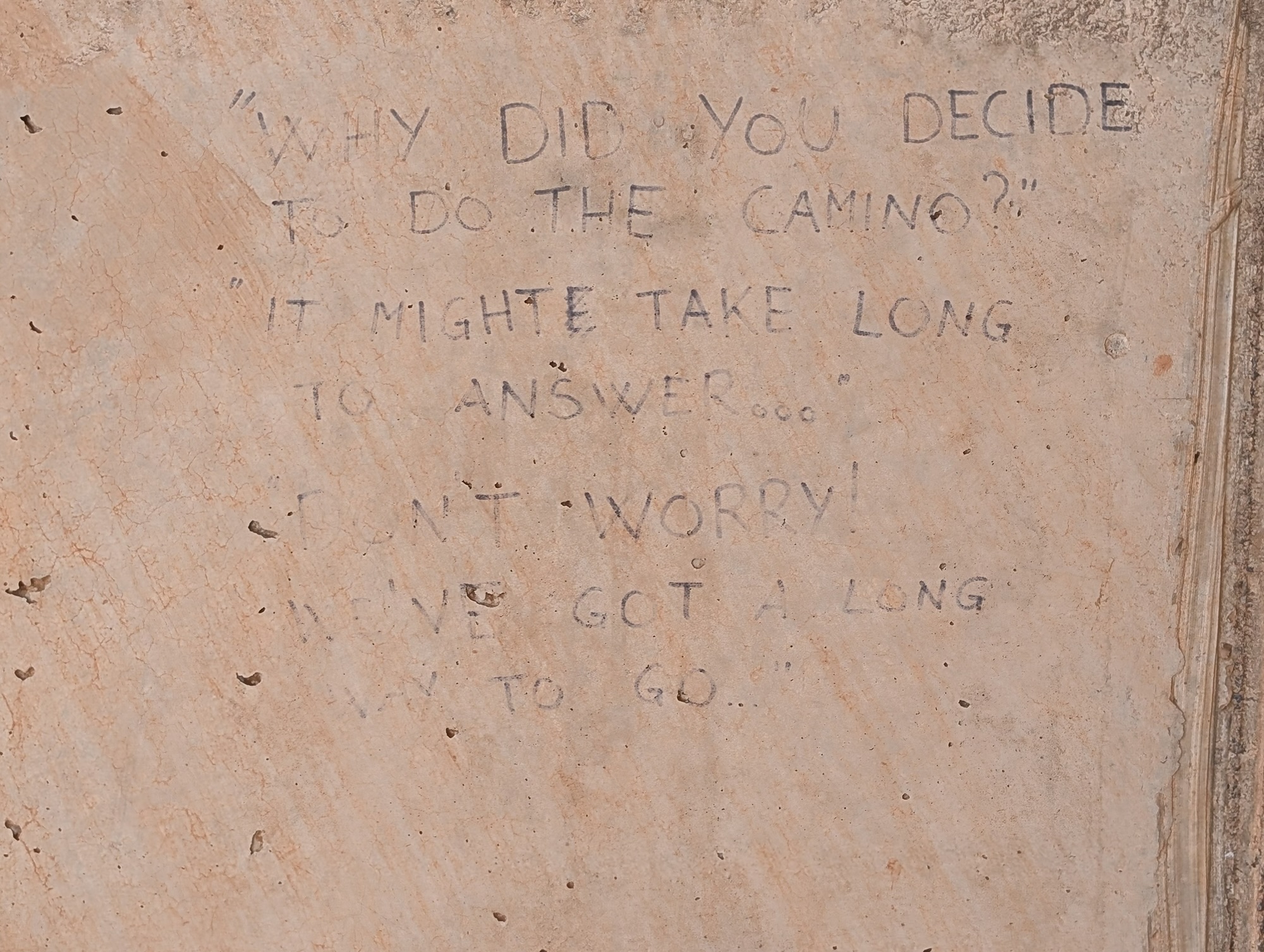
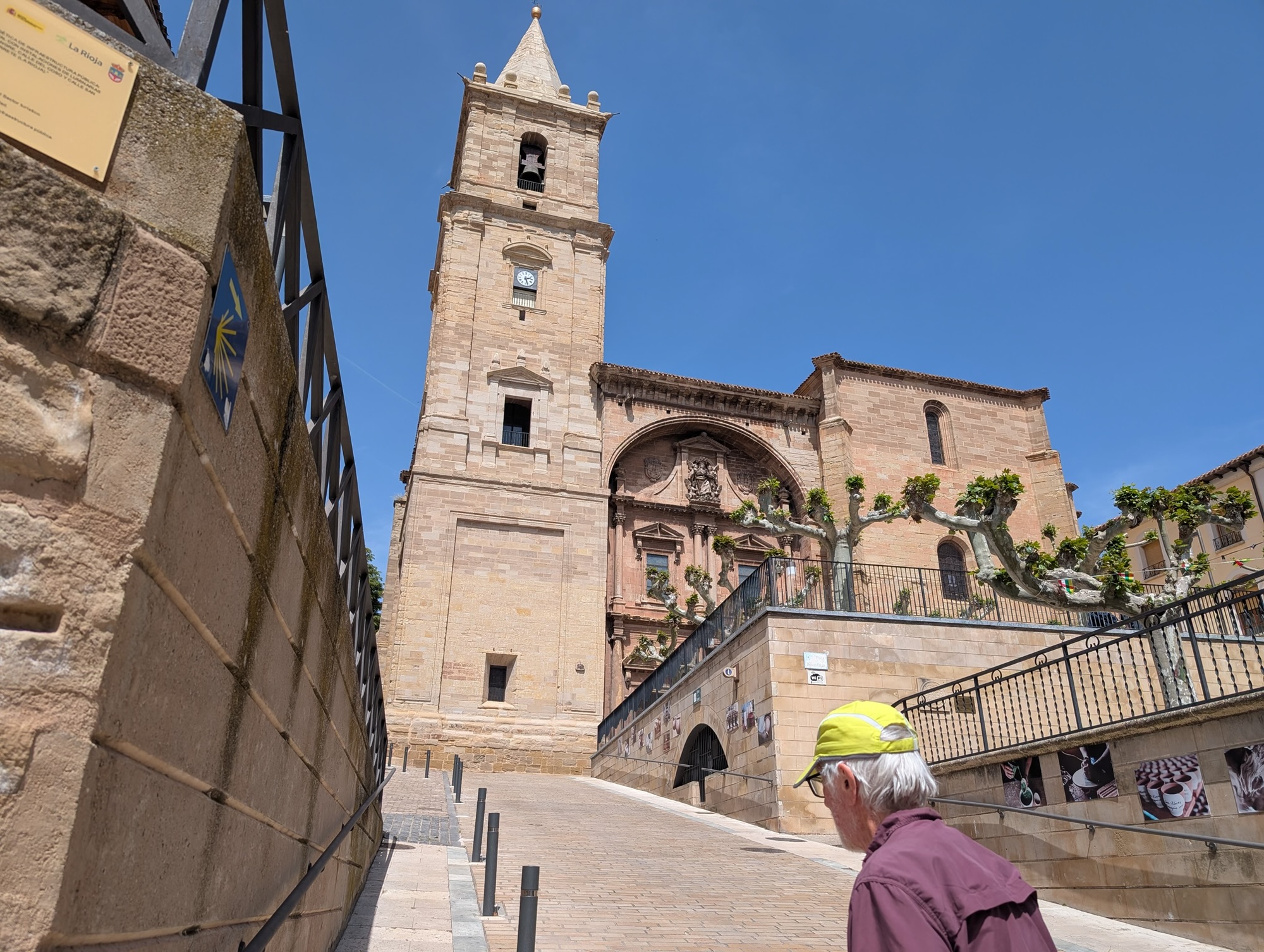
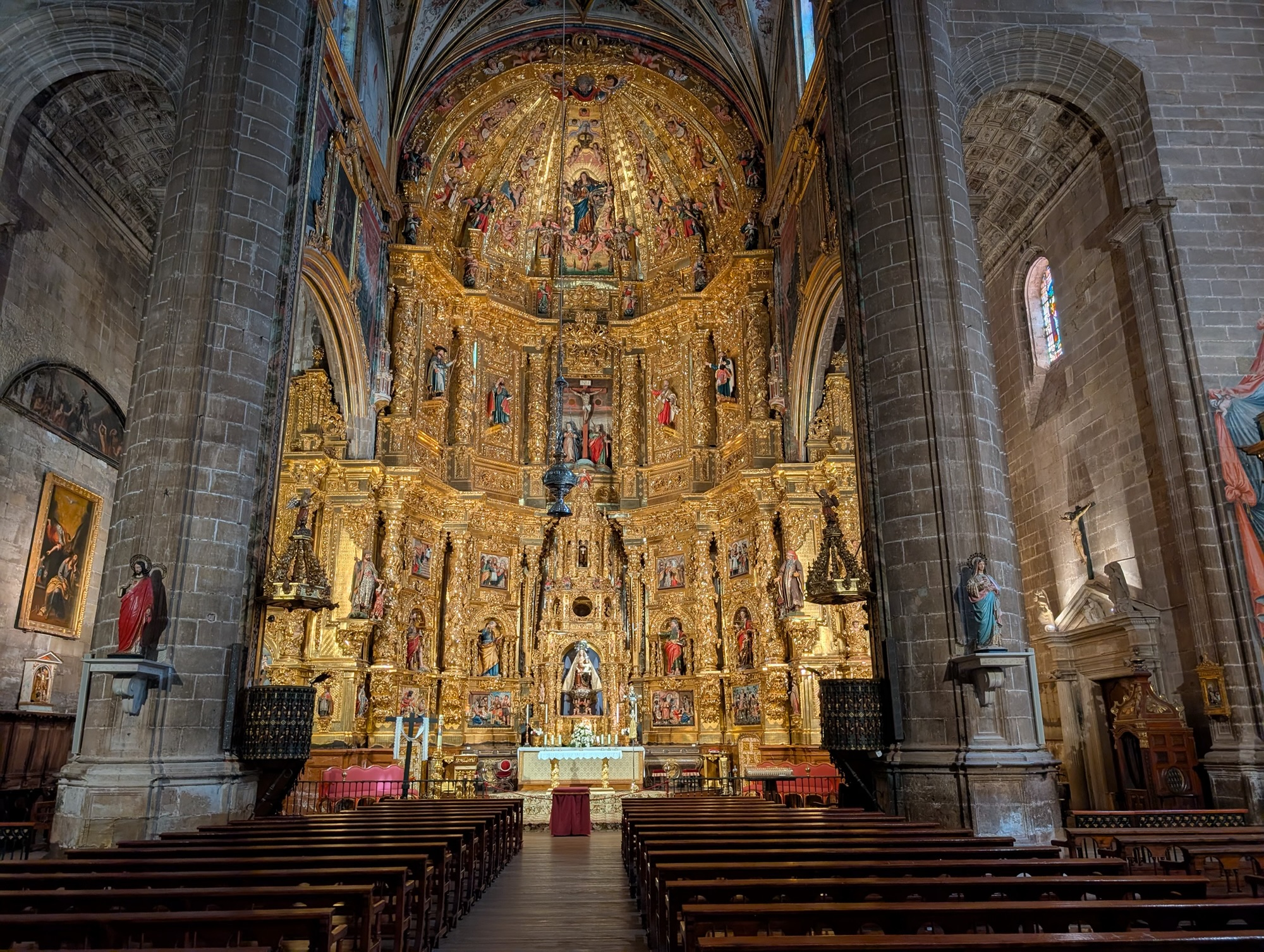
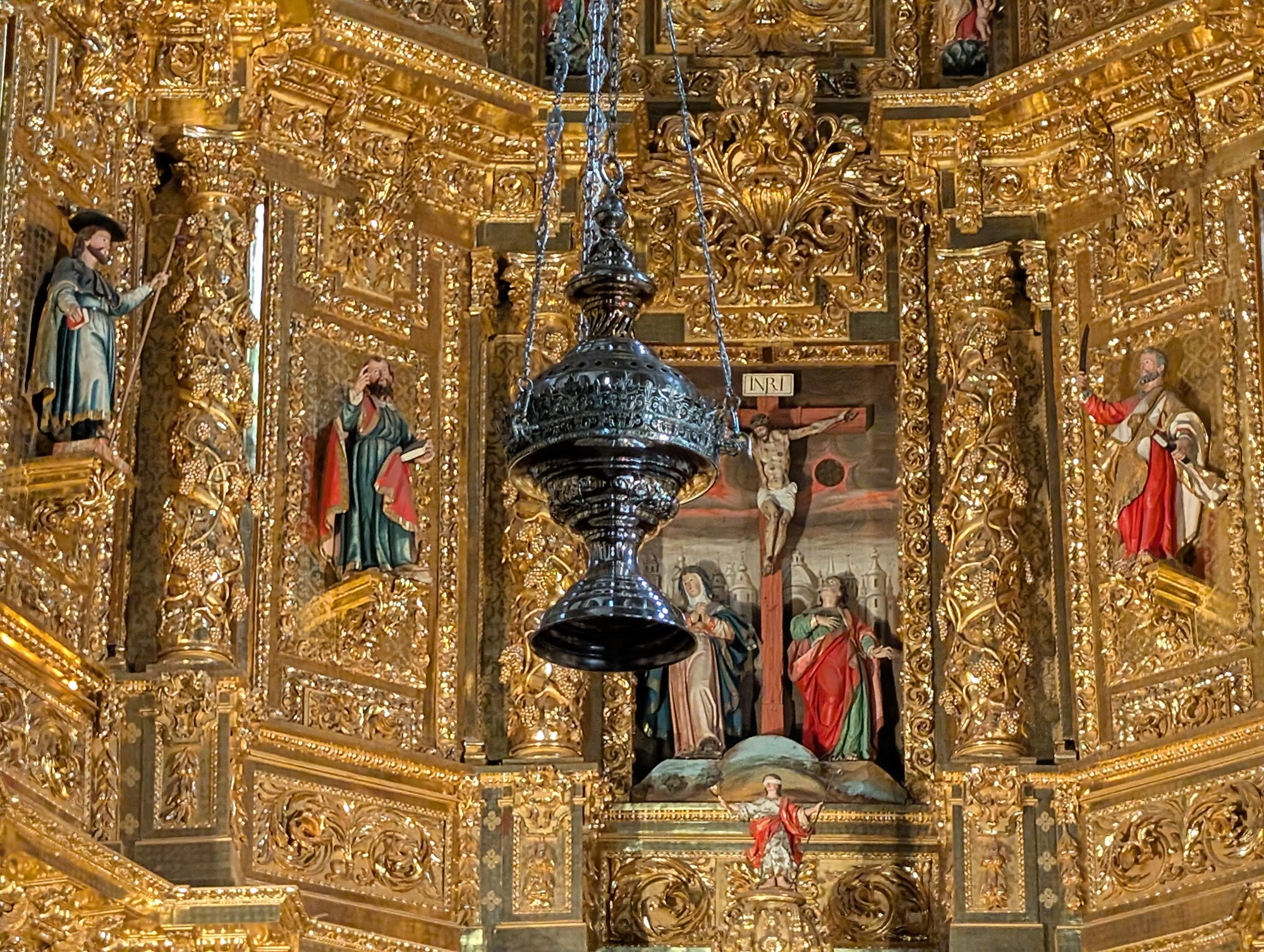
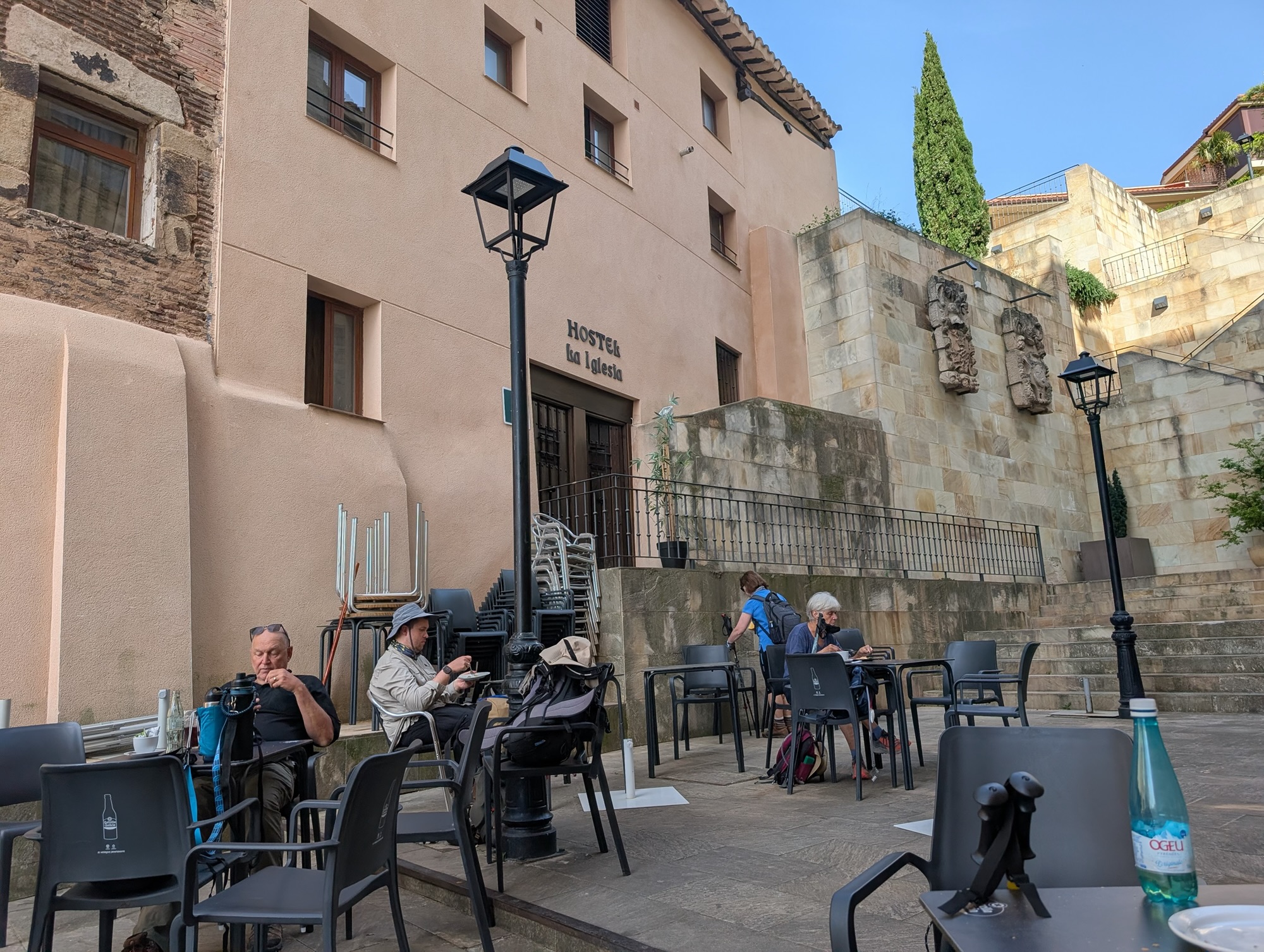
Starting our day on the camino, early morning, walking along Calle Portales, under the long portal.Camino shell used in sidewalks in Logroño to mark the way.One in 10 Pilgrims walk in the dirt (based on this small sample). Walking through the miles of parkway on the outskirts of Logroño. As soon as we saw the soft dirt path on the side of the pavement we moved over. The pavement gets tiring on the feet. Rare to find soft non-rocky dirt. Bliss.Park rules. I’m pretty sure this is the exact same sign we saw 13 years ago.Walking along the autopista. Pilgrims have woven stick crosses in the chain link fence.An iconic Osborne bull seen from behind. They were originally billboards dating from the 1950s advertising sherry and brandy. When billboards were banned in Spain in 1994, public outcry saved them (without the advertising). About 90 of 500 remain in Spain now. We passed one of them today on our walk. (Silver lining to walking along a noisy autopista.) https://en.wikipedia.org/wiki/Osborne_bullAbove seen from the front looking back.Approaching Navarrete.We haven’t seen a lot of this kind of graffiti this time. Not sure why. But more today.Iglesia de Santa María de la Asunción in Navarrete. This little town has a population of 3000 so it’s stunning to see this church here. Built in the 1500s.Check out this alter. It’s gold. We assume gold leaf. We put a euro in a slot and the altar was illuminated for 5 minutes. So many other wonderful sculptures and painting here. Henry and Moira, I think you can teach us more about this amazing church.The large incense burner was hanging in the middle of the nave. Not as big as the one in the Santiago cathedral, but impressive.Our albergue for the night. The best! Albergue de la Iglesia. Next door to the church.Our cute private room with private bath. And, yes, that’s a third bed up on the shelf.
5 thoughts on “April 22: Logroño to Navarrete.”
Love the scallop shell pillows. Nice touch.
Nothing to say about the church, other than if we were there we might be able to identify some of the saints .
Moira added: all the gold reminded her of Spanish Colonial/New World churches, which are often over-decorated in the same manner. We saw some when we were in Quito, Ecuador (on our way to the Galapagos).
That church in Navarette certainly doesn’t want you to confuse it with a Protestant place of worship! Beyond Baroque! It made me think of Peruvian loot and how heavy the ships must have been that hauled the booty. Didn’t quite get the vida dolorosa vibe.
I asked Claude about this and it said that gold leaf is typically 0.1 micrometers thick and estimated the gold leaf for that altar would total about 300-500 grams or $35,000 to $60,000 at todays prices but the staggering cost of a retablo like this would be the labor.
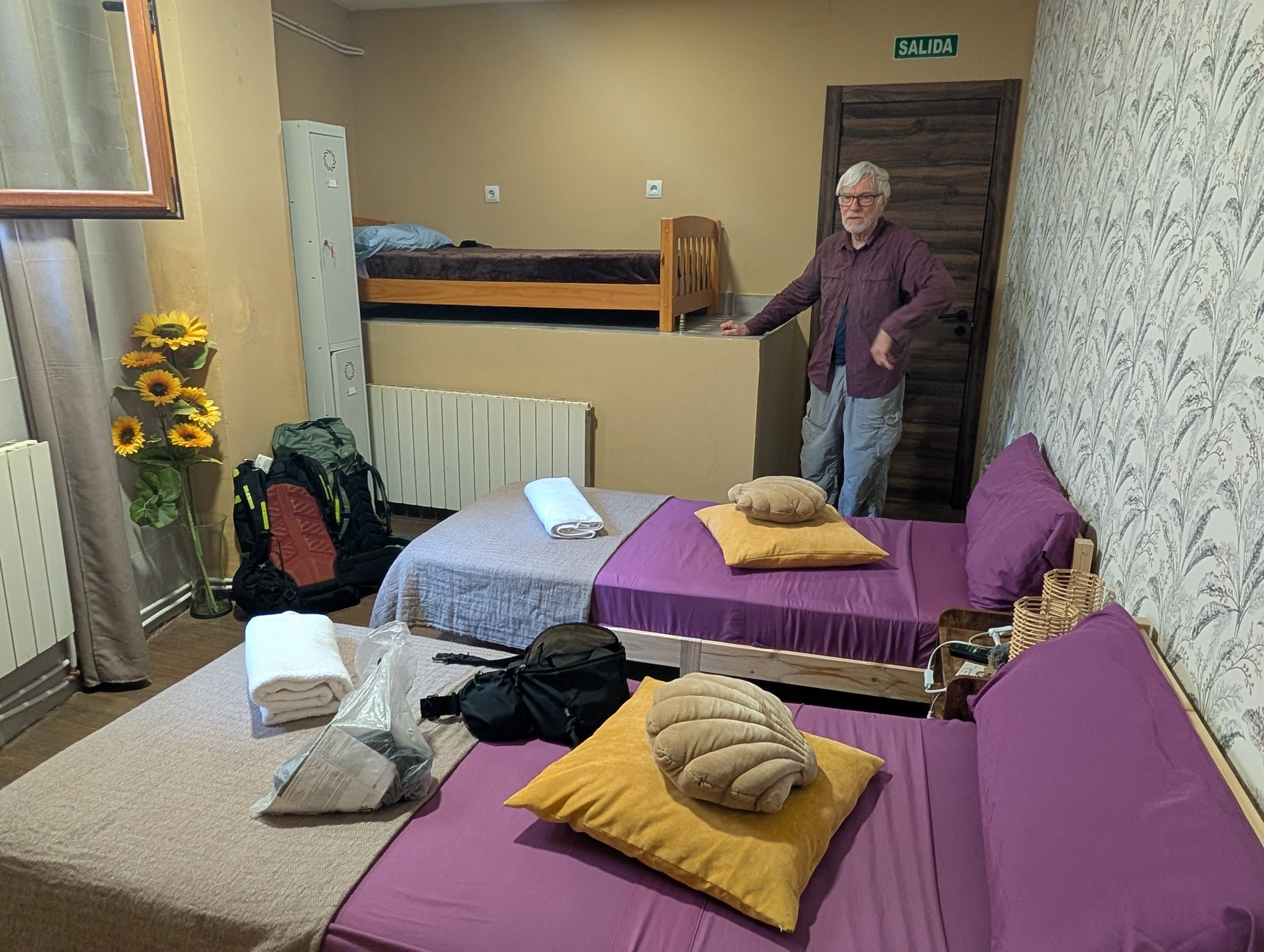
Love the scallop shell pillows. Nice touch.
Nothing to say about the church, other than if we were there we might be able to identify some of the saints .
Moira added: all the gold reminded her of Spanish Colonial/New World churches, which are often over-decorated in the same manner. We saw some when we were in Quito, Ecuador (on our way to the Galapagos).
There sure was a lot of gold. I have heard that you can pound gold leaf very thin. I wonder how many ounces of gold it took to decorate this altar?
I also wonder what is the surface the gold leaf is on.
That church in Navarette certainly doesn’t want you to confuse it with a Protestant place of worship! Beyond Baroque! It made me think of Peruvian loot and how heavy the ships must have been that hauled the booty. Didn’t quite get the vida dolorosa vibe.
I asked Claude about this and it said that gold leaf is typically 0.1 micrometers thick and estimated the gold leaf for that altar would total about 300-500 grams or $35,000 to $60,000 at todays prices but the staggering cost of a retablo like this would be the labor.